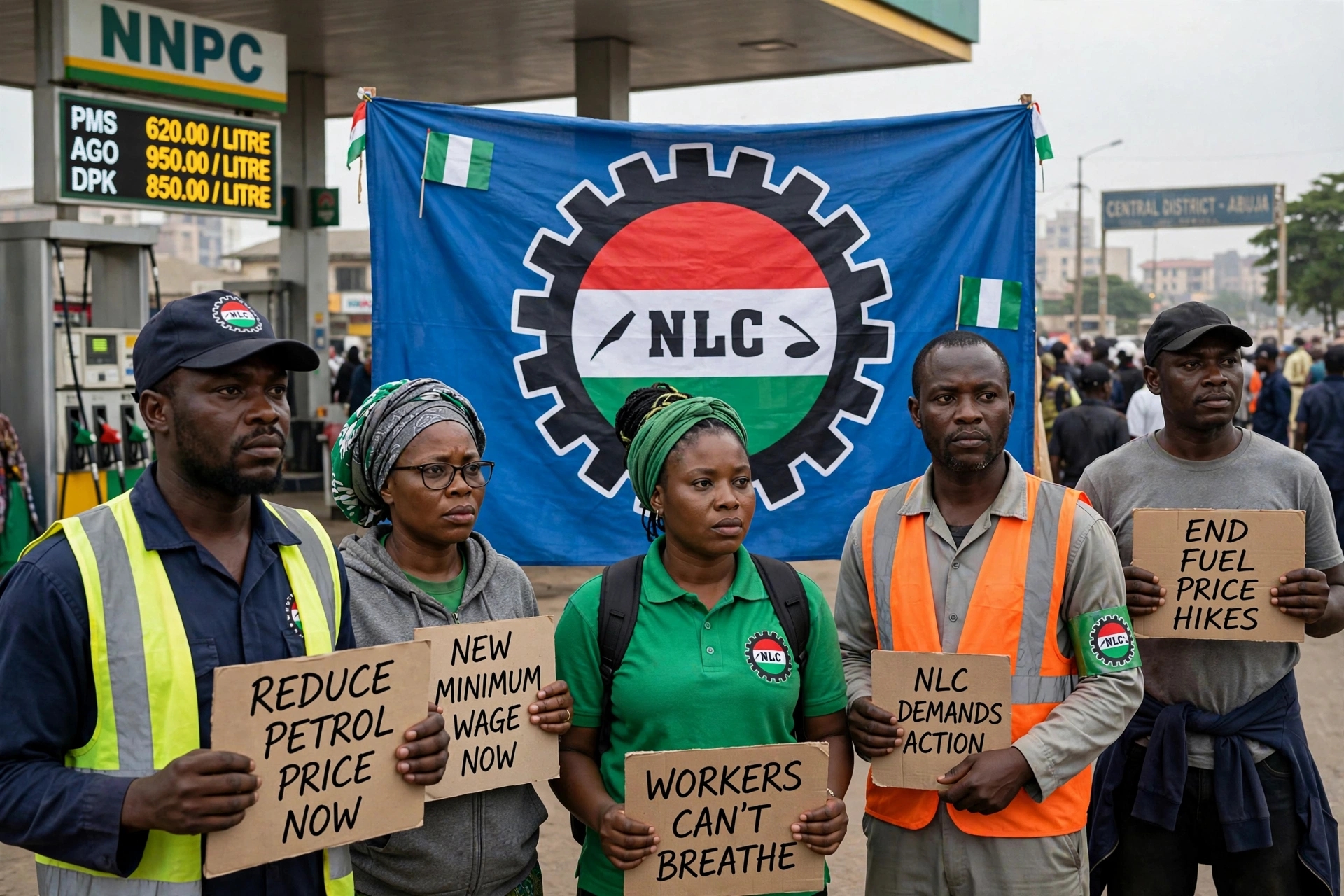
The Nigeria Labour Congress (NLC) has given the Federal Government a two-week ultimatum to address rising petrol prices and begin negotiations for a new national minimum wage, warning that failure to act could trigger further measures by organised labour. The ultimatum, which takes effect on Friday, October 9, 2026, follows a joint meeting of the union’s National Executive Council and Central Working Committee in Abuja. In a communiqué signed by NLC President Joe Ajaero, the union expressed concern over the rising cost of living, the declining purchasing power of workers and the difficulty many Nigerian households face in meeting basic needs. The labour organisation argued that the existing national minimum wage has lost significant value amid currency depreciation and increasing prices of essential goods and services. According to the NLC, many workers are struggling to afford food, accommodation, healthcare, transportation and education despite being employed. The congress is demanding an immediate reduction in petrol prices to the level that prevailed when the current national minimum wage was signed into law in 2024. It also wants the Federal Government to commence negotiations for a new minimum wage before the end of October. Other demands include tax relief for workers, payment of outstanding wage awards and implementation of agreements involving public-sector and health-sector workers. The NLC maintained that urgent intervention was necessary to ease the economic pressure on Nigerian workers and prevent further deterioration in living conditions. Petrol prices remain a major concern because of their direct and indirect effects on transportation, food distribution, manufacturing and the cost of everyday services. The labour union warned that failure to meet its demands within the two-week period could lead to further action as determined by its relevant organs. It has directed its affiliates and allies to remain prepared for developments. However, the ultimatum does not automatically mean a nationwide strike will begin when the deadline expires. Any subsequent action will depend on the union’s decisions and developments in its engagement with the government. The Federal Government now faces pressure to respond to labour’s demands while addressing broader economic challenges. For millions of Nigerians, the central concern is whether government policies will translate into lower living costs and improved purchasing power. As the deadline begins, attention will focus on whether both sides can reach an agreement before the dispute escalates.
Similar Posts
UBEC Raises Alarm as 10 Million Nigerian Children Miss Early Childhood Education
The Universal Basic Education Commission has raised concerns over the number of Nigerian children who are currently outside the country’s early childhood education system. UBEC estimates that approximately 10 million children are not captured in early childhood care, development and education programmes across the country. The commission disclosed the figure during a capacity-building programme for…
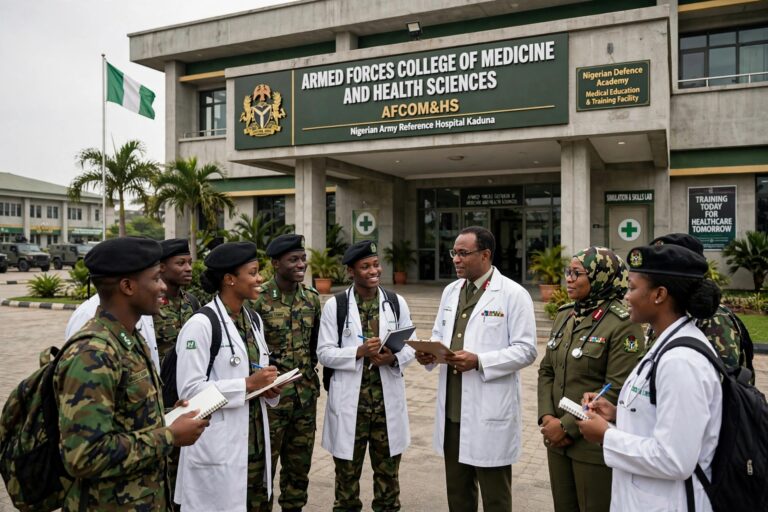
FG’s Military Medical College Project Raises Expectations for Specialist Training
The Federal Government’s plan to establish the Armed Forces College of Medicine and Health Sciences (AFCOM&HS) has moved from policy approval to implementation, raising expectations for specialist military medical training. The proposed institution is intended to produce medical professionals who will serve within the armed forces and strengthen healthcare delivery for military personnel. The Federal…
Nigerian Army Activates Three New Military Formations in Kebbi
The Nigerian Army has operationalised three new military formations in Kebbi State as part of efforts to strengthen security operations and tackle banditry in the North-West. The formations are the 28 Armoured Brigade and Garrison in Birnin Kebbi, the 281 Tank Battalion in Yauri and the 381 Artillery Regiment in Kaoje. The operationalisation is part…
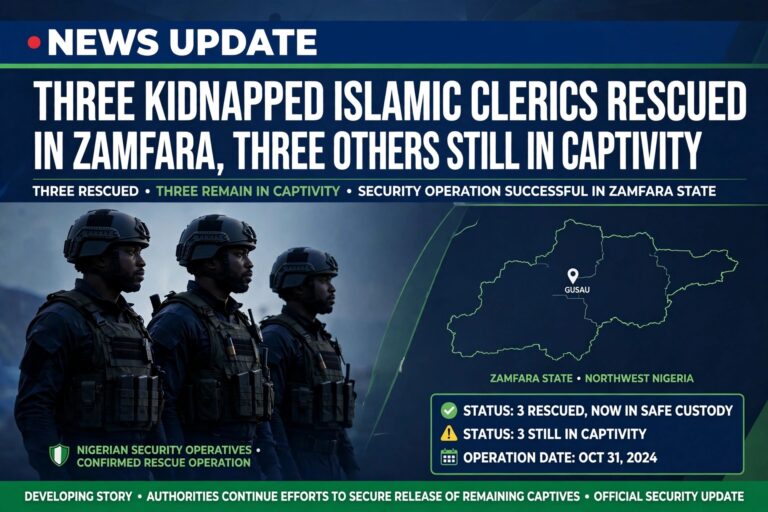
THREE KIDNAPPED ISLAMIC CLERICS RESCUED IN ZAMFARA, THREE OTHERS STILL IN CAPTIVITY
Security operatives have rescued three Islamic clerics who were abducted by armed bandits in Zamfara State, while three others remain in captivity. The rescue was confirmed by the Zamfara State Commissioner of Police, Muhammad Bello, following a coordinated security operation involving the Nigeria Police Force, the Department of State Services (DSS) and the Office of…
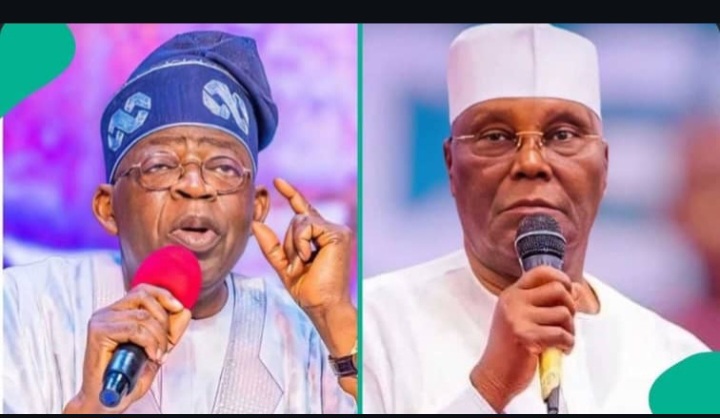
Atiku Challenges Tinubu Over Economic Hardship as 2027 Politics Heats Up
Former Vice-President Atiku Abubakar has criticised President Bola Tinubu’s administration over economic hardship and insecurity, adding to the growing political debate ahead of Nigeria’s 2027 general elections. The criticism was issued in two linked statements on October 14 and October 15, 2026, as political parties intensify preparations for the poll. Atiku, now presidential candidate of…
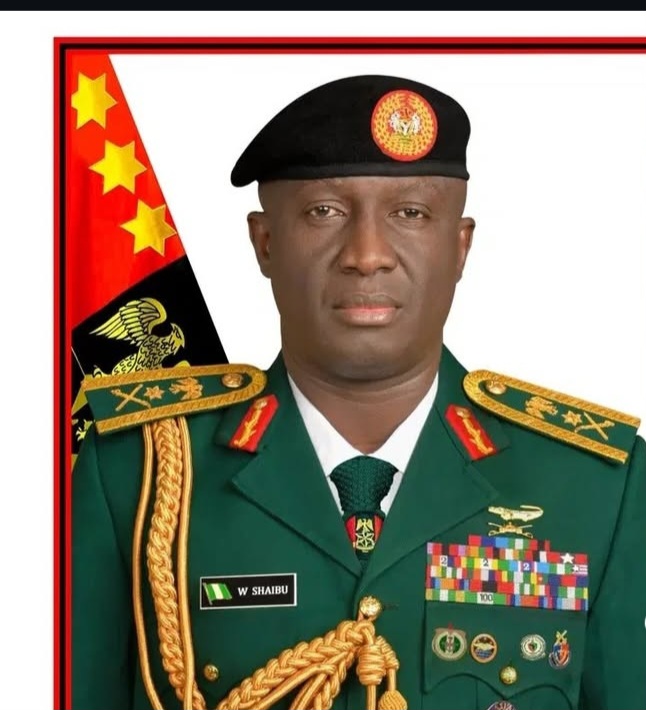
ARMY CHIEF ARRIVES IN BORNO AS TINUBU ORDERS INTENSIFIED OPERATIONS AGAINST TERRORISTS
Lieutenant General Waidi Shuaibu’s visit to Maiduguri follows presidential directives to security agencies to intensify efforts against terrorists and rescue abducted Nigerians. Nigeria’s Chief of Army Staff, Lieutenant General Waidi Shuaibu, has arrived in Maiduguri, Borno State, amid renewed efforts to strengthen security operations in the North-East. The visit was reported on Saturday, October 17,…