
The Truth About “Toilet Infection” in Nigerian Hostels: Symptoms, Myths, and Real Solutions
If you live in a Nigerian university hostel, you’ve probably heard the term "Toilet Infection." Maybe you’ve felt that sudden itch, a burning sensation when peeing, or noticed an unusual discharge, and your first thought was: "It must be that dirty hostel toilet."
At Shast Campus News, we know that hostel toilets in schools like AE-FUNAI, UNILAG, or UNIBEN can be rough. But did you know that medically, “toilet infection” is not a real medical diagnosis? Most infections students blame on toilets are actually common conditions affecting the urinary or reproductive system.
In this guide, we’re going to stop the myths and explain what is actually happening to your body—and how to fix it without the shame.
READ ALSO: Post-UTME 2026: 7 Proven Secrets to Secure Admission in Nigeria
1. Why "Toilet Infection" is a Myth
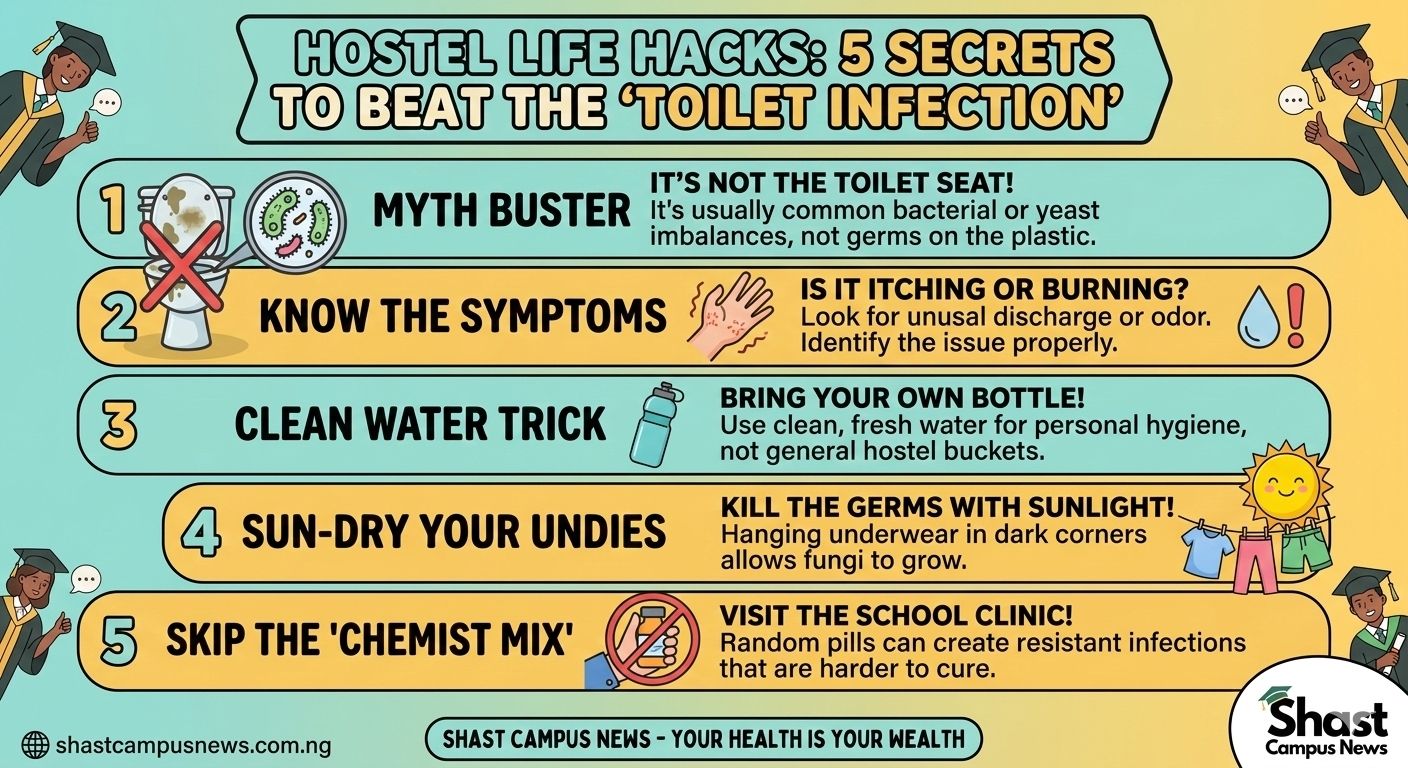
In Nigeria, we use the term "toilet infection" to describe discomfort in the private area. However, germs that cause most infections rarely spread through toilet seats, because they do not survive long on hard surfaces.
What students often call “toilet infection” is usually one of these conditions:
Yeast Infection – Often caused by excess moisture, tight underwear, antibiotics, or heat that allows yeast to grow.
Urinary Tract Infection – Caused by bacteria entering the urethra (the tube urine passes through), which can happen when hygiene is poor or when urine is held for too long.
Bacterial Vaginosis – A condition caused by an imbalance of the natural bacteria in the vagina.
2. Common Symptoms Students Experience
If you notice any of these symptoms, don't just “buy pills” at the chemist. Identify the symptoms first:
The Itch: Intense itching around your private area.
The Burn: A stinging feeling when you are urinating.
The Discharge: Thick, white (like spoiled milk) or yellowish discharge.
The Odour: A strong, fishy smell that wasn't there before.
3. Why Hostel Life Makes it Worse
Hostels can increase the chances of these issues, but not simply because of the toilets.
Water Scarcity: When there’s no water, students may not maintain proper hygiene.
Overcrowding: 8–10 people in one room means shared spaces and reduced hygiene standards.
Laundry Issues: Drying underwear in dark, damp corners instead of under the sun allows fungi and bacteria to grow.
4. How to Protect Yourself (The Student Hack)
You can’t change your hostel, but you can change your habits:
The "Water Bottle" Trick: Always take a bottle of clean water to the toilet for personal washing instead of relying on shared containers.
Avoid "Chemists Mix": Stop buying “GV” or random antibiotic mixes without proper testing. It can make infections resistant and harder to treat later.
Sun-Dry Your Undies: Sunlight helps kill microorganisms that grow on damp underwear and may contribute to itching or infections.
Cotton is King: Wear cotton underwear. Nylon traps heat and moisture, which allows yeast and bacteria to grow more easily.
5. When to Visit the School Medical Centre
We know the queue at the school clinic can be long, but self-medication can be dangerous. If you experience the following symptoms, visit the medical centre immediately:
Fever
Lower back pain
Blood in your urine
These may indicate that the infection is spreading to the kidneys.
Disclaimer:
This post is for educational purposes on Shast Campus News and is not a substitute for professional medical advice. Always consult a qualified doctor or visit your university medical centre for proper diagnosis and treatment.