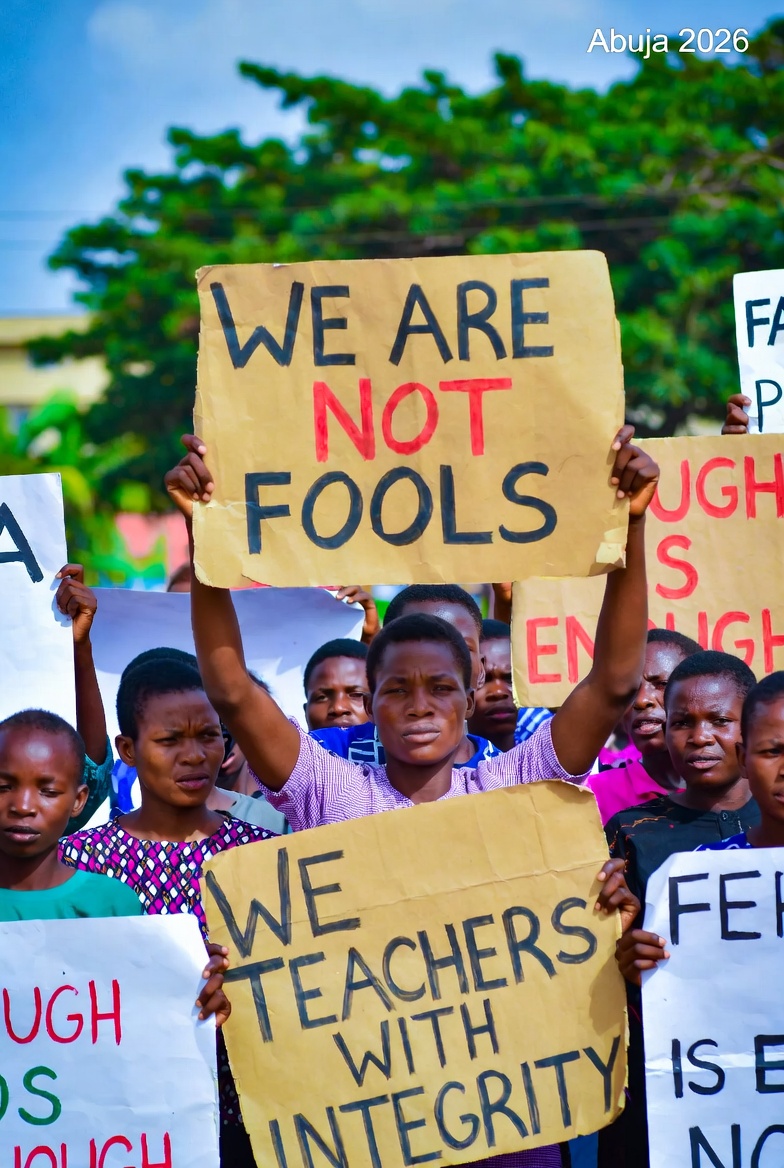
They Pay Teachers ₦20k–₦30k While Parents Drop ₦100k–₦500k Every Term… The Quiet Scandal No One Wants to Talk About (But Everyone Feels)
Private Schools Charging Parents Arm and Leg While Paying Teachers Peanuts: The Shocking Reality in Nigeria 2026
Guys, let’s talk straight. If you’re a parent in Abuja or anywhere in Naija, you know how painful it is to pay those sky-high private school fees every term—sometimes ₦200,000, ₦500,000 or more per child, depending on the school. You stretch your salary, borrow, hustle extra just to give your kids “quality” education. But have you ever stopped to wonder: where exactly is all that money going when the teachers—who do the actual work of molding our children—are struggling to eat?
I’m not just ranting. This is real life for thousands of teachers right now in 2026. From recent reports and stories pouring in, many private school teachers (especially in primary and lower secondary) are earning as low as ₦10,000 to ₦30,000 per month—even with NCE, HND, BSc, or Master’s degrees. Some haven’t seen a salary bump in 5-10 years. That’s way below the national minimum wage of ₦70,000, and it doesn’t even cover transport, food, or rent in this economy where everything has doubled in price.
Think about it:
A teacher told Daily Post in February 2026: “I’ve been teaching for four years on ₦15,000. No increase, no hope.” Another said ₦12,000 after eight years with an NCE.
The Guardian (2025 report still relevant) found some earning just ₦15,000 monthly, even after years of experience. Many survive on passion alone, but passion doesn’t pay bills—so they take side hustles, borrow, or quietly quit.
In places like Jos, Ado-Ekiti, and Lagos, studies show teachers handling heavy workloads (multiple classes, admin duties, no overtime pay) while owners pocket huge fees. One survey in Ado-Ekiti had over 50% of teachers agreeing low pay leads to financial exploitation and emotional stress.
Meanwhile, parents complain about fees rising every year due to “inflation and costs,” but teachers say: “We see the school buses, new buildings, fancy uniforms—yet our salaries stay the same or worse.”
Why does this matter to all of us?
Poor pay = poor motivation. Underpaid, overworked teachers burn out fast. High turnover means your child gets a new, inexperienced teacher mid-year. Quality drops.
Teacher shortages everywhere. Even the federal government admitted in the 2026 budget defence (March 2026) that Unity Colleges alone are short over 3,500 teachers, especially in STEM. Private schools are worse—no union protection, no benefits.
It’s exploitation. Owners prioritize profits (and sometimes personal expenses) over staff welfare. Teachers can’t unionize easily, so they suffer in silence. This isn’t just unfair—it’s hurting the future of our kids.
The 2026 education budget is ₦3.52 trillion (proposed), with focus on teacher recruitment and infrastructure. But most of that goes to public schools. Private ones? Still no regulation on fair pay. The NLC and unions keep calling for change, but nothing concrete yet.
As parents, teachers, and students—what can we do?
Ask questions: When paying fees, politely ask about teacher welfare. Support schools that treat staff right.
Share your story: Drop anonymous comments below or DM me. Have you (or your teacher friend) faced this? Let’s expose it and push for better.
Demand better: Tag unions, ministry officials, or your reps. Teachers deserve living wages—it’s not rocket science.
This isn’t about hating private schools—they fill gaps the public system can’t. But fairness must start somewhere. Our teachers shape tomorrow; paying them peanuts today is robbing our children’s future.
What do you think? Is this happening in your area? Drop your thoughts in the comments—let’s discuss and maybe spark some real change. Share this if it hits home.