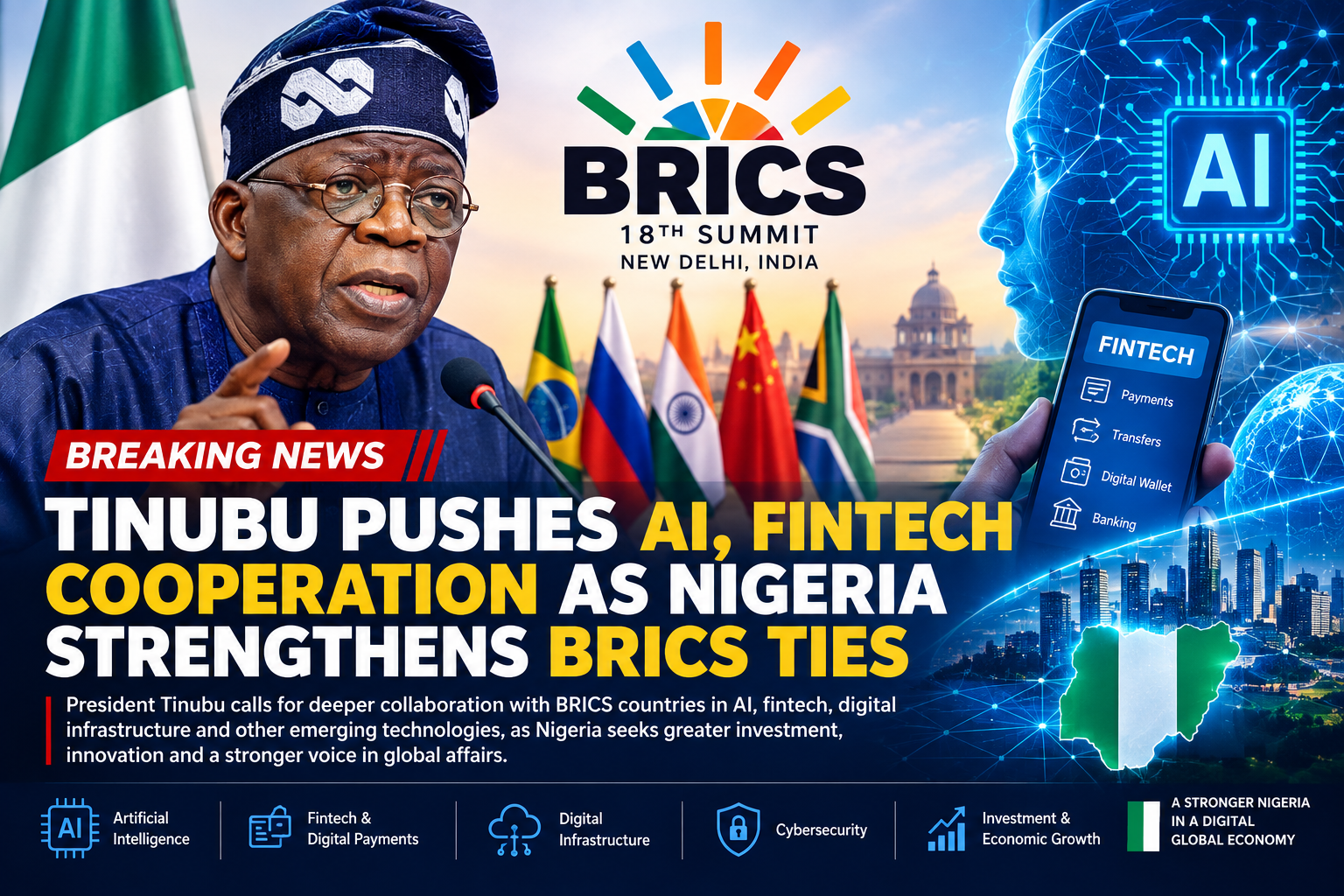
President Bola Ahmed Tinubu has called for deeper cooperation between Nigeria and BRICS countries in artificial intelligence, fintech, digital infrastructure and other emerging technologies as the country seeks to strengthen its position in the global digital economy. The President made the call in his address to the 18th BRICS Leaders’ Summit in New Delhi, India, on Sunday, September 13, 2026. The speech was delivered on his behalf by Vice President Kashim Shettima. Tinubu said Nigeria sees its engagement with BRICS as an opportunity to attract investment, accelerate technology transfer, develop human capital and create new opportunities for economic growth. A major part of the President’s message was the need for developing countries to move beyond simply using technology created elsewhere. Tinubu called for stronger BRICS cooperation in artificial intelligence, digital public infrastructure, fintech, telecommunications, cybersecurity, biotechnology and advanced manufacturing. He argued that countries such as Nigeria must develop the capacity to produce technology, create knowledge and own intellectual property rather than remain dependent on technologies developed by others.The President also pointed to Nigeria’s large and youthful population as an important advantage, highlighting digital skills, entrepreneurship, research, AI and technology-driven businesses as areas capable of creating jobs and driving innovation. Nigeria is particularly interested in expanding its digital economy through improved broadband, fibre networks and digital public services. Tinubu said cooperation with BRICS could help Nigeria develop an open, secure and inclusive digital ecosystem, while supporting digital trade, responsible artificial intelligence and stronger cybersecurity. The call comes at a time when BRICS itself is placing greater emphasis on technology and digital cooperation. The 2026 summit has featured proposals for expanded collaboration in AI, digital systems and cross-border payments. Beyond technology, the President used the summit to position Nigeria as an attractive destination for international investment. He invited BRICS investors to explore opportunities in Nigeria, describing the country as a potential gateway to Africa’s growing market under the African Continental Free Trade Area (AfCFTA). Tinubu said Nigeria is seeking partnerships across sectors including infrastructure, energy, agriculture, healthcare, education, manufacturing and critical minerals. He stressed that such partnerships should produce practical results, including job creation, increased trade, technology transfer and stronger local production capacity. Tinubu also used the BRICS platform to call for reforms to global governance and international financial institutions. He argued that institutions such as the United Nations Security Council and the international financial system should better reflect today’s economic and demographic realities. According to the President, stronger cooperation among developing countries could give the Global South a greater voice in decisions shaping the world economy. If the proposed partnerships translate into actual investment, Nigeria could see opportunities for expanded digital infrastructure, technology transfer, fintech development and skills training. For Nigeria’s young population in particular, increased investment in AI, cybersecurity, digital businesses and advanced manufacturing could create new employment and entrepreneurship opportunities. However, the bigger test will be whether the agreements and diplomatic commitments eventually produce visible projects, investment, jobs and affordable digital services for ordinary Nigerians. For now, Tinubu’s message at the BRICS summit signals Nigeria’s desire to move from being primarily a consumer of technology to becoming a stronger participant in its development and ownership. Nigeria’s BRICS strategy is therefore no longer only about trade and diplomacy. Technology, AI, fintech and digital infrastructure are increasingly becoming central to the country’s ambitions on the global stage.
Similar Posts
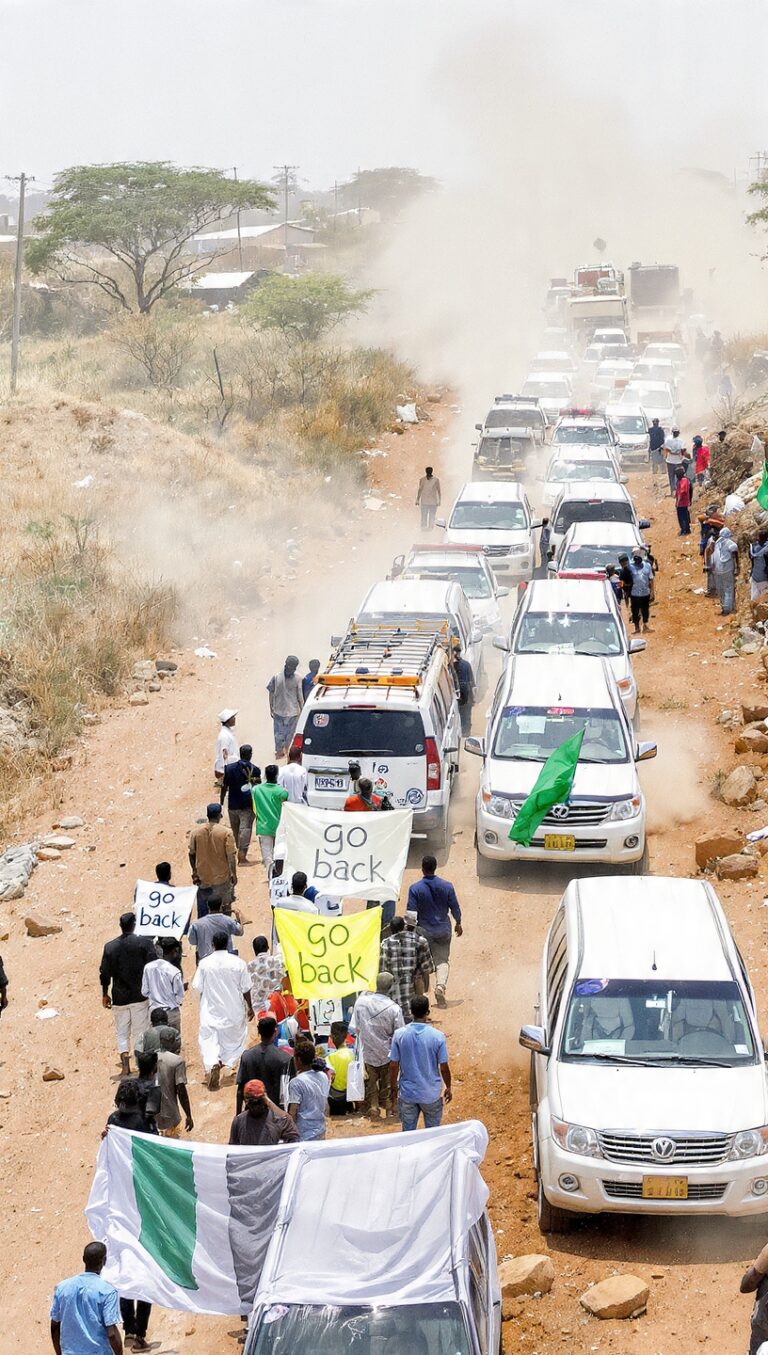
Peter Obi Blocked In Benue: Convoy Stopped From Visiting Yelwata Massacre Victims
The political tension in Benue State took a new turn on Tuesday as Labour Party leader and presidential candidate, Peter Obi, was prevented from visiting victims of the June 2025 massacre in Yelwata community. What was meant to be humanitarian visit quickly turned into a political controversy, with both Obi and the Benue State Government…
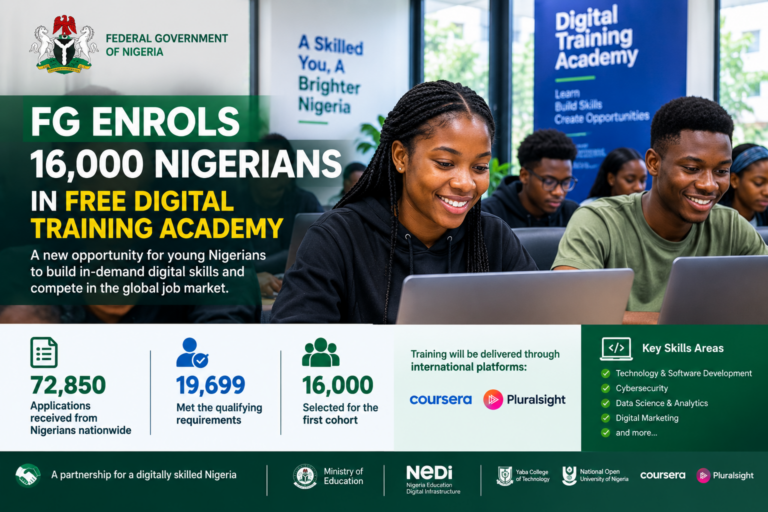
FG Enrols 16,000 Nigerians in Free Digital Training Academy
The Federal Government has enrolled 16,000 Nigerians into the first cohort of its newly established Digital Training Academy (DTA), a free programme designed to equip young Nigerians with digital skills needed in today’s changing job market. The development comes as Nigeria continues to face growing demand for technology and digital skills, with young people increasingly…
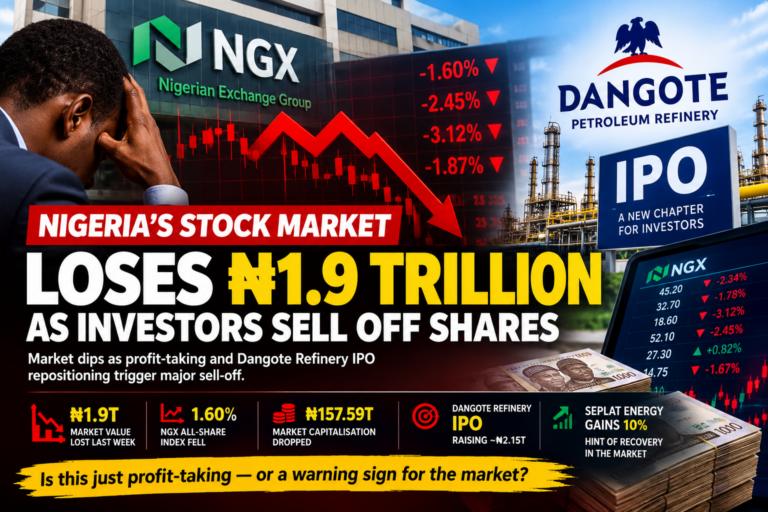
Nigeria’s Stock Market Loses Nearly ₦2 Trillion as Investors Sell Off Shares
Nigeria’s stock market has suffered a major setback, with investors losing about ₦1.9 trillion in market value last week as widespread profit-taking triggered heavy selling across several major stocks. The decline came after the Nigerian Exchange (NGX) had recorded a strong performance the previous week, when investors gained about ₦3.73 trillion in market value. The…
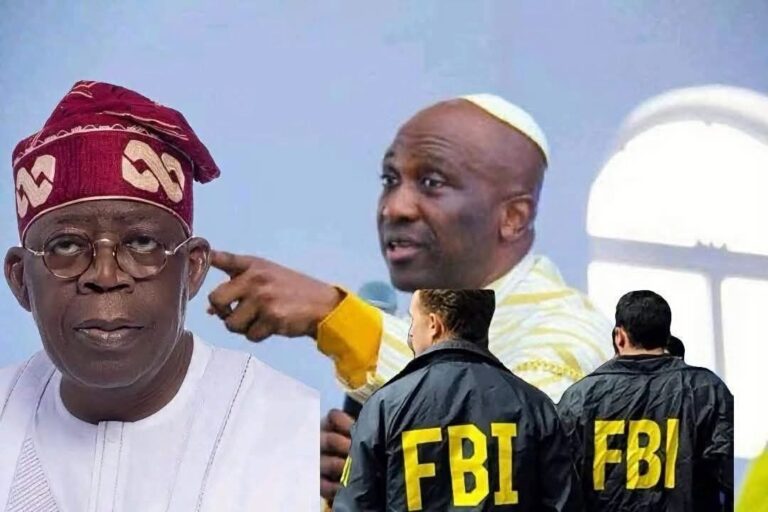
BREAKING! Why Tinubu Doesn’t Want His US Records Released – Presidency Finally Speaks
The Presidency has explained why President Bola Ahmed Tinubu is opposing the release of unredacted records held by United States law enforcement agencies, saying the matter involves lawful exemptions under the US Freedom of Information Act (FOIA) and does not amount to a criminal case against the Nigerian leader. The Presidency, in a statement issued…
ISRAELI STRIKES KILL12 SOUTHERN LEBANON AMID RENEWED TENSIONS WITH HEZBOLLAH
Israeli airstrikes have killed at least 12 people, including two children and four women, in Southern Lebanon as fighting between Israel and Hezbollah intensifies despite a ceasefire agreement reached more than two months ago.The Lebanese Health Ministry confirmed the deaths. The ministry said one strike hit a residential building in Kfar Rumman, killing 11 people…