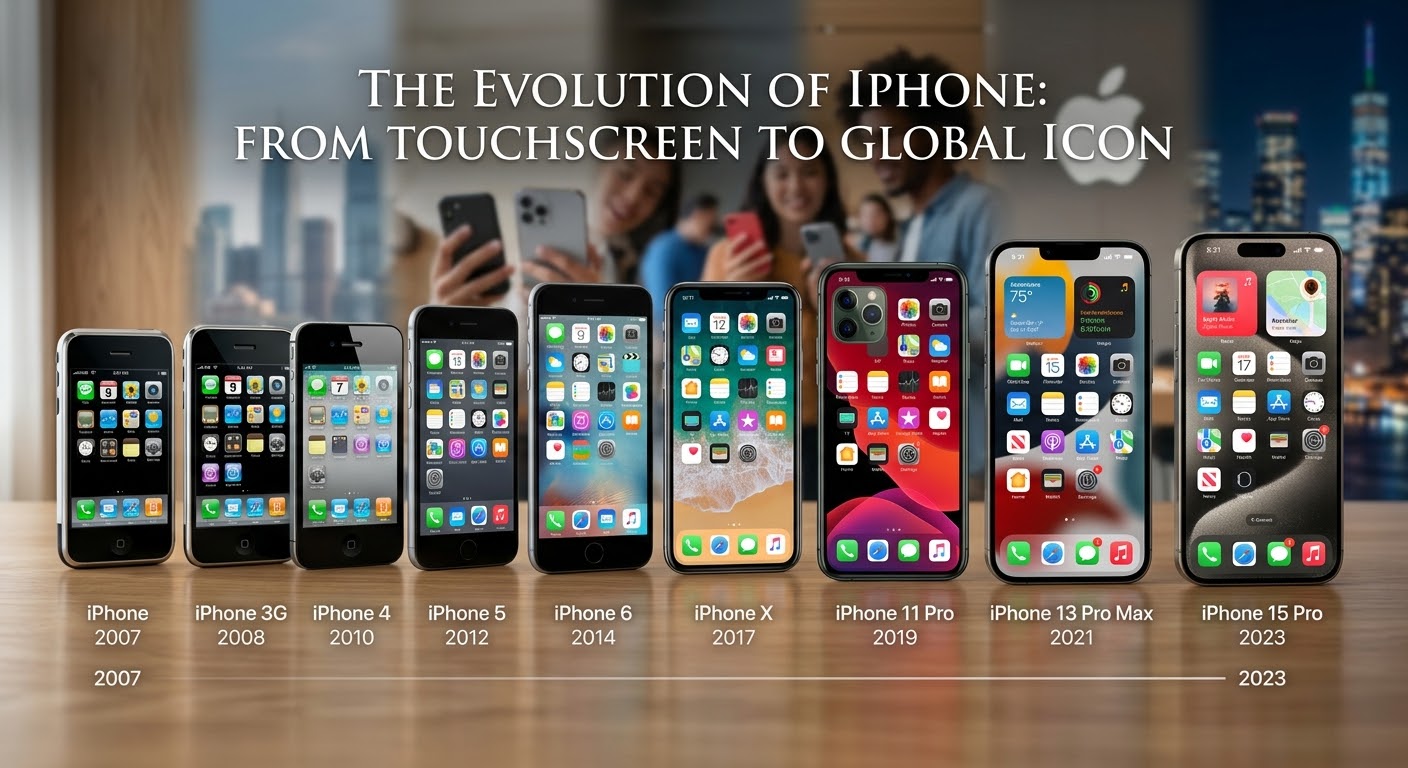
When Apple introduced the first iPhone in 2007, it was difficult to predict just how much the device would change the mobile phone industry.At the time, smartphones were already around, but Apple took a different approach. Instead of relying on a physical keyboard or stylus, the company put a touchscreen at the centre of the experience. That decision would go on to influence almost every smartphone that followed.It Started With the iPhoneThe original iPhone arrived in 2007 with a 3.5-inch touchscreen and Apple’s multi-touch interface. There was no physical keyboard, and users could navigate the phone directly with their fingers.A year later, Apple released the iPhone 3G. As the name suggested, 3G connectivity was one of its major additions. It also came with GPS and, perhaps more importantly, the App Store, giving developers a way to create and distribute applications for iPhone users.Then came the iPhone 3GS in 2009. Apple focused more on speed and performance with this model. It also introduced video recording and improved voice-control features.Apple Changes the DesignThe iPhone 4, released in 2010, brought one of the biggest visual changes yet. Apple moved to a glass-and-stainless-steel design and introduced the Retina Display, which offered a much sharper screen.It also had a front-facing camera, helping make FaceTime possible.In 2011, the iPhone 4S arrived with a better 8-megapixel camera, 1080p video recording and a feature that would later become a familiar part of Apple’s ecosystem — Siri.The iPhone 5 followed in 2012 with a taller 4-inch display, LTE connectivity and Apple’s new Lightning connector, replacing the older 30-pin connection.Touch ID and the 64-bit EraApple continued experimenting with the iPhone in 2013 when it released the iPhone 5s alongside the colourful iPhone 5c.The 5s introduced Touch ID, allowing users to unlock the phone using their fingerprint. It also featured Apple’s A7 chip, which made history as the first 64-bit processor in a smartphone.Meanwhile, the iPhone 5c offered a more colourful plastic design and gave consumers another option within Apple’s growing smartphone lineup.From that first 3.5-inch touchscreen in 2007 to the increasingly powerful devices that followed, Apple’s early iPhone models helped set the direction of the modern smartphone.And the interesting part is that the story was only getting started.
Similar Posts
Nigeria Moves to Strengthen Digital Connectivity With New NigComSat-2A Satellite
Nigeria is set to strengthen its digital communication infrastructure with the development of a new telecommunications satellite, NigComSat-2A. The Nigerian Communications Satellite Limited (NIGCOMSAT) has entered into an agreement with Thales Alenia Space for the development of the new satellite, which is expected to improve connectivity across Nigeria and other parts of Africa. The planned…
NIGERIAN MANUFACTURERS INVEST ₦4.54 TRILLION AS ₦2.12 TRILLION WORTH OF GOODS REMAIN UNSOLD
Nigerian manufacturers invested about ₦4.54 trillion in 2025, even as products worth approximately ₦2.12 trillion reportedly remained unsold. The figures present a mixed picture of Nigeria’s manufacturing sector. On one side, manufacturers significantly increased their investment in production facilities, machinery and other assets. On the other, weak consumer purchasing power made it difficult for some…
NDLEA Intercepts ₦3bn Worth of Opioids at Lagos Airport, Arrests Man With 72 Cocaine Wraps
The National Drug Law Enforcement Agency (NDLEA) has announced the interception of 2.55 million tablets of opioids valued at more than ₦3 billion at the Murtala Muhammed International Airport in Lagos. The agency said the drugs, weighing 1,640.55 kilogrammes, were seized on September 22 during the examination of three consignments at the airport’s import shed….
TINUBU SET TO RETURN TO NIGERIA AFTER FOUR-WEEK EUROPEAN STAY
President Bola Ahmed Tinubu is expected to return to Nigeria on Tuesday, September 29, after spending about four weeks in Europe on what the Presidency described as a working vacation. The President is expected to arrive in Lagos, where he will spend the Independence Day period before returning to Abuja later in the week. Tinubu’s…
VDM QUESTIONS SENATOR NATASHA OVER PURPORTED LEAKED VOICE NOTE: “IS THIS YOUR VOICE?”
Social media activist Martins Vincent Otse, popularly known as VeryDarkMan (VDM), has reacted to a purported leaked voice recording allegedly involving Senator Natasha Akpoti-Uduaghan, reigniting discussions surrounding the long-running controversy involving the senator, Senate President Godswill Akpabio and US-based activist Sandra Duru.In a video shared on social media, VDM addressed the recording after Duru released…
37 Suspected Illegal Miners Die in NSCDC Custody as Niger Orders Investigation
A major investigation has been launched in Niger State after 37 people suspected of illegal mining reportedly died while in the custody of the Nigeria Security and Civil Defence Corps (NSCDC). The victims were among people arrested during enforcement operations targeting suspected illegal mining activities around the M.I. Wushishi/Lukoto area of Minna on September 15…