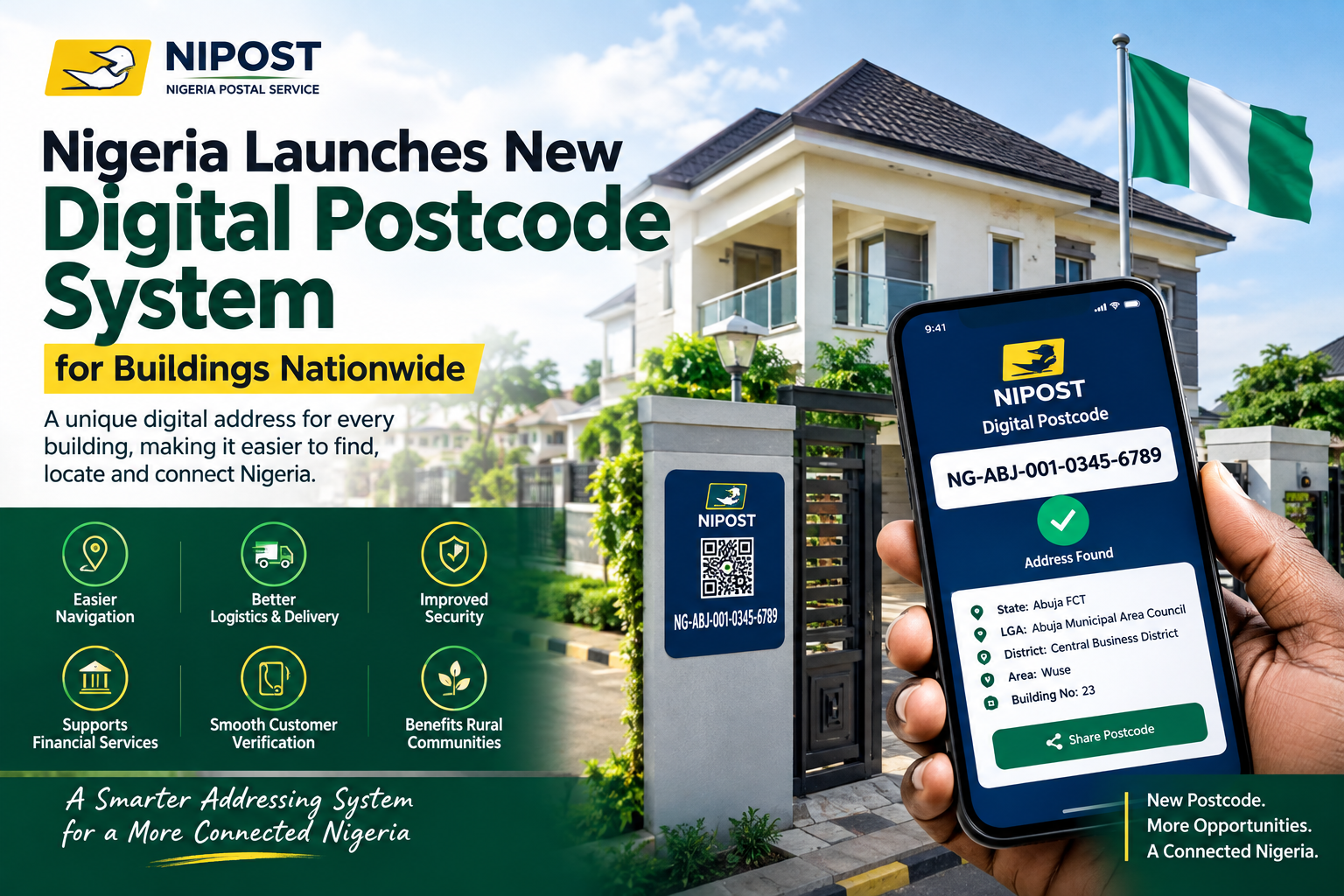
Nigeria is set to introduce a new National Digital Alphanumeric Postcode System, giving addressable buildings across the country unique digital codes. The system officially launches on October 1, 2026, as part of efforts to modernise Nigeria’s addressing infrastructure and make it easier to identify and locate buildings. According to the official National Digital Postcode platform operated by the Nigerian Postal Service, each addressable building will receive a unique 11-character code. The system is designed to provide more precise location information than the traditional postcode arrangement by linking the code to specific geographical locations. The digital postcode is structured around different levels, including the state, local government area, district, area and individual building. The Federal Government has described the initiative as an important step toward building a more digitally connected country. Beyond helping people locate homes and businesses, the system is expected to have applications in areas such as logistics, emergency response, security, financial services, customer verification and delivery services. For businesses that depend heavily on accurate addresses, including courier companies and e-commerce platforms, a precise building-level addressing system could make it easier to identify customers and assets. The system is also intended to cover buildings in rural communities, potentially improving the identification of locations that have traditionally been difficult to describe using conventional street addresses. NIPOST says users will be able to find, save and share their digital postcode through its postcode platform and mobile application. The launch comes as Nigeria continues to expand the use of digital technology across public and private services. For millions of Nigerians, one of the most noticeable changes could eventually be the ability to provide a short digital code when giving an address instead of relying solely on lengthy descriptions of streets, landmarks and surrounding locations. The new system therefore represents an attempt to make Nigeria’s addressing system more precise, searchable and compatible with modern digital services.
Similar Posts
Dangote Begins Construction of $16bn Refinery Project in Kenya
Nigerian businessman Aliko Dangote has begun construction of a major oil refinery project in Kenya estimated at $16 billion. The groundbreaking ceremony for the proposed refinery was held in Lamu County on Wednesday, with Kenyan President William Ruto and other regional leaders attending the event. The refinery is planned to have a capacity of about…
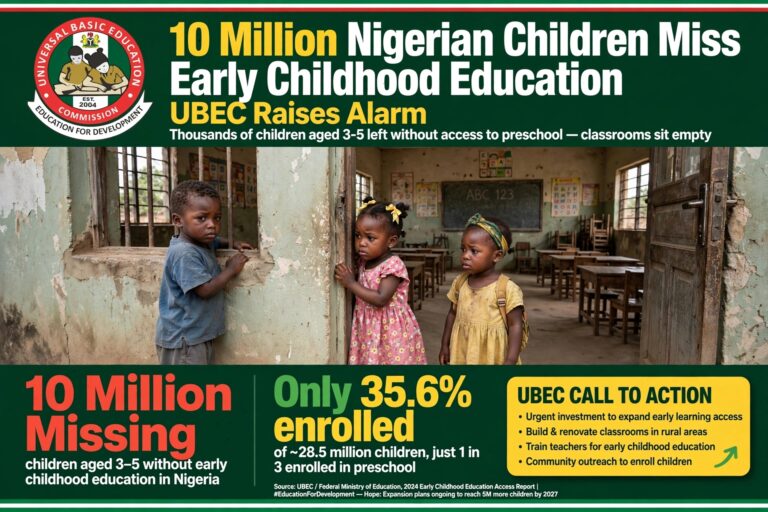
10 Million Nigerian Children Miss Early Childhood Education, UBEC Raises Alarm
The Universal Basic Education Commission (UBEC) has raised concerns over the large number of Nigerian children who are currently missing out on early childhood education. According to the commission, an estimated 10 million children are outside early childhood care, development and education programmes across the country. UBEC disclosed the figure during a capacity-building workshop for…
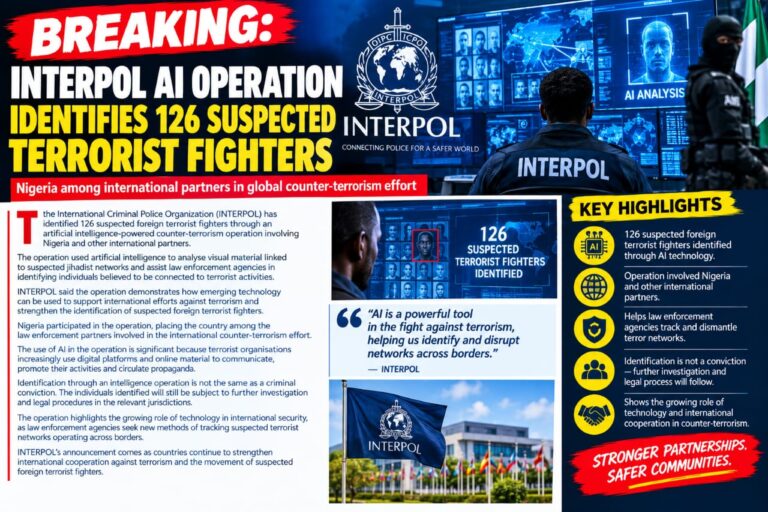
INTERPOL AI Operation Identifies 126 Suspected Terrorist Fighters
The International Criminal Police Organization, INTERPOL, has identified 126 suspected foreign terrorist fighters through an artificial intelligence-powered counter-terrorism operation involving Nigeria and other international partners. The operation used artificial intelligence to analyse visual material linked to suspected jihadist networks and assist law enforcement agencies in identifying individuals believed to be connected to terrorist activities. INTERPOL…
Nigeria, US Sign Mineral Investment Pact as FG Moves to Expand Critical Minerals Sector
Nigeria and the United States have signed a framework agreement aimed at deepening cooperation and investment in Nigeria’s solid minerals sector. The agreement was signed on the sidelines of the 81st United Nations General Assembly in New York. Minister of Solid Minerals Development, Dele Alake, described the framework as a future-focused arrangement designed to strengthen…
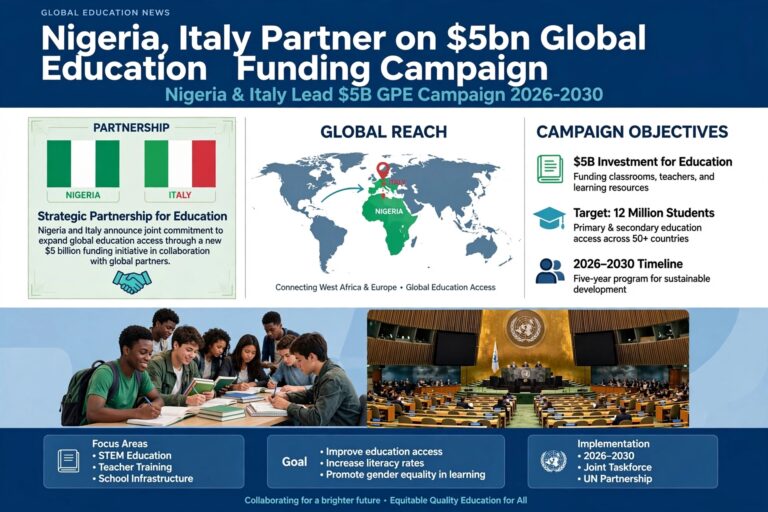
Nigeria, Italy Partner on $5bn Global Education Funding Campaign
Nigeria and Italy have joined forces in a global campaign seeking to mobilise $5 billion for education programmes across more than 100 low-income and lower-middle-income countries. The initiative was discussed during a high-level education financing event held in New York on the sidelines of the 81st United Nations General Assembly. Nigeria is co-hosting the 2026–2030…
Fake Products Flood Nigerian Markets: Nigerians Ask, “What Is NAFDAC Doing?”
From medicines and cosmetics to food, drinks and other everyday consumer products, the growing presence of suspected fake and substandard products in Nigerian markets is raising fresh questions about regulation, enforcement and consumer safety. For many Nigerians, the concern is no longer simply about finding a cheaper product. The bigger question is whether consumers can…