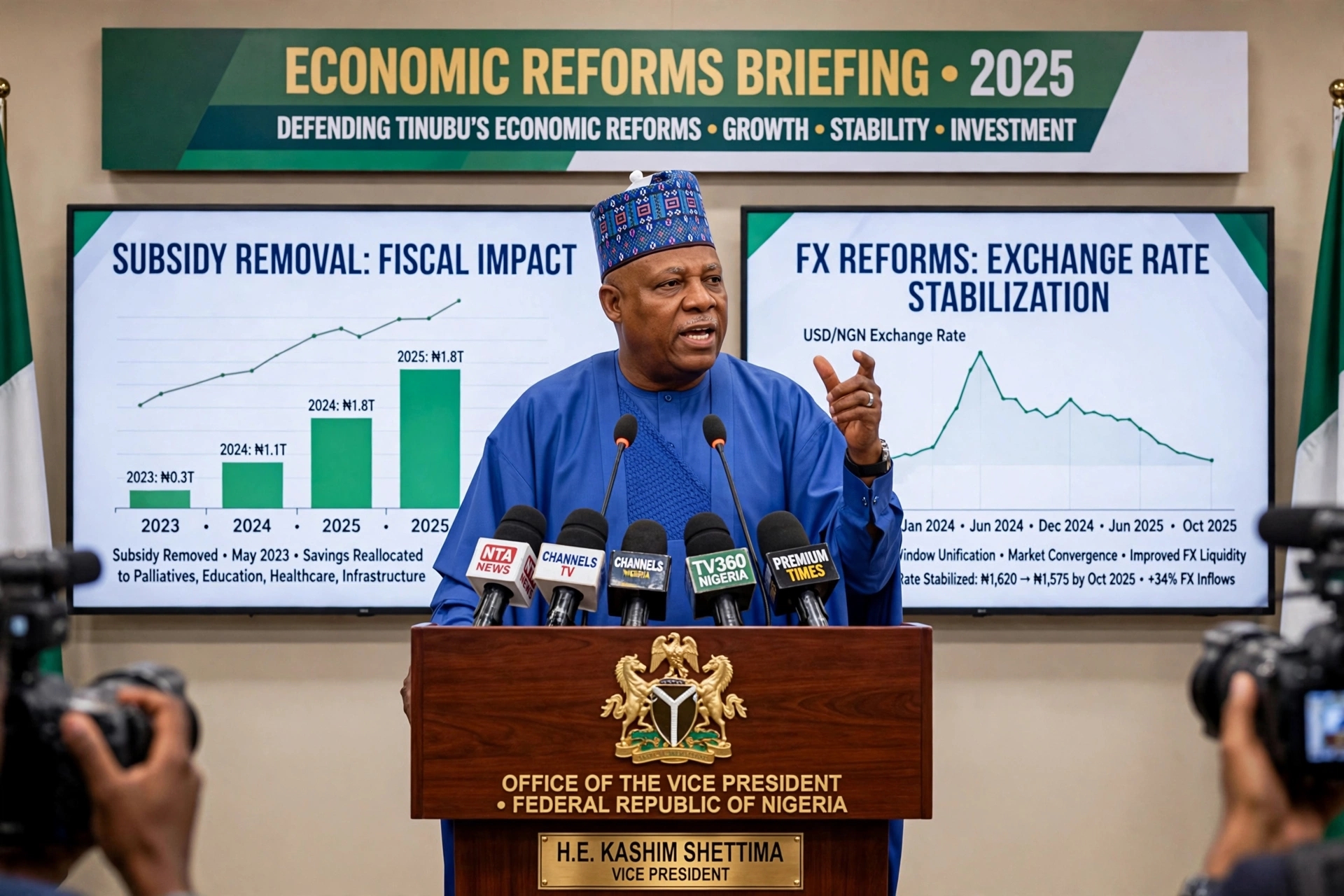
Vice President Kashim Shettima has defended the economic policies of President Bola Ahmed Tinubu’s administration, arguing that difficult reforms were necessary to prevent Nigeria’s economy from deteriorating further. Shettima made the remarks while discussing the government’s economic reforms and their impact on the country. The Tinubu administration has implemented several major economic policies since taking office, including the removal of petrol subsidy and changes affecting the foreign exchange market. The policies have generated intense debate because of their impact on the cost of living. While the government argues that the reforms are necessary to create a stronger and more sustainable economy, critics have continued to question whether Nigerians are seeing enough benefits. Shettima has urged Nigerians to recognise the long-term objective of the reforms. He argued that the government must ensure that economic changes eventually translate into increased purchasing power and improved living standards. The Vice President’s position comes as Nigerians continue to deal with high food prices, transportation costs and other economic pressures. The government has also introduced several intervention programmes aimed at cushioning the effects of economic reforms. Supporters say the reforms are gradually repositioning the economy, while critics argue that the social cost remains too high. The debate is likely to become even more intense as the 2027 elections approach. For ordinary Nigerians, the most important measure will ultimately be whether reforms result in cheaper living costs, more jobs, stronger incomes and improved purchasing power.
Similar Posts
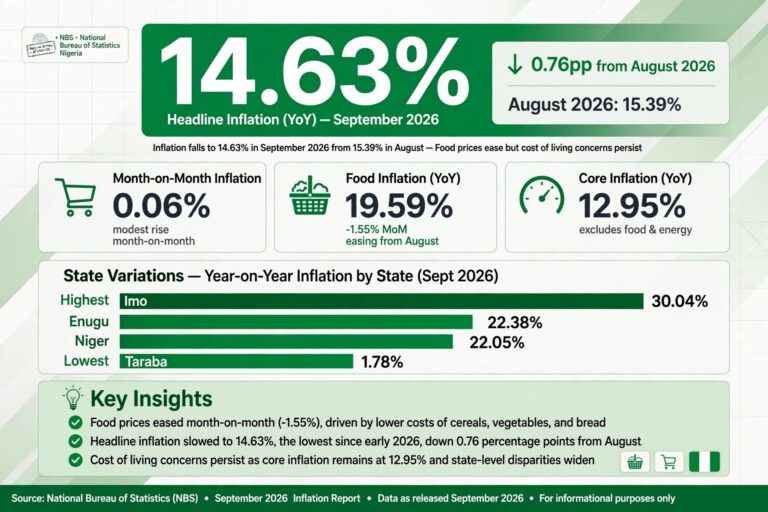
NIGERIA’S INFLATION FALLS TO 14.63% AS FOOD PRICES EASE, BUT COST-OF-LIVING CONCERNS PERSIST
Nigeria’s headline inflation rate declined to 14.63 per cent in September 2026 from 15.39 per cent in August, according to figures released by the National Bureau of Statistics. However, the improvement does not mean that the high cost of living has disappeared. Nigeria recorded another decline in its headline inflation rate in September 2026, offering…
Air Peace Explains Abuja–Maiduguri Flight Cancellation, Cites Fuel Shortage and Airport Restrictions
Air Peace has explained the cancellation of its Abuja–Maiduguri flight on Saturday, attributing the disruption to a shortage of aviation fuel in Abuja and a subsequent restriction affecting operations at Maiduguri Airport. The airline said the initial delays to its Abuja operations were caused by the unavailability of Jet A1 aviation fuel, a situation it…
Nigerian Army Activates Three New Military Formations in Kebbi
The Nigerian Army has operationalised three new military formations in Kebbi State as part of efforts to strengthen security operations and tackle banditry in the North-West. The formations are the 28 Armoured Brigade and Garrison in Birnin Kebbi, the 281 Tank Battalion in Yauri and the 381 Artillery Regiment in Kaoje. The operationalisation is part…
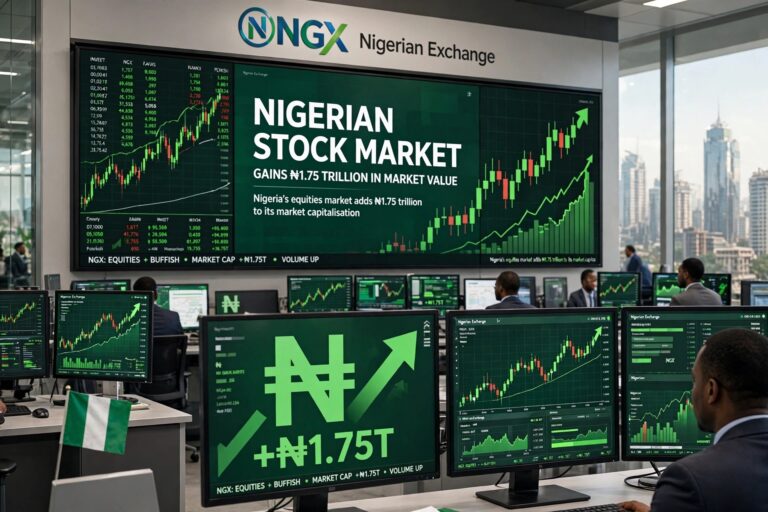
NIGERIAN STOCK MARKET GAINS ₦1.75 TRILLION IN MARKET VALUE
Nigeria’s equities market reportedly added approximately ₦1.75 trillion to its market capitalisation in a recent trading session, reflecting an increase in the combined market value of listed shares. The development was highlighted in Nigerian financial news coverage published on October 28, as investors continued to monitor corporate performance, economic policy and market conditions. The reported…
INTERPOL AI Operation Identifies 126 Suspected Terrorist Fighters
The International Criminal Police Organization, INTERPOL, has identified 126 suspected foreign terrorist fighters through an artificial intelligence-powered counter-terrorism operation involving Nigeria and other international partners. The operation used artificial intelligence to analyse visual material linked to suspected jihadist networks and assist law enforcement agencies in identifying individuals believed to be connected to terrorist activities. INTERPOL…
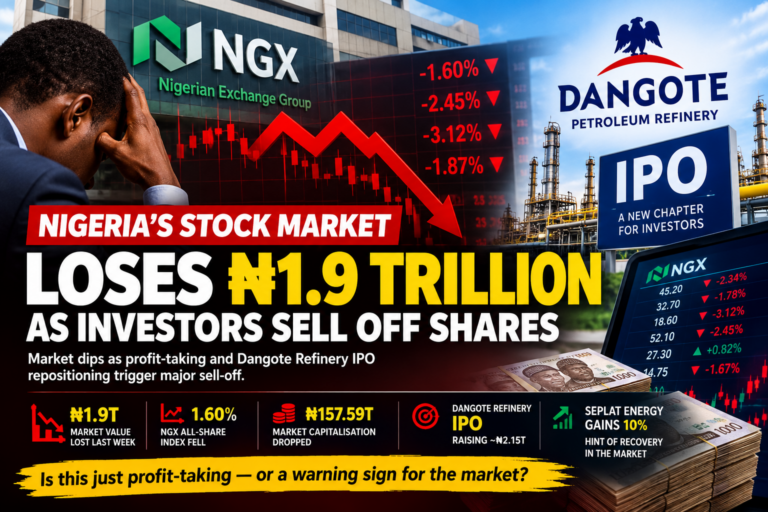
Nigeria’s Stock Market Loses Nearly ₦2 Trillion as Investors Sell Off Shares
Nigeria’s stock market has suffered a major setback, with investors losing about ₦1.9 trillion in market value last week as widespread profit-taking triggered heavy selling across several major stocks. The decline came after the Nigerian Exchange (NGX) had recorded a strong performance the previous week, when investors gained about ₦3.73 trillion in market value. The…