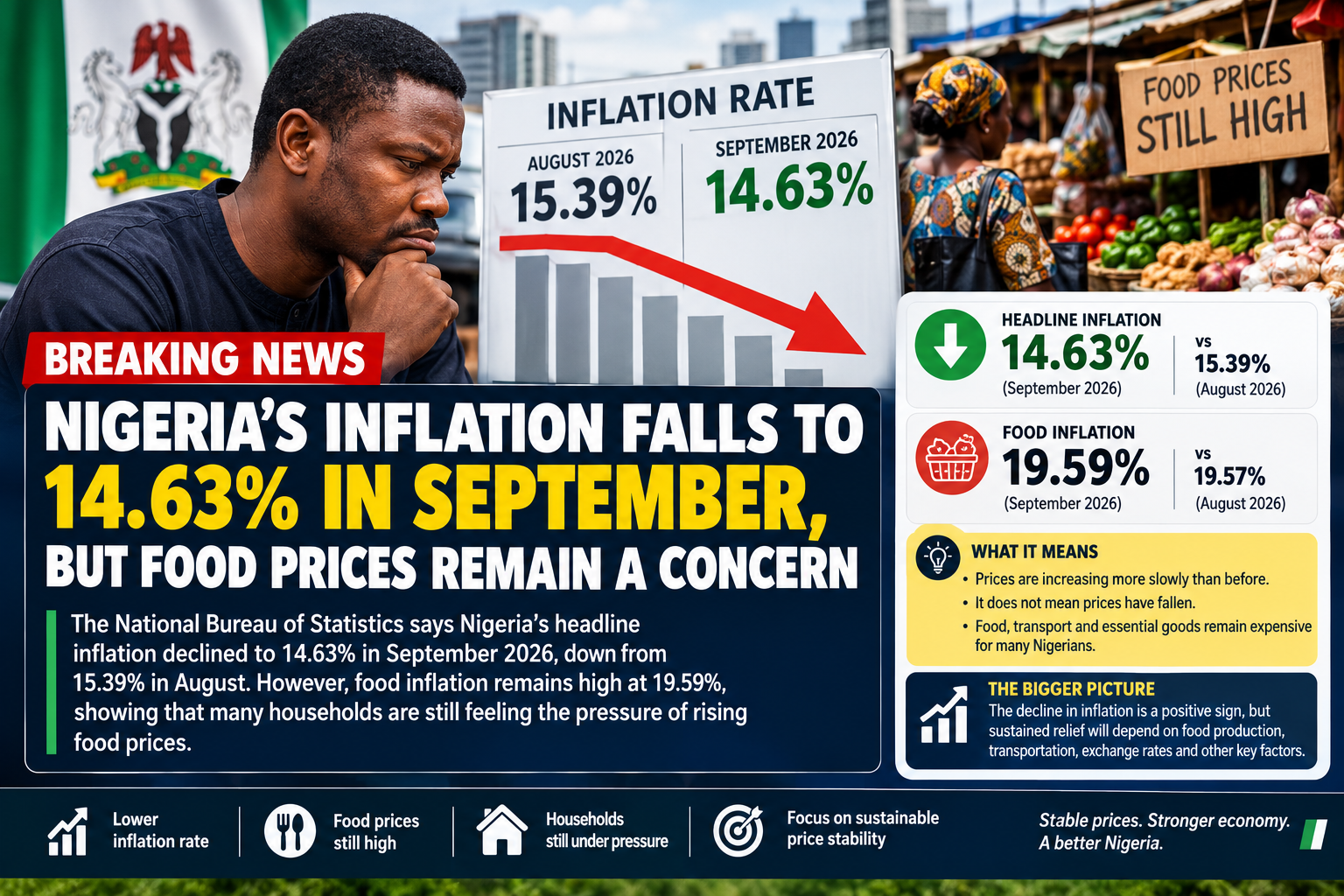
Nigeria’s headline inflation rate reportedly declined to 14.63 per cent in September 2026, down from 15.39 per cent in August, according to figures attributed to the National Bureau of Statistics. The figures, reported on October 15, indicate that the annual rate of increase in consumer prices continued to ease. However, food inflation remains a major concern for households facing high costs for essential commodities. Reports on the September figures put food inflation at 19.59 per cent year-on-year, slightly above the 19.57 per cent recorded in August. The figures highlight the difference between a general slowdown in inflation and the continuing pressure consumers experience when purchasing food. Inflation measures the rate at which prices increase over a period. When inflation falls, it generally means prices are increasing more slowly than before. It does not necessarily mean that prices have returned to previous levels. For Nigerian households, this distinction is important because the cost of food, transport, housing and other necessities remains a source of concern. A reduction in headline inflation could indicate an improvement in the pace of price increases, but its practical effect on household budgets depends on the prices of the specific goods and services people purchase. Food inflation is particularly significant because food represents a substantial part of household spending.The figures come amid continuing debate over the effects of currency and fuel-market reforms introduced by the Tinubu administration. The government has defended its economic policies, while citizens continue to demand measures that improve purchasing power and reduce the cost of living. Businesses also face challenges when prices, transport expenses and operating costs remain high. The September figures may indicate that overall price increases are slowing. However, sustained improvement will depend on developments in food production, transportation, exchange rates and other factors affecting prices. For consumers, the priority remains seeing measurable improvements in affordability rather than relying solely on headline economic indicators.
Similar Posts
The Independent National Electoral Commission has published final lists of governorship candidates for the 2027 general elections
The Independent National Electoral Commission has published final lists of governorship candidates for the 2027 general elections, providing voters with a clearer picture of the political figures expected to contest governorship positions across several states. The lists contain candidates’ names, political party affiliations and other relevant identifying information. Their publication represents an important stage in…
FIVE SUSPECTS ARRAIGNED OVER ALLEGED KIDNAPPING OF 20 PROSPECTIVE CORPS MEMBERS IN IMO
Five men have been arraigned before the Imo State High Court over separate alleged kidnapping incidents, including the abduction of 20 prospective members of the National Youth Service Corps. The cases have renewed concerns about the safety of young Nigerians travelling to orientation camps and other destinations for national service. According to reports published on…
Nigerian Workers Begin Three-Day Warning Strike Over Economic Hardship
Public service workers across Nigeria have commenced a three-day warning strike following growing concerns over economic hardship, petrol prices and unresolved demands for improved welfare. The industrial action, which began at midnight on Friday, October 2, is being observed by workers under the Joint National Public Service Negotiating Council. The council directed workers across federal,…
TINUBU RULES OUT RETURN OF PETROL SUBSIDY AS NIGERIANS CONTINUE TO GRAPPLE WITH HIGH FUEL PRICES
President Bola Tinubu’s administration has maintained its position against restoring petrol subsidies, keeping the controversial policy at the centre of Nigeria’s economic debate as households and businesses struggle with rising living costs. The Federal Government has again defended the removal of petrol subsidies, insisting that Nigeria cannot afford to return to the previous system despite…
NDLEA Intercepts ₦3bn Worth of Opioids at Lagos Airport, Arrests Man With 72 Cocaine Wraps
The National Drug Law Enforcement Agency (NDLEA) has announced the interception of 2.55 million tablets of opioids valued at more than ₦3 billion at the Murtala Muhammed International Airport in Lagos. The agency said the drugs, weighing 1,640.55 kilogrammes, were seized on September 22 during the examination of three consignments at the airport’s import shed….
APC Sets October 24 for Presidential Campaign Flag-Off in Kaduna Ahead of 2027 Election
The ruling party says its presidential campaign will begin in Kaduna as preparations intensify for the 2027 general election. The All Progressives Congress (APC) has announced October 24, 2026, as the date for the flag-off of its presidential campaign in Kaduna State, marking a significant step in the party’s preparations for the forthcoming general election….