President Bola Tinubu’s administration has maintained its position against restoring petrol subsidies, keeping the controversial policy at the centre of Nigeria’s economic debate as households and businesses struggle with rising living costs. The Federal Government has again defended the removal of petrol subsidies, insisting that Nigeria cannot afford to return to the previous system despite growing concerns over fuel prices, transportation expenses and the cost of essential goods. The position has renewed debate about the economic consequences of the government’s reforms and whether the savings from subsidy removal are translating into meaningful improvements in the lives of ordinary Nigerians. President Tinubu’s administration has consistently argued that maintaining the subsidy placed an unsustainable burden on public finances and diverted resources that could otherwise support infrastructure, healthcare, education and other essential services. However, many Nigerians continue to question the timing and implementation of the reform, particularly as petrol prices have placed additional pressure on household budgets. The removal of petrol subsidies marked one of the most significant economic decisions of Tinubu’s administration, before the reform, the government spent substantial sums supporting the domestic price of petrol. Under the subsidy arrangement, consumers paid less at the pump than they otherwise might have paid under market-based pricing. The policy’s defenders argued that it helped protect households from international oil-price fluctuations. Critics, however, maintained that the arrangement was expensive, vulnerable to abuse and difficult to sustain. The government has argued that ending the subsidy would reduce fiscal pressure and give Nigeria greater flexibility to direct public resources towards other priorities. Nevertheless, the immediate consequences have been difficult for many citizens, especially those whose incomes have not increased at the same pace as their expenses. Petrol prices affect more than motorists. They influence the cost of transporting food, agricultural produce, building materials and other goods across the country, commercial transport operators often adjust their fares in response to fuel-price changes. Businesses that depend on generators may also face higher operating expenses when electricity supply is unreliable, these additional costs can eventually be passed on to consumers through higher prices for goods and services. For low-income households, the combined effect can mean spending a greater proportion of their earnings on transportation, food and basic necessities, the challenge is particularly significant for workers whose salaries remain relatively fixed while living expenses continue to fluctuate. A central question in the subsidy debate concerns how the government uses the money saved from ending the policy, supporters of the reform argue that the savings could help finance development projects and improve public services. Others have called for greater transparency, stronger social protection programmes and clearer evidence of the benefits reaching ordinary citizens, economic relief measures, infrastructure investment and targeted support for vulnerable households are among the areas frequently raised in discussions about how the government should manage the consequences of the reform. For many Nigerians, the issue is not only whether the subsidy should return but whether the alternative economic arrangement can provide more reliable opportunities, better public services and improved purchasing power, the Federal Government faces the challenge of sustaining its economic reforms while responding to the hardship experienced by households and businesses. A return to subsidies could have significant fiscal implications, while maintaining the current approach requires policies capable of reducing inflationary pressure, improving productivity and supporting economic growth, the effectiveness of the government’s approach will ultimately be judged not only by its fiscal position but also by whether Nigerians experience tangible improvements in their standard of living. For now, the administration’s position remains clear: it does not intend to return to the former petrol subsidy regime, the continuing debate is whether the government’s economic strategy can deliver sufficient relief and opportunity to justify the difficult adjustment faced by millions of citizens.
Similar Posts
Atiku Challenges Tinubu Over Economic Hardship as 2027 Politics Heats Up
Former Vice-President Atiku Abubakar has criticised President Bola Tinubu’s administration over economic hardship and insecurity, adding to the growing political debate ahead of Nigeria’s 2027 general elections. The criticism was issued in two linked statements on October 14 and October 15, 2026, as political parties intensify preparations for the poll. Atiku, now presidential candidate of…
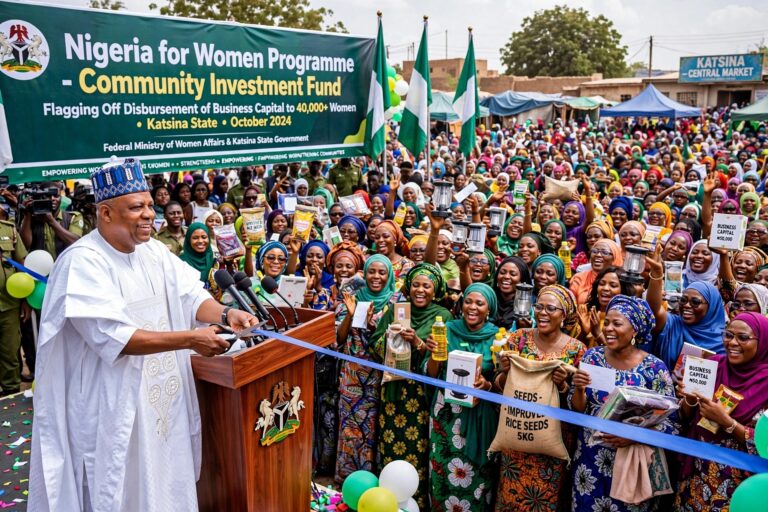
Over 40,000 Katsina Women to Receive Business Capital as Shettima Flags Off Fund
More than 40,000 women in Katsina State are set to benefit from a new business-capital intervention launched under the Nigeria for Women Programme Scale-Up project. Vice President Kashim Shettima flagged off the disbursement of the Community Investment Fund in Katsina on Sunday. The programme is designed to provide additional capital to women who have participated…
2027 ELECTION: NDC CANDIDATE ALLEGES PLOT TO KEEP PARTY OFF LAGOS BALLOT
A Nigeria Democratic Congress candidate has alleged that efforts are being made to prevent the party from appearing on the ballot in her constituency, calling for attention from party leaders and electoral authorities. Adefolaseye Adebayo, the Nigeria Democratic Congress (NDC) candidate for Surulere I Federal Constituency in Lagos State, has alleged that there is a…
KYLIAN MBAPPÉ LOSES MAJOR CHINESE BRAND DEALS FOLLOWING CONTROVERSIAL REMARKS ABOUT MAO ZEDONG
XANDERXO ENTERTAINMENT French football superstar Kylian Mbappé has found himself at the centre of an international controversy after remarks concerning a viral internet meme depicting him as former Chinese leader Mao Zedong triggered widespread backlash in China. The controversy emerged after a video circulated online showing the Real Madrid forward discussing an internet meme in…
Plateau Disburses ₦1.5bn to 1,579 Victims of Violent Attacks
The Plateau State Government has disbursed ₦1.5 billion in humanitarian assistance to 1,579 people affected by violent attacks across five local government areas of the state. The intervention was supervised by Governor Caleb Mutfwang during a ceremony in Jos on Monday. According to reports, the package consisted of ₦1 billion donated by First Lady Oluremi…
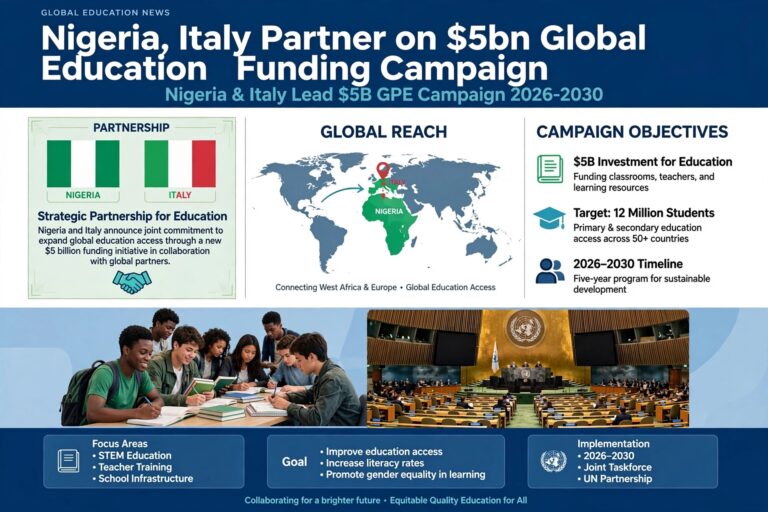
Nigeria, Italy Partner on $5bn Global Education Funding Campaign
Nigeria and Italy have joined forces in a global campaign seeking to mobilise $5 billion for education programmes across more than 100 low-income and lower-middle-income countries. The initiative was discussed during a high-level education financing event held in New York on the sidelines of the 81st United Nations General Assembly. Nigeria is co-hosting the 2026–2030…