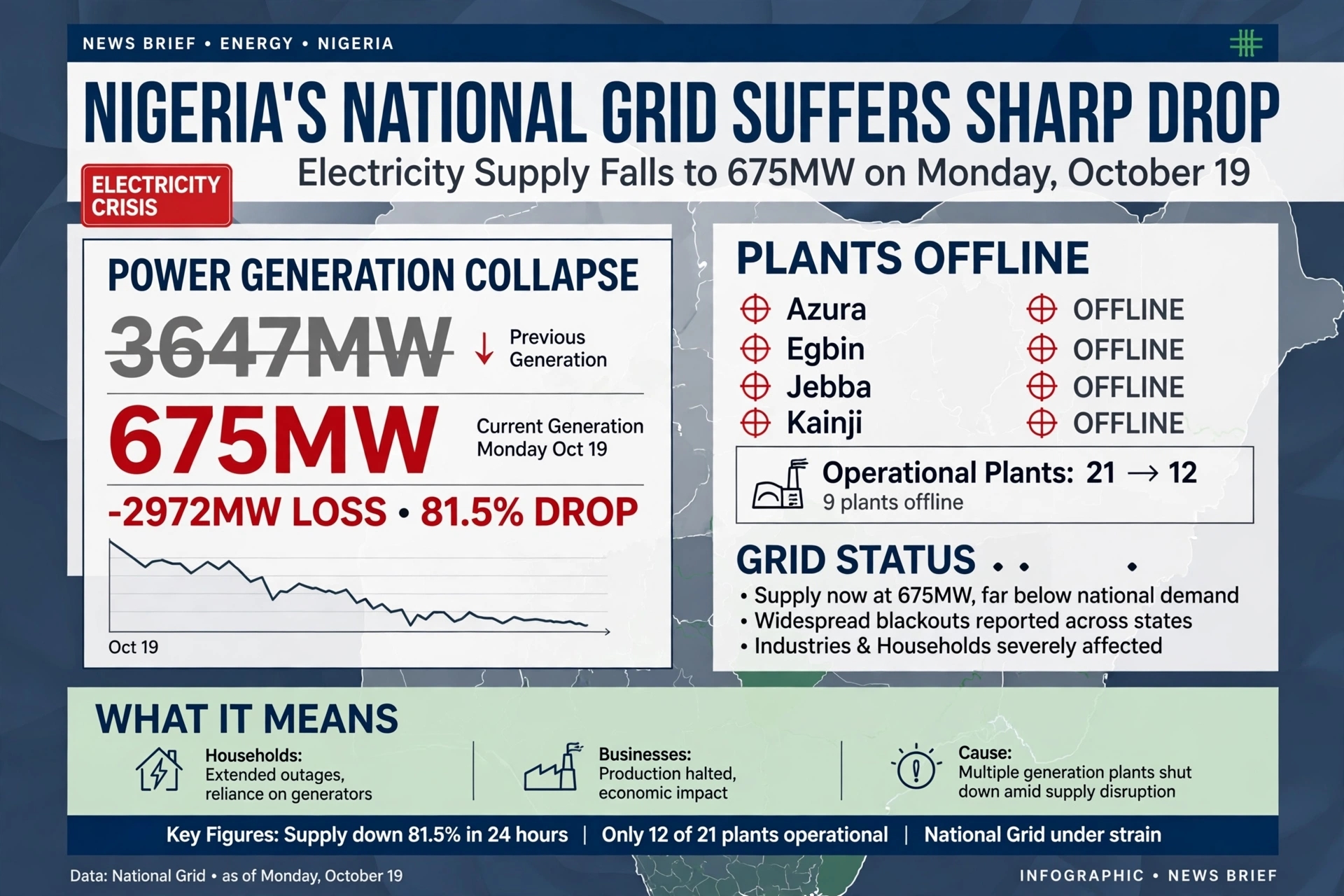
Nigeria experienced a sharp decline in electricity supplied to the national grid on Monday, October 19, after several power plants went offline, raising fresh concerns about the reliability of the country’s electricity supply. Nigeria’s electricity supply suffered a major setback on Monday after power generation connected to the national grid fell sharply to 675 megawatts at approximately 1 p.m., according to reported data from the Nigerian Independent System Operator, the incident affected electricity distribution and prompted public notices from distribution companies, including Abuja Electricity Distribution Company and Ikeja Electric. The development renewed concerns about the stability of Nigeria’s electricity system and its implications for households, commercial establishments and industries that depend on a consistent power supply. Electricity generation stood at approximately 3,647 megawatts at noon on Monday, by 1 p.m., however, the figure had dropped to 675 megawatts, representing a reduction of approximately 81.5 per cent within an hour, the number of power plants supplying electricity to the grid reportedly declined from 21 to 12 during the same period, among the plants reported to have gone offline were Azura, Egbin, Jebba and Kainji. The sudden reduction created significant supply constraints and demonstrated the vulnerability of a system that relies on coordinated generation, transmission and distribution. The reported figures describe the situation during a particular period on Monday, they should not be interpreted as evidence that the country’s electricity supply remained at 675 megawatts throughout the day. Following the disruption, electricity distribution companies notified customers about reduced supply, Abuja Electricity Distribution Company attributed the interruption to a grid-related challenge and said efforts were being made to restore supply, Ikeja Electric also informed customers that the quantity of electricity available for distribution had declined, distribution companies do not independently generate all the electricity delivered to their customers, their supply depends significantly on the power allocated to them through the national electricity system. Consequently, a major reduction in grid generation can affect customers across different distribution networks. Unreliable electricity remains a major challenge for Nigerian households and businesses, when grid supply declines, some consumers turn to petrol or diesel generators, solar systems and other alternative sources of electricity. For small businesses, including barbershops, restaurants, cold-storage operators and internet service providers, interruptions can increase operating expenses and affect productivity, manufacturers may also face higher costs when they have to rely on alternative power sources to maintain production, households can experience additional expenses from generator fuel and maintenance, particularly when electricity interruptions occur frequently, the wider economic consequences depend on the duration of the disruption, the speed of restoration and the ability of affected consumers to obtain alternative electricity. The operator subsequently reported that the grid had stabilised and that restoration measures had been completed, the reported recovery is important because the initial fall in generation does not, by itself, establish the condition of the grid at every subsequent hour. Consumers should continue to rely on updates from their electricity distribution companies and the relevant system operators for information about supply in their areas. Nigeria’s electricity sector has faced longstanding difficulties involving generation capacity, transmission infrastructure, distribution constraints and the availability of gas for some thermal power plants. Although the country has significant energy resources, converting those resources into dependable electricity for homes and industries remains a major challenge. The latest disruption has once again highlighted the need for reliable infrastructure, effective maintenance, adequate investment and transparent communication with consumers. For Nigerians already dealing with rising operating costs, a stable electricity supply remains essential to household welfare and economic activity, the speed and sustainability of the grid’s recovery will therefore be important indicators of how effectively the immediate disruption has been addressed.
Similar Posts
Three Nigerians Killed in South Africa as Nigeria Demands Investigation
The Nigerian Government has called for thorough investigations into the deaths of three Nigerian nationals who were killed in separate incidents in South Africa between September 18 and 21, 2026. The Nigerian Consulate-General in Johannesburg raised concerns over the deaths and called on South African authorities to investigate the circumstances surrounding each incident. The three…
FIVE SUSPECTS ARRAIGNED OVER ALLEGED KIDNAPPING OF 20 PROSPECTIVE CORPS MEMBERS IN IMO
Five men have been arraigned before the Imo State High Court over separate alleged kidnapping incidents, including the abduction of 20 prospective members of the National Youth Service Corps. The cases have renewed concerns about the safety of young Nigerians travelling to orientation camps and other destinations for national service. According to reports published on…
Uba Sani Calls for Unified Northern Strategy on Education and Development Kaduna State Governor
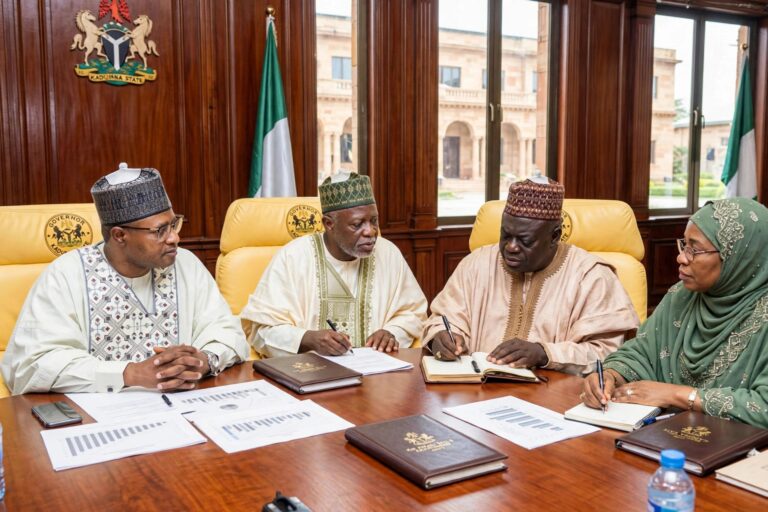
Uba Sani has called on leaders in Northern Nigeria to stop focusing primarily on the quest for political power at the centre and instead develop a common blueprint to address the region’s persistent development challenges. The governor made the call on Wednesday when the leadership of the Sir Ahmadu Bello Memorial Foundation, led by former…
INEC SOUNDS ALARM OVER FAKE VOTER REGISTRATION WEBSITE
The Independent National Electoral Commission has warned Nigerians against a fraudulent website claiming to offer a fresh online voter registration exercise. INEC issued the warning on Saturday as preparations continue ahead of the 2027 general elections. The electoral body said a fake website had been circulating claims that a new nationwide online voter registration exercise…
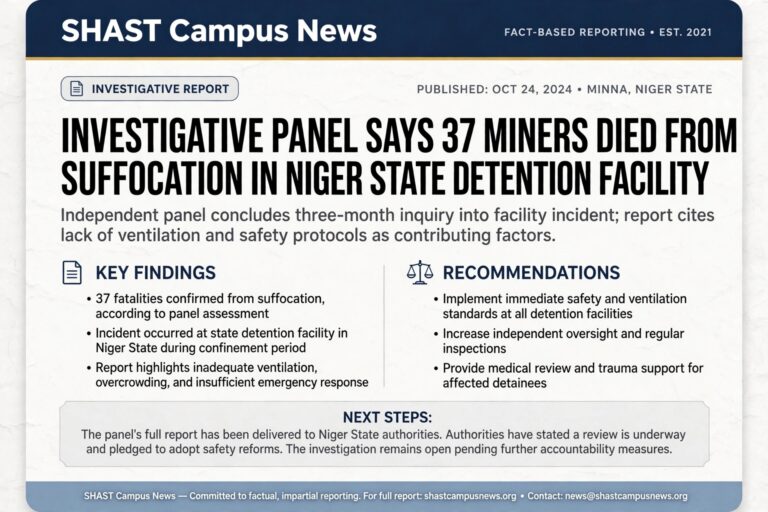
INVESTIGATIVE PANEL SAYS 37 MINERS DIED FROM SUFFOCATION IN NIGER STATE DETENTION FACILITY
An investigative panel has attributed the deaths of 37 suspected illegal miners in detention in Niger State to suffocation linked to severe overcrowding, poor ventilation and failures in the treatment and supervision of detainees, the findings have renewed calls for accountability, improved detention conditions and stronger safeguards for people held by law enforcement agencies. The…
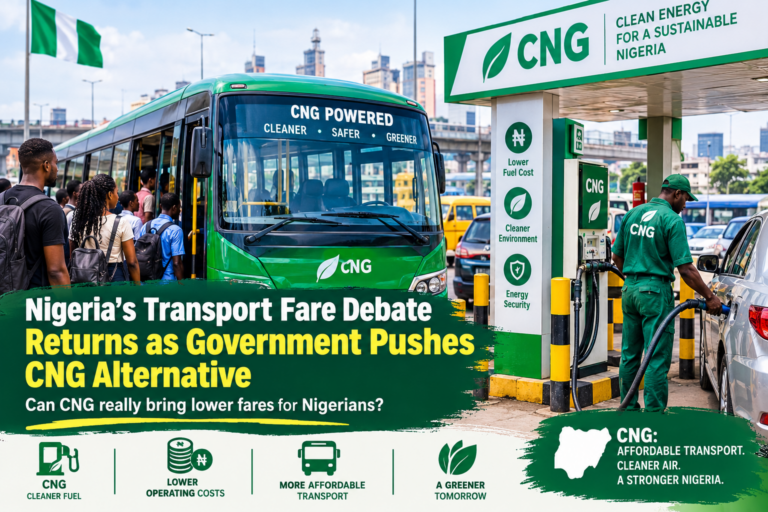
Nigeria’s Transport Fare Debate Returns as Government Pushes CNG Alternative
Nigeria’s efforts to reduce transportation costs through compressed natural gas-powered vehicles are facing renewed public scrutiny, as commuters continue to look for meaningful relief from rising travel expenses. The Federal Government has promoted compressed natural gas, commonly known as CNG, as an alternative to petrol for vehicles, particularly commercial transport fleets. The initiative is intended…