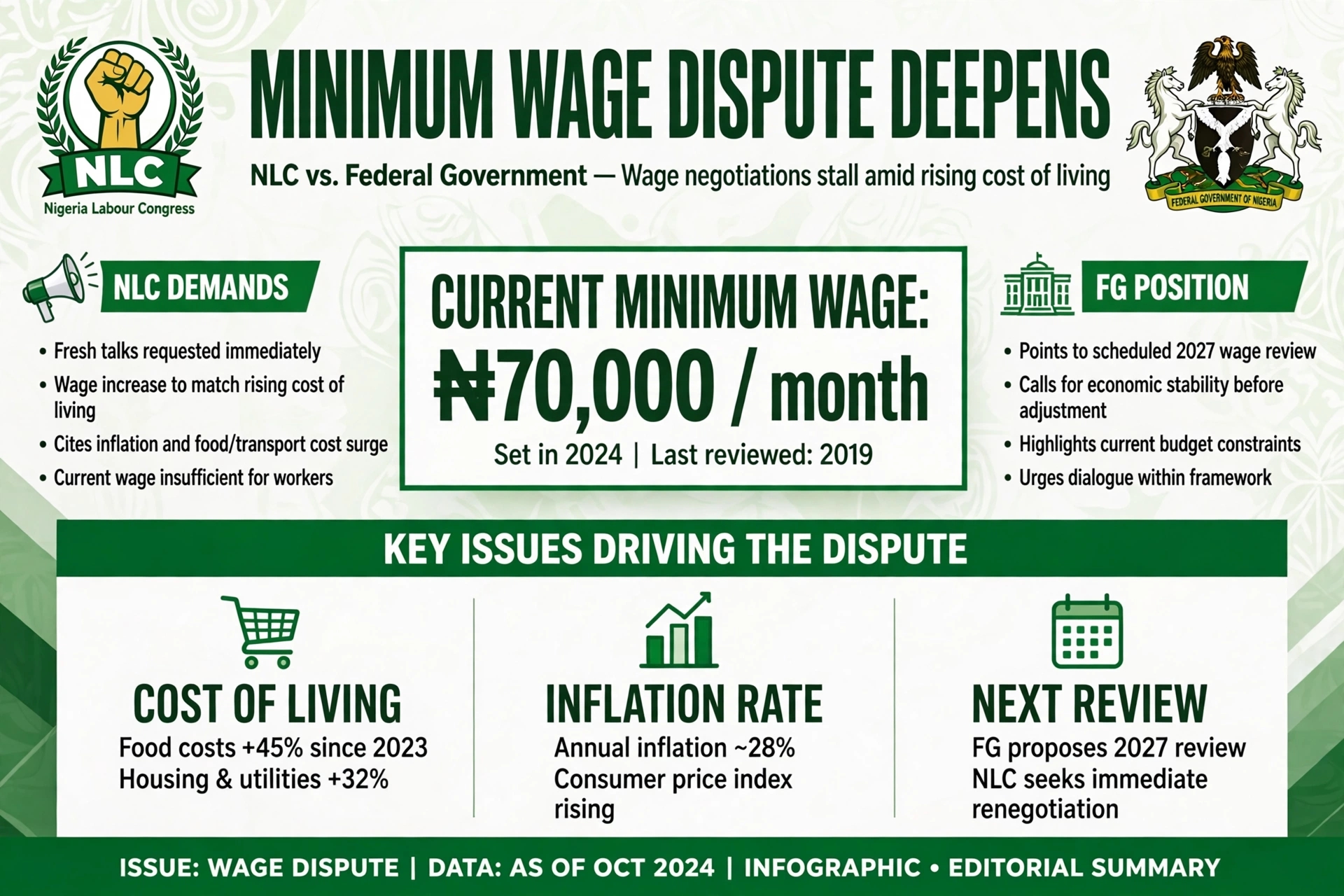
The Federal Government and the Nigeria Labour Congress are at odds over the timing of negotiations for a new national minimum wage, as organised labour warns that rising living costs continue to erode workers’ purchasing power. The disagreement between the Federal Government and the Nigeria Labour Congress over a fresh minimum wage review has intensified, bringing workers’ earnings and the cost of living back into the national conversation, the NLC wants negotiations for a new minimum wage to begin immediately, arguing that the existing wage is no longer sufficient to meet the financial demands facing many Nigerian workers. The Federal Government, however, has maintained that the current minimum wage is due for review in June 2027 under its interpretation of the applicable law, the disagreement has raised questions about when formal negotiations should commence and whether the economic circumstances facing workers justify beginning the process before the next statutory review date. The NLC has argued that the rising cost of essential goods and services has reduced the purchasing power of workers earning the current national minimum wage of ₦70,000, in a statement reported by Nigerian media, the labour organisation called for the immediate commencement of discussions involving the government, employers and organised labour. The union has also raised concerns about petrol prices, transportation costs, food expenses, housing and other basic needs. According to labour representatives, the financial difficulties facing workers mean that preparations for a new wage arrangement should not be delayed until the final months before the review becomes due. The NLC’s position is that negotiations require time and should begin early enough to allow the parties to examine economic conditions, consider proposals and reach an agreement without unnecessary delays, the union has also called for broader measures to ease the pressure on workers, including action on fuel prices and outstanding labour-related agreements. The Federal Government has argued that the current minimum wage is due for review on June 1, 2027. According to a report, the government cited the three-year review cycle provided for under the National Minimum Wage Act, as amended in 2024, the government has maintained that commencing a formal review substantially earlier would be premature under its interpretation of the law. This position has created a disagreement over the distinction between starting negotiations and completing a statutory wage review, while labour wants discussions to begin early, the government has emphasised the date on which the current wage becomes due for review. The disagreement does not mean that a new minimum wage has been approved, the current national minimum wage remains ₦70,000 unless a subsequent lawful change is announced, the dispute is taking place against the background of continuing concerns about the cost of living. For many workers, monthly earnings must cover food, transportation, rent, electricity, healthcare, school expenses and family responsibilities, when these costs rise faster than income, workers may find it increasingly difficult to maintain their previous standard of living. Public-sector employees and workers in the private sector may also experience different financial pressures depending on their employers, location and existing salary arrangements. Although some states and employers may pay above the national minimum wage, others face challenges implementing wage increases or meeting broader employment obligations, the debate therefore extends beyond the headline minimum wage figure to include compliance, purchasing power and the wider economic conditions affecting workers. The possibility of industrial action has become part of the dispute, reports indicated that the NLC had issued the Federal Government a two-week ultimatum over its demands, including the commencement of wage negotiations and measures to address the effects of high petrol prices. The union warned that it could consider further action if its concerns were not adequately addressed. However, the existence of an ultimatum should not automatically be interpreted as confirmation that a nationwide strike has commenced or that one will certainly take place, workers and employers should rely on formal announcements from the NLC and other relevant labour organisations for confirmation of any subsequent decisions. The outcome will depend partly on whether the government and organised labour can find common ground through discussions, minimum wage negotiations can have implications for government expenditure, private-sector operating costs and workers’ purchasing power. A higher wage could provide additional income for eligible workers, but its overall effect would depend on the size of the increase, the implementation arrangements and broader economic conditions, for employers, wage adjustments may require changes to budgets and payroll arrangements, for government, negotiations involve balancing workers’ demands with revenue, expenditure commitments and the ability of different public institutions to implement any agreed changes. However, the economic debate cannot be separated from the need to ensure that workers receive compensation that allows them to meet basic needs. The challenge is to find an arrangement that is financially sustainable while addressing the pressure experienced by workers. The immediate issue is whether the Federal Government and organised labour can agree on a timetable for negotiations, the two sides will also need to address the wider concerns raised by labour, including the cost of transportation, energy and other essential goods and services. Until an agreement is reached and the appropriate procedures are completed, Nigerians should not assume that a new minimum wage has been approved. For millions of workers, the dispute represents an important test of how government and labour institutions respond to economic pressure. The coming discussions will determine whether the disagreement produces a negotiated timetable or leads to further confrontation between the government and organised labour.
Similar Posts
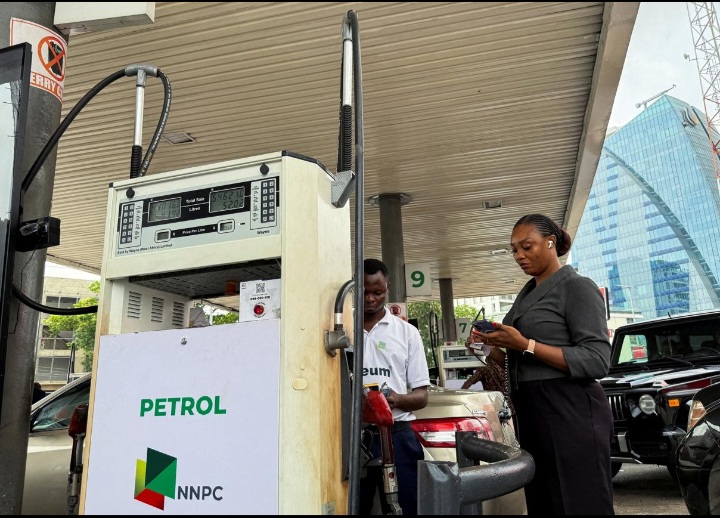
Petrol Price: FG Proposes ₦1,350 Per Litre Cost Ceiling as Nigerians Face Rising Fuel Bills
The proposed measure is intended to reduce sudden price fluctuations, but its implementation and impact on pump prices remain important questions. The Federal Government has proposed a mechanism aimed at limiting petrol cost volatility, with a target ceiling of approximately ₦1,350 per litre for petrol’s ex-gantry or landing cost. The proposal was announced by the…
Nigeria’s Smartphone Ownership Rises to 75% as Digital Usage Expands
Smartphone ownership in Nigeria has risen to 75 per cent, reflecting the growing role of mobile devices in communication, business and access to digital services. The figure was contained in the Nigeria Smartphone Study, a nationwide analysis of smartphone ownership and digital application usage conducted by KPMG in partnership with Orange Group Nigeria. According to…
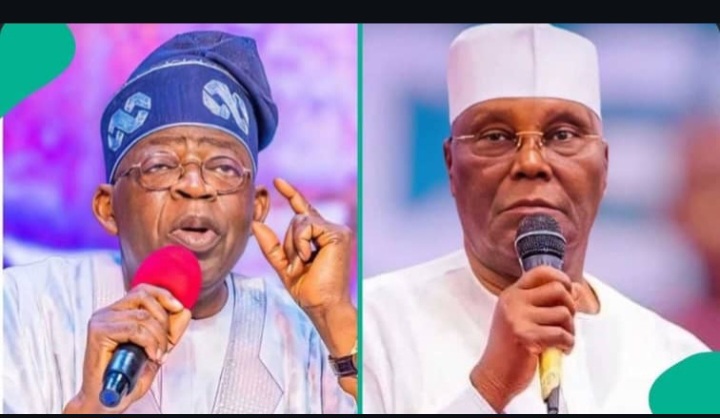
Atiku Challenges Tinubu Over Economic Hardship as 2027 Politics Heats Up
Former Vice-President Atiku Abubakar has criticised President Bola Tinubu’s administration over economic hardship and insecurity, adding to the growing political debate ahead of Nigeria’s 2027 general elections. The criticism was issued in two linked statements on October 14 and October 15, 2026, as political parties intensify preparations for the poll. Atiku, now presidential candidate of…
Shettima to Lead Nigeria’s Delegation to 81st UN General Assembly
Vice President Kashim Shettima will lead Nigeria’s delegation to the 81st Session of the United Nations General Assembly in New York, following a directive from President Bola Ahmed Tinubu. The development was announced on Sunday, September 20, 2026, by Stanley Nkwocha, Senior Special Assistant to the President on Media and Communications in the Office of…
WAEC WARNS SCHOOLS AGAINST EXCESSIVE CHARGES FOR 2027 MAY/JUNE EXAMINATION
The examination body has reportedly raised concerns about arbitrary charges imposed on candidates, as schools and students prepare for the 2027 West African Senior School Certificate Examination. The West African Examinations Council (WAEC) has warned against arbitrary charges associated with the 2027 May/June West African Senior School Certificate Examination. The warning comes amid concerns that…
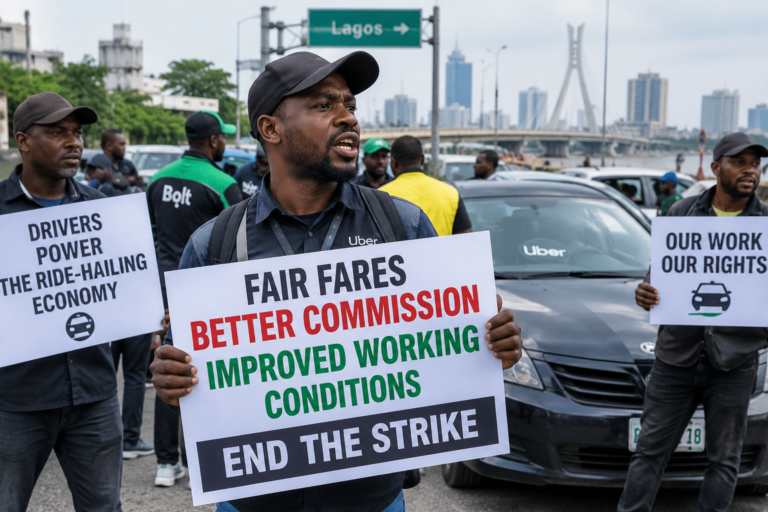
Lagos E-Hailing Drivers Reportedly Begin Indefinite Strike Over Fares and Platform Charges
E-hailing services in Lagos could face disruption following reports that drivers have begun an indefinite strike over concerns about fares, platform commissions and working conditions. The reported action highlights continuing tensions between drivers and the digital platforms through which they connect with passengers. It also raises questions about how the cost of operating commercial vehicles…