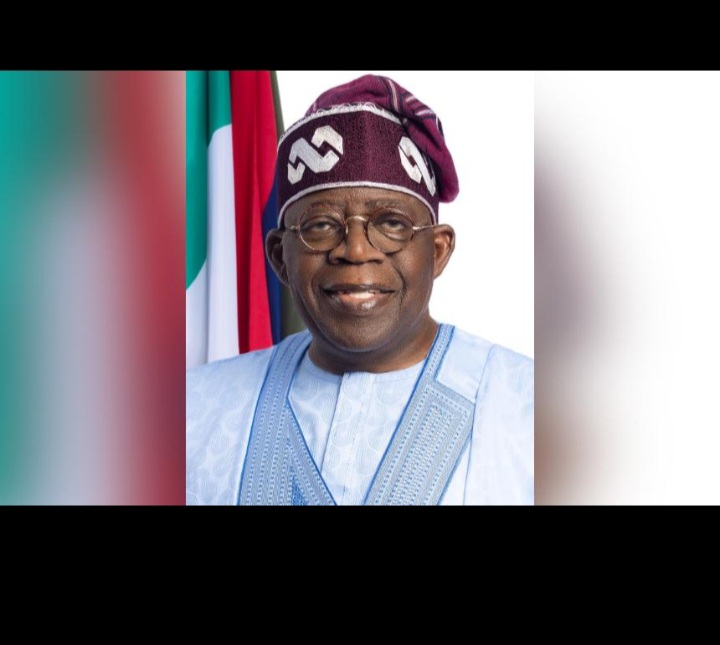
President Bola Ahmed Tinubu has nominated six individuals for appointment as executive directors of the Nigerian Midstream and Downstream Petroleum Regulatory Authority (NMDPRA), forwarding their names to the Senate for confirmation. The nominations were announced on Friday, October 30, 2026, by the President’s Special Adviser on Information and Strategy, Bayo Onanuga. According to the announcement, the nominations comprise three returning executive directors and three new nominees. The three officials nominated for reappointment are Abiodun Adeniji, Ogbugo Kalu Ukoha and Mustapha Lamorde. Adeniji was nominated as Executive Director, Finance and Accounts, while Ukoha was nominated as Executive Director, Distribution Systems, Storage and Retailing Infrastructure. Lamorde was nominated as Executive Director, Health, Safety, Environment and Community. The three new nominees are Mobolaji Tajudeen Musa, Ogechukwu Modie and Said Abutalib. Musa was nominated as Executive Director, Hydrocarbon Processing Plants, Installations and Transportation Infrastructure. Modie was nominated as Executive Director, Economic Regulations and Strategic Planning, while Abutalib was nominated as Executive Director, Corporate Services and Administration. President Tinubu urged the Senate to consider the nominations promptly, explaining that the appointments were intended to ensure institutional continuity and strengthen the authority’s regulatory responsibilities. In a related development, the President also approved the appointment of Jumoke Gafar as Secretary to the Board and Legal Adviser of the NMDPRA. However, the appointment remains subject to the completion of statutory procedures under the Petroleum Industry Act. The nominations come amid continuing efforts to strengthen leadership and regulatory oversight within Nigeria’s petroleum industry. The NMDPRA plays an important role in regulating Nigeria’s midstream and downstream petroleum sectors. Its responsibilities include overseeing petroleum processing, transportation, distribution, storage and other activities within the regulated sectors. Consequently, the composition and effectiveness of its leadership are important to the country’s petroleum industry. The appointments will require legislative consideration before the nominated executive directors can assume their respective positions, the Senate’s decision will therefore determine the next stage of the proposed leadership changes.
Similar Posts
Ohafia Community Drama: Woman Reportedly Banished Over Alleged Affair With Two Brothers
A social-media report has sparked widespread reactions after a woman was reportedly banished from her community in Ohafia, Abia State, following allegations of sexual relations with two brothers. A woman identified only in circulating social-media posts has reportedly been expelled from Amuma, Ohafia, Abia State, after she was allegedly caught having sexual relations with two…
Nigeria Moves to Strengthen Digital Connectivity With New NigComSat-2A Satellite
Nigeria is set to strengthen its digital communication infrastructure with the development of a new telecommunications satellite, NigComSat-2A. The Nigerian Communications Satellite Limited (NIGCOMSAT) has entered into an agreement with Thales Alenia Space for the development of the new satellite, which is expected to improve connectivity across Nigeria and other parts of Africa. The planned…
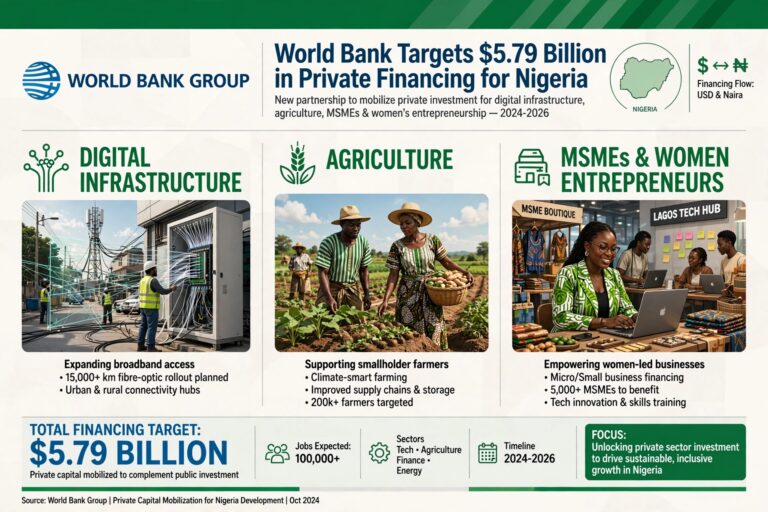
World Bank Targets $5.79 Billion in Private Financing for Nigeria
The World Bank Group says it is helping mobilise up to $5.79 billion in private financing for Nigeria during its 2026 fiscal year, as efforts continue to attract investment into infrastructure, agriculture, digital connectivity and small businesses. The initiative forms part of a broader approach aimed at using public-sector reforms and financial support to encourage…
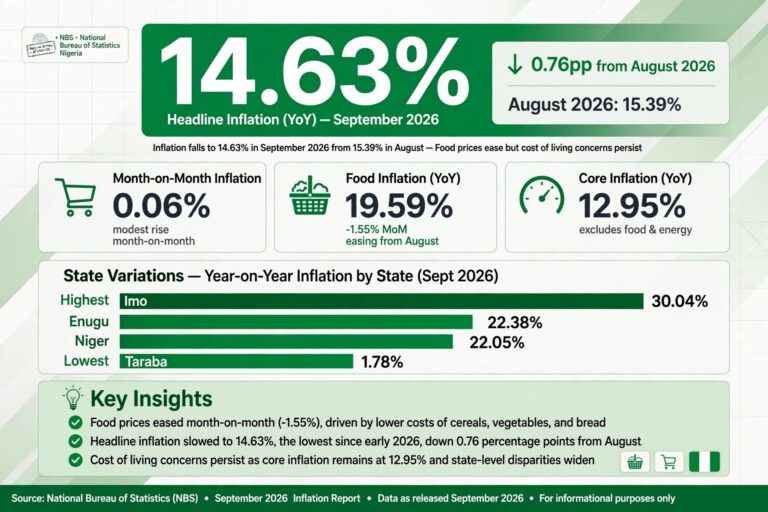
NIGERIA’S INFLATION FALLS TO 14.63% AS FOOD PRICES EASE, BUT COST-OF-LIVING CONCERNS PERSIST
Nigeria’s headline inflation rate declined to 14.63 per cent in September 2026 from 15.39 per cent in August, according to figures released by the National Bureau of Statistics. However, the improvement does not mean that the high cost of living has disappeared. Nigeria recorded another decline in its headline inflation rate in September 2026, offering…
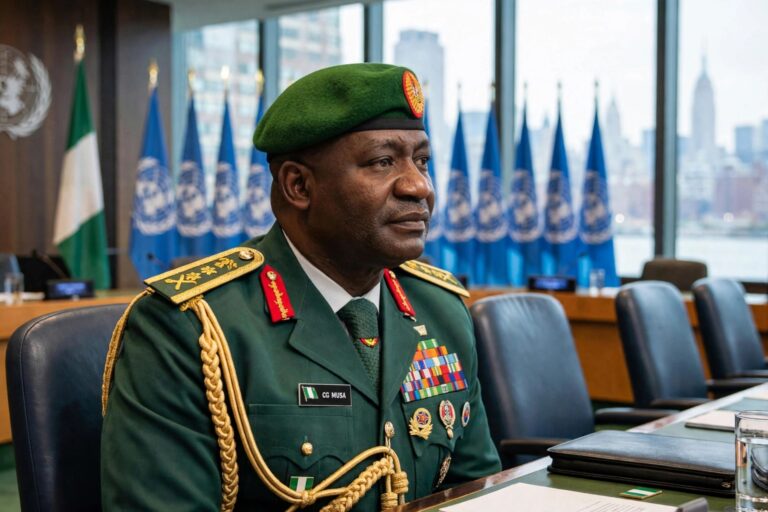
NIGERIA SEEKS STRONGER GLOBAL SUPPORT AGAINST TERRORISM AND BANDITRY
Nigeria is seeking stronger international cooperation to tackle terrorism, banditry, kidnapping and other security threats affecting the country. Minister of Defence Christopher Musa has called for greater cooperation between Nigeria and international partners as the government continues its efforts to improve national security. The minister made the call during engagements connected to the 81st United…
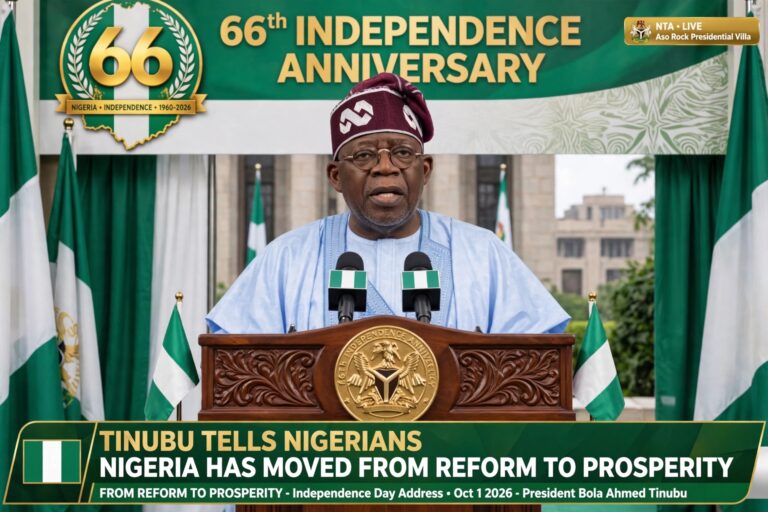
Tinubu Tells Nigerians: Nigeria Has Moved From Reform to Prosperity
President Bola Ahmed Tinubu has assured Nigerians that the country is entering a new phase of economic development, declaring that Nigeria has moved beyond the difficult period of reforms and is now focused on achieving broader prosperity. Tinubu made the declaration on Thursday, October 1, 2026, during his nationwide Independence Day address to mark Nigeria’s…