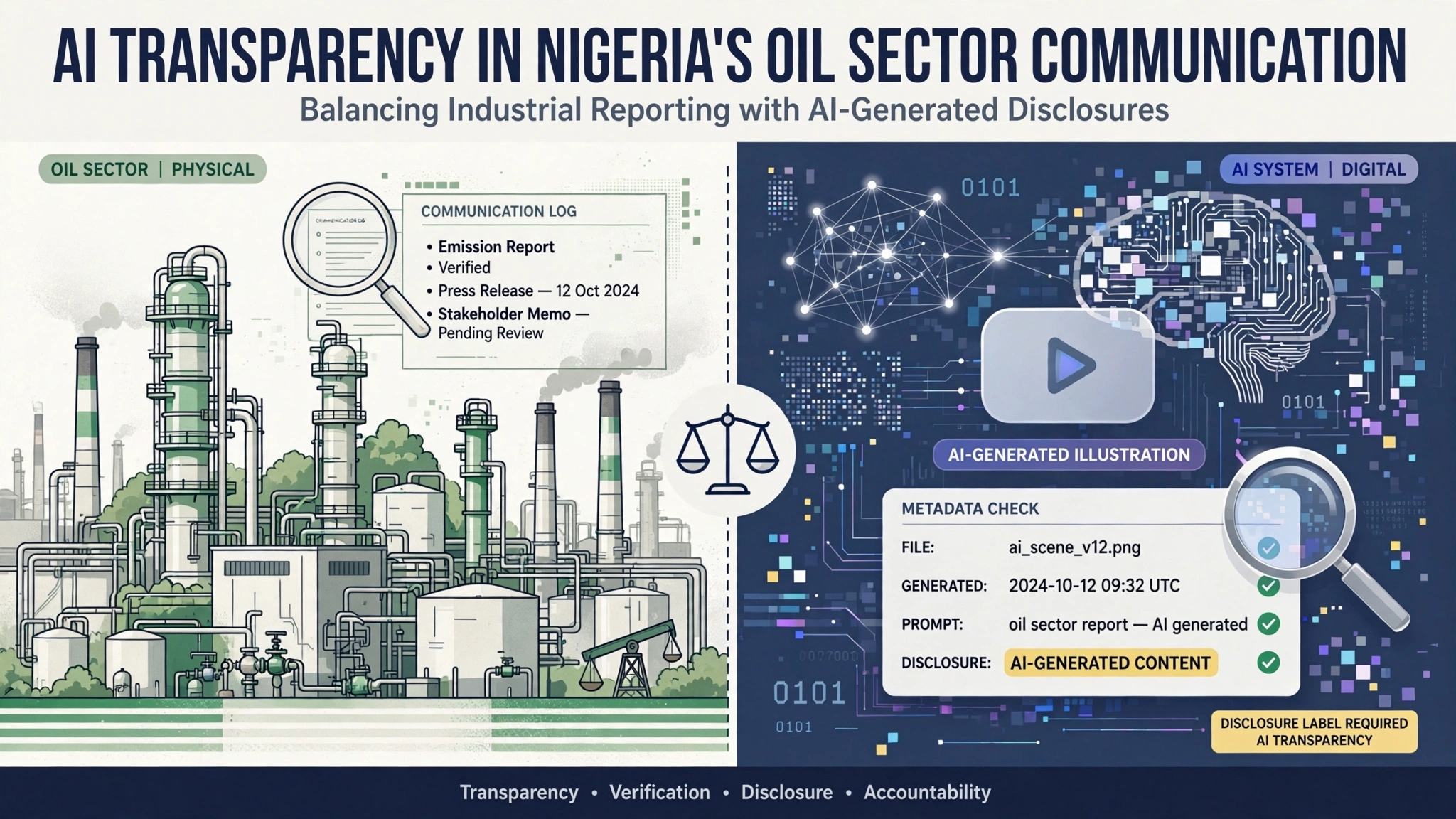
A report about criticism surrounding an AI-generated video linked to communication on Nigeria’s oil sector has renewed discussion about transparency in the use of artificial intelligence in public communication. The issue highlights the challenges that can arise when synthetic images, voices or videos are used to explain government policies or communicate information about important national industries. Artificial intelligence tools can help organisations produce educational materials, visual demonstrations and explanatory content at a lower cost. However, the same tools can also create confusion when viewers cannot easily distinguish generated material from authentic footage. In government communication, the distinction is particularly important because citizens rely on official statements and public information to understand policy decisions and assess the performance of public institutions. Where an AI-generated video is used, clear disclosure can help audiences understand whether they are watching an actual event, a simulation or an illustration created to explain a subject. The reported controversy also raises questions about the procedures organisations should follow when publishing digitally generated content. These may include identifying the material as AI-generated, checking factual claims, ensuring that visuals do not misrepresent real events and obtaining the necessary permissions when using identifiable individuals’ likenesses. The use of artificial intelligence does not automatically make a communication inaccurate. The central concern is whether the content is presented honestly and whether its claims can be independently verified. For journalists and publishers, verifying the origin of a video is increasingly important. Metadata, the original source, official explanations and independent reporting can help establish its authenticity and context. The matter also demonstrates why audiences should be cautious about sharing dramatic videos before confirming where they originated. As AI technology becomes more accessible, governments, media organisations and technology companies will face growing pressure to adopt clear standards for synthetic content.
Similar Posts
BREAKING: FG and CBN Sign New Pact to Coordinate Nigeria’s Economic Policies
The Federal Government and the Central Bank are tightening coordination on the economy in a move focused on inflation, data sharing, forecasting and broader economic policy. Nigeria’s fiscal and monetary authorities have signed a new agreement aimed at strengthening coordination between the Federal Ministry of Finance and the Central Bank of Nigeria (CBN). The agreement…
Military Court Postpones Ruling in Alleged Coup Plot Trial to October 5
A General Court Martial in Abuja has postponed its ruling in the ongoing case involving military officers accused of an alleged coup plot. The ruling, which had been scheduled for Wednesday, September 30, has now been fixed for Monday, October 5, 2026. The court is sitting at the Scorpion Officers’ Mess in Asokoro, Abuja. A…
Sickle Cell Foundation Calls for Home-Grown Solutions to Nigeria’s Sickle Cell Crisis
The Sickle Cell Foundation Nigeria has called for stronger Nigerian leadership in developing and implementing home-grown solutions to the country’s sickle cell burden. The foundation made the call as concerns continue over the challenges faced by people living with sickle cell disorder, including access to appropriate healthcare, diagnosis, treatment, counselling and long-term support. The organisation’s…
Dangote Refinery Increases Diesel Gantry Price by ₦100 to ₦1,800 per Litre
Dangote Petroleum Refinery has increased its gantry price for automotive gas oil, commonly known as diesel, by ₦100 per litre. According to a notice from the refinery’s Group Commercial Operations, reviewed by http://Petroleumprice.ng, the price was raised from ₦1,700 to ₦1,800 per litre, effective Saturday, October 10, 2026. The adjustment represents a 5.88% increase. Customers…
2027 Elections: INEC Begins PVC Collection as Voter Register Tops 103 Million
The Independent National Electoral Commission (INEC) has commenced nationwide Permanent Voter Card (PVC) collection activities as preparations intensify for Nigeria’s 2027 general elections. INEC Chairman, Prof. Joash Amupitan, disclosed this on Monday in Abuja at a strategic workshop for editors organised by the Nigerian Guild of Editors (NGE) in collaboration with the commission. Following the…
FIVE SUSPECTS ARRESTED OVER ABDUCTION OF 20 PROSPECTIVE NYSC MEMBERS IN IMO
Security operatives have reportedly arrested five suspected members of a criminal gang allegedly involved in the abduction of 20 prospective National Youth Service Corps (NYSC) members in Imo State. The arrests were reported on October 16 following intelligence-led operations involving the Department of State Services, the military, the police and other security personnel. According to…