Sometimes she cried as she wrote. Sometimes she tore the pages out. Other times, she folded them and hid them underneath her mattress. That notebook became the one place where Amara didn’t have to be the perfect daughter. She could be angry.
Confused, afraid, hurt. She could finally tell the truth without worrying about being judged. Without someone telling her she was disrespectful, without someone asking what she had done to cause it, without anyone judging her. For the first time, Amara could say everything she had been too afraid to say out loud. She also began learning how to breathe through the panic. Whenever a man walked too close to her in the shop and her heart suddenly started beating hard, she would excuse herself.
She would go to the back. Hold her wrapper tightly, take slow breaths, and whisper to herself:
“You are safe now.”
“That was then.”
“This is now.”
Little by little, she began to understand something, hating every man was not going to make what happened disappear, it was only going to give what happened more control over her life. So she started small. She began greeting the old Mallam who sold groundnuts near the shop without snapping at him. It sounds like such a small thing, but for Amara, it was a big step. She was learning that not every man was the person who had hurt her, she was learning that she could protect herself without hating everyone, she was learning that healing didn’t mean forgetting.
It meant refusing to let what happened define the rest of her life. She also stopped hurting herself, whenever the urge came because the pain inside her became too much and she couldn’t find the words to release it, she looked for something else to do. She would fetch water, wash all the plates, sweep the entire compound, sometimes she would simply sit quietly until the feeling passed. She turned her pain into work, not because work could magically heal trauma, but because she was desperately searching for safer ways to survive the moments when everything inside her felt unbearable. And slowly, Amara began to change again. She was still quiet. Still neat. Still respectful. Still the well-behaved girl people saw from the outside. But inside, she was becoming someone different. She was no longer living only to avoid punishment, she was beginning to understand herself, she learned that saying NO did not automatically make her rude, she learned that she could have boundaries without shouting, she learned that she could say YES without fear, she learned that she could protect herself without becoming cruel, she didn’t become loud, she didn’t remain rude forever, she simply became herself. But there was one thing she never did.
She never told her parents what happened in their shop, not because what happened to her was right, not because she shouldn’t have spoken. But because she didn’t trust the house to be safe enough for her truth. And that was the wound that remained even after some of the pain began to fade. Strict parenting had taught her obedience, but it had also taken away something her parents didn’t realize they needed to protect: her trust.
A child can obey you and still be afraid of you.
A child can respect you and still hide things from you.
A child can follow every rule in your house and still feel completely alone inside it.
Amara healed alone. But she shouldn’t have had to.
And that is why parents need to pay attention when a child’s behaviour suddenly changes.
If your child goes from very obedient to very rude…
From very social to always wanting to be alone…
From calm to constantly defensive…
Don’t just punish the rudeness.
Don’t immediately blame bad friends.
Don’t simply say, “This child has changed.”
Stop and ask:
“What changed?”
And if they don’t want to talk, don’t force them.
Keep showing up.
Keep listening.
Keep correcting them when necessary, but make sure they know that correction will never mean humiliation.
Make your home safe enough that one day, when they are finally ready, they can walk up to you and say:
“Something happened to me.”
And instead of fearing what will happen next, they will know:
“My parents will listen.”
Sometimes children don’t need you to immediately fix everything. Sometimes they just need to know that when they finally find the courage to speak…
you won’t judge them, children need boundaries.
They need discipline, they need guidance, but they also need safety.
They need to know that saying NO is allowed when something makes them uncomfortable. They need to know that asking for help will not automatically get them into trouble. They need to know that home is not just the place where they are corrected.
Home should also be the place where they feel safe enough to tell the truth.
Because a child who fears punishment may learn to obey, but a child who feels safe will learn to speak. And sometimes, that voice can protect them when you are not there.
Amara eventually found her voice.
Not loudly.
Not perfectly.
But enough to know that she mattered.
Enough to know that her boundaries mattered.
Enough to know that what happened to her did not have to become who she was.
She had been the girl everyone loved because she never caused trouble.
Now she was learning something much more important:
She didn’t have to be perfect to deserve love.
And perhaps that is the real lesson from Amara’s story.
Children don’t need parents who never correct them.
And they don’t need parents who allow everything.
They need both:
A safe place to tell the truth, and a firm hand to guide them.
Because discipline without safety can teach a child to hide.
And freedom without boundaries can teach a child that actions have no consequences.
But when love and boundaries grow together, a child learns:
“I can be corrected without being humiliated.”
“I can make mistakes without being afraid.”
“I can say NO.”
“I can ask for help.”
And most importantly:
“No matter what happens, I can always come home.”
Amara healed.
But she shouldn’t have had to heal alone.
If you or someone you know is going through abuse or self-harm thoughts, please speak to a trusted adult or counsellor. You are not alone. In Nigeria, you can reach Mentally Aware Nigeria Initiative (MANI) or call a close family counsellor, pastor, or school guidance counsellor.

Similar Posts
The Bloodstained Dust of Ikot Abasi Where the Redcoats Opened Fire on Unarmed Mothers
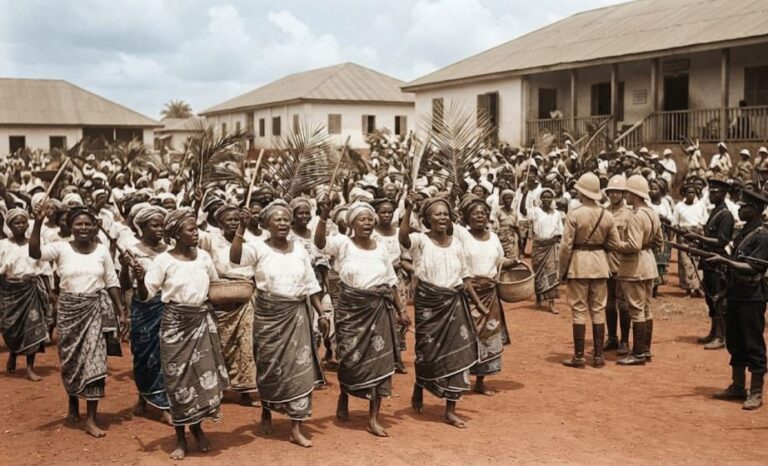
CHAPTER FOUR – Aba Women Riot The British Empire finally did what empires always do when confronted with an unyielding demand for dignity: they resorted to mass murder.The climax of the tragedy unfolded in mid-December at Ikot Abasi and Opobo. Thousands of women had occupied the colonial administrative offices, blocking the roads and demanding written…
The Agonizing Walk of Shame Back to the Exam Hall After Forgetting My Student ID Card
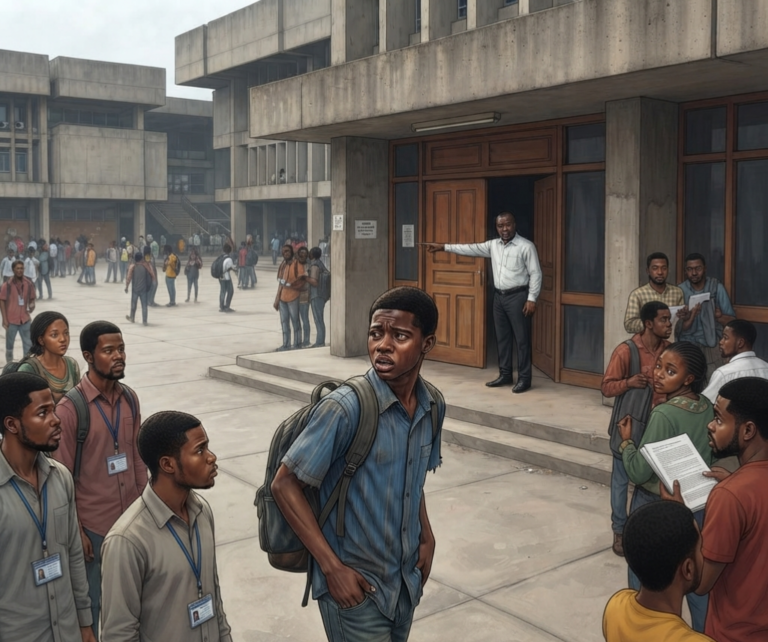
The atmosphere outside the Multipurpose Hall was tense. Hundreds of students were pacing up and down the concrete floor, flipping through their last-minute revision notes for the “Advanced Taxation” paper. The exam was scheduled to start at exactly 9:00 AM, and the invigilators were already forming a human barricade at the entrance, checking slips. Kofi…
THE ARO–BRITISH WAR: WHEN AROCHUKWU FOUGHT BACK 1901-1902
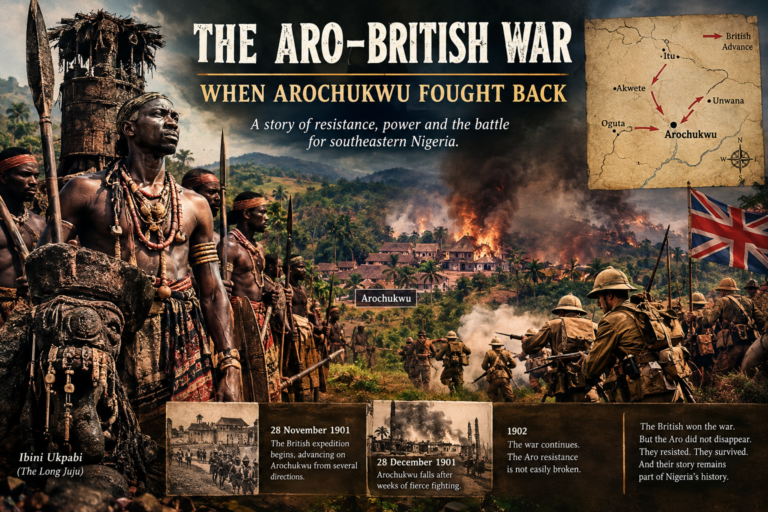
century ago, Arochukwu stood at the centre of one of the most influential political, commercial and religious networks in southeastern Nigeria. Then, in 1901, the British Empire marched into Aro territory.The conflict that followed became known as the Anglo- Aro War, or the Aro Expedition of 1901–1902.It was not simply a battle between two armies.It…
BEFORE THE DOOR WAS LOCKED
On 1st October 1960, Nigeria gained independence from Britain. The nation was made up of 3 major regions and over 250 ethnic groups. The three dominant groups were the Igbo, Hausa, and Yoruba.On paper, Nigeria was one. In reality, the regions were already locked in conflict over power, resources, and control. And the Eastern region…
How 10,000 Furious Women Gathered to “Sit on Chief Okugo” and Strip Him of His Royal Cap
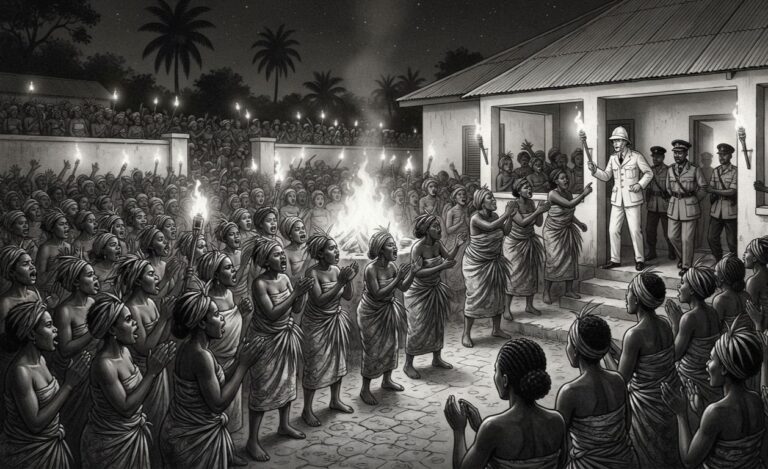
CHAPTER TWO – Aba Women Riot Within hours, the market networks transformed from places of commerce into an underground military machine. Women wrapped palm fronds—the Omu—around their heads and waists. In southeastern Nigeria, the palm leaf was a sacred emblem of crisis, an unmistakable call to war. If a man saw a woman wearing the…
The Legend of the “Ghost Lecturer” Who Disappeared for an Entire Semester
If you’ve ever gone to a 7:00 AM lecture in a hall packed like a BRT bus, stood for two hours because all the plastic chairs were taken, and wondered if the lecturer was ever going to show up—this story is for you. Except, this didn’t happen to just one class. It happened to an…