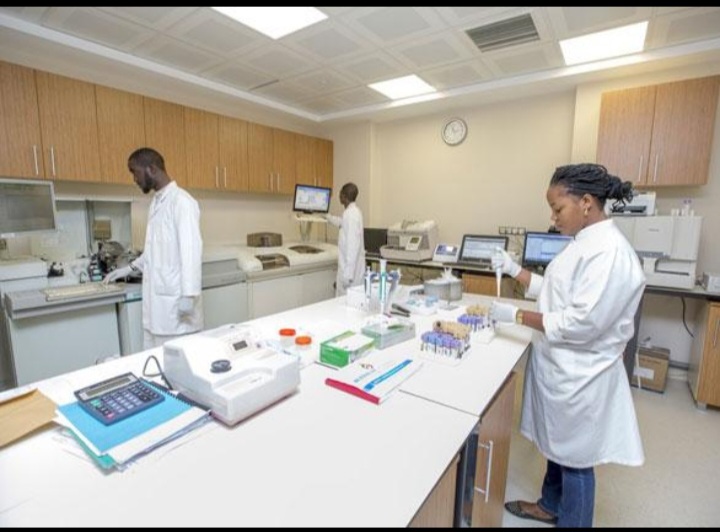
The Federal Government has renewed its push to strengthen the local production of medical diagnostic products as part of efforts to reduce Nigeria’s dependence on imports and improve the country’s health security. The Minister of State for Health and Social Welfare, Dr Iziaq Salako, said medical diagnostics should be treated as a strategic national asset because accurate and timely testing is essential for healthcare delivery, disease surveillance and public health decisions. Salako made the remarks in Abuja while declaring open the 28th Scientific Conference and Annual General Meeting of the Guild of Medical Laboratory Directors. According to the minister, achieving greater diagnostic self-sufficiency will require more than simply manufacturing test kits locally. He highlighted the importance of technology transfer, research and innovation, effective regulation, sustainable procurement and partnerships between government and the private sector. The National President of the Guild of Medical Laboratory Directors, Dr Samuel Fele, also called for an end to Nigeria’s heavy dependence on imported diagnostic reagents, consumables and equipment. He said Nigeria has an opportunity to develop a competitive diagnostic manufacturing industry that could serve both the domestic market and other African countries. However, stakeholders stressed that increasing local production must not come at the expense of quality. Strong regulatory oversight, quality-control systems and recognised standards will be necessary to ensure that locally produced diagnostic products are safe and reliable. The Federal Government had also previously announced efforts to accelerate the local production of Rapid Diagnostic Test kits for diseases including malaria and tuberculosis, with the stated goals of reducing import dependence, improving access and strengthening Nigeria’s healthcare manufacturing capacity. If successfully implemented, the wider strategy could create opportunities for Nigerian manufacturers, researchers and skilled workers while reducing some of the vulnerabilities associated with dependence on international medical supply chains. For patients, the ultimate objective is straightforward: greater access to reliable and affordable diagnostic services when they are needed. Nigeria’s push toward stronger domestic diagnostic capacity therefore represents not only an industrial policy but also an effort to build a more resilient healthcare system.
Similar Posts
INTERPOL AI Operation Identifies 126 Suspected Terrorist Fighters
The International Criminal Police Organization, INTERPOL, has identified 126 suspected foreign terrorist fighters through an artificial intelligence-powered counter-terrorism operation involving Nigeria and other international partners. The operation used artificial intelligence to analyse visual material linked to suspected jihadist networks and assist law enforcement agencies in identifying individuals believed to be connected to terrorist activities. INTERPOL…
Osun Orders 24-Hour Security Alert, Sets Up Joint Task Force Amid Fresh Threats
The Osun State Government has ordered security agencies to maintain a 24-hour red alert across the state and approved the establishment of a Joint Security Task Force following recent security alerts and concerns over threats to lives and property. The decision was reached at a State Security Council meeting attended by the newly deployed Commissioner…
Budget Minister Says Nigeria Needs Bigger Fiscal Capacity to Meet Development Goals
The Dangote Group says it generated approximately $17 billion in revenue during the first half of 2026 and is targeting about $36 billion in revenue for the full year. The figures were disclosed by the group’s Chief Strategy Officer, Aliyu Suleiman, during a media briefing at the Dangote Petroleum Refinery in Lagos. The briefing took…
Troops Rescue 41 Travellers After Kidnap Attempt in Zamfara
Nigerian troops have rescued 41 travellers after armed men allegedly attempted to abduct them in Zamfara State. The incident occurred in Tsafe Local Government Area after the commercial vehicle conveying the passengers reportedly developed a mechanical fault along a major highway. According to the military, the vehicle was travelling from Senegal towards Kano State when…
Tinubu and Nigeria’s 2027 Political Race: The Battle for Aso Rock Takes Shape
Nigeria’s 2027 presidential election is beginning to take clearer shape as political parties and major contenders intensify preparations for what is expected to be another closely watched contest for the country’s highest political office. The Independent National Electoral Commission (INEC) has now released its final list of presidential candidates and their running mates for the…
Shettima to Lead Nigeria’s Delegation to 81st UN General Assembly
Vice President Kashim Shettima will lead Nigeria’s delegation to the 81st Session of the United Nations General Assembly in New York, following a directive from President Bola Ahmed Tinubu. The development was announced on Sunday, September 20, 2026, by Stanley Nkwocha, Senior Special Assistant to the President on Media and Communications in the Office of…