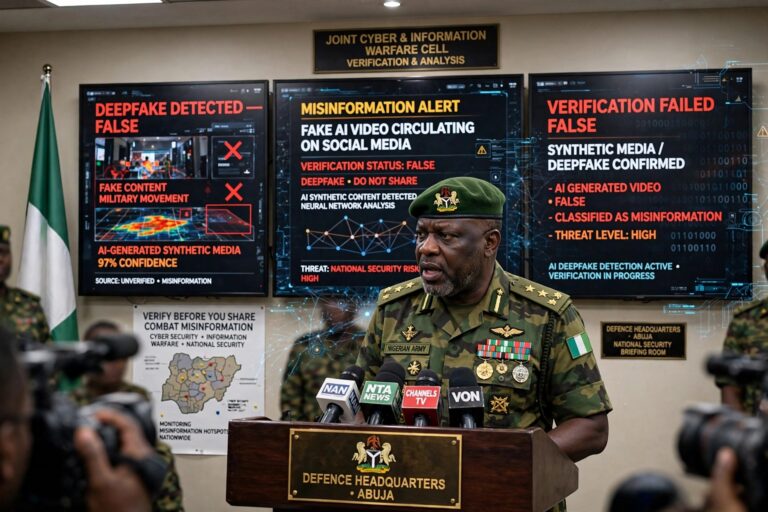
The Independent National Electoral Commission (INEC) has warned that artificial intelligence-generated misinformation could pose a serious challenge to Nigeria’s democratic process ahead of the 2027 general elections. INEC Chairman Professor Joash Amupitan gave the warning on Wednesday, October 14, while speaking at the Artificial Intelligence and Democracy Forum 2026 in Abuja. The forum focused on protecting Nigeria’s elections from digital manipulation, misinformation and other emerging technological threats. Amupitan stressed that artificial intelligence must not be allowed to determine electoral outcomes, insisting that the authority to choose political leaders belongs to Nigerian voters. His comments come at a time when AI tools can generate realistic videos, imitate human voices and produce fabricated statements that may be difficult for ordinary users to distinguish from genuine recordings. Deepfakes are digitally manipulated videos, images or audio recordings designed to make people appear to say or do things that never happened. During an election campaign, such material could be used to spread false allegations about candidates, create confusion over voting arrangements or misrepresent statements made by public officials. A fabricated recording released shortly before an election could circulate rapidly through social media and messaging platforms before fact-checkers have an opportunity to investigate it. The danger is not limited to false information about candidates. Misleading messages about election dates, polling locations or voting procedures could also discourage participation or cause voters to make costly mistakes. According to reporting by Voice of Nigeria on October 15, INEC has established an artificial intelligence unit to monitor digital threats and help detect manipulated content ahead of the election. The commission is also exploring ways to use technology to improve electoral administration, identify irregularities and strengthen the integrity of the voting process. However, technological tools alone may not eliminate misinformation. Their effectiveness will depend on the quality of the systems deployed, the ability of election officials to respond quickly and cooperation with relevant technology platforms. INEC’s warning highlights the importance of responsible social media use as political campaigns become more sophisticated. Voters are encouraged to verify sensational claims before sharing them, particularly when the material appears to show a prominent politician making an inflammatory statement. Information about election dates, registration procedures and polling arrangements should be obtained from official electoral sources rather than anonymous social media accounts. Journalists and content creators also have an important role to play by checking the authenticity of videos, photographs and audio recordings before publishing them. Niigeria’s 2027 elections will take place in an information environment where genuine political communication and fabricated content may compete for public attention. The challenge for INEC will be to ensure that technology supports electoral transparency rather than undermining confidence in the process. Ultimately, protecting the credibility of an election will require more than sophisticated software. It will depend on effective institutions, responsible political communication, public awareness and respect for the choices made by voters.

Similar Posts
Benue Boat Tragedy: Four Confirmed Dead, Nine Still Missing
A tragic boat accident on the Buruku River in Benue State has left four people dead and nine others missing, according to an updated report from the state emergency management authorities. The accident occurred when a wooden boat carrying mourners capsized while crossing the River Katsina-Ala in Buruku Local Government Area. The passengers were returning…
Kalabari Kingdom Begins Countdown to Dokubo-Asari Coronation
The Kalabari Kingdom has commenced preparations for the coronation of Da Amakiri Tubo, Alhaji Mujahid Abubakr Dokubo-Asari, as the Amanyanabo of the Source. A 16-unit Coronation Central Planning Committee has been inaugurated to coordinate preparations for the historic ceremony. The coronation and Se Diye ceremonies are scheduled for December 19, 2026. The committee comprises prominent…
LAGOS POLICE DETAIN FOUR OFFICERS AFTER VIRAL HARASSMENT VIDEO
The Lagos State Police Command has reportedly detained four police officers and disbanded their tactical team following the circulation of a viral video allegedly showing officers harassing a young man in the Odogunyan area of Ikorodu. The development was reported on October 23, 2026, after the command announced that the officers had been identified and…
Military Chief Warns Against Fake AI Videos That Could Threaten National Security
Nigeria’s military leadership has reportedly raised concerns about the growing use of artificial intelligence to produce misleading videos that could threaten national security, spread panic and undermine public confidence in security institutions. The warning highlights a growing challenge facing governments around the world as artificial intelligence tools make it easier to generate convincing images, audio…
37 Suspected Illegal Miners Die in NSCDC Custody as Niger Orders Investigation
A major investigation has been launched in Niger State after 37 people suspected of illegal mining reportedly died while in the custody of the Nigeria Security and Civil Defence Corps (NSCDC). The victims were among people arrested during enforcement operations targeting suspected illegal mining activities around the M.I. Wushishi/Lukoto area of Minna on September 15…
Nine Zamfara Lawmakers Dump APC for ADC Amid Rising Political Tension
The political landscape in Zamfara State has witnessed another major shake-up after nine members of the State House of Assembly defected from the All Progressives Congress to the African Democratic Congress. The lawmakers announced their defection amid growing political activity ahead of the 2027 general elections. The lawmakers cited concerns surrounding the security situation in…