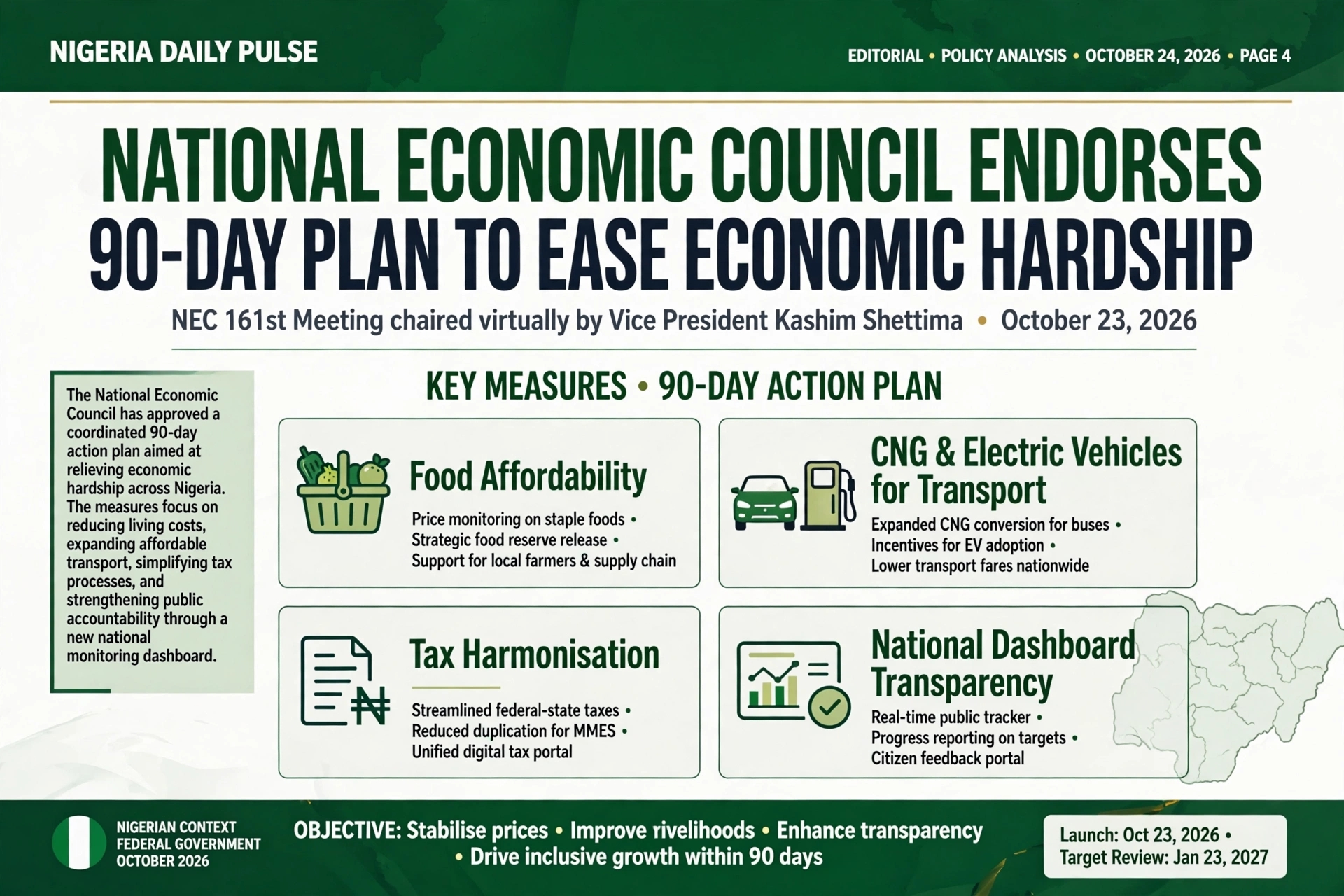
The National Economic Council has endorsed a 90-day economic action plan aimed at reducing the cost-of-living burden on Nigerians and improving access to affordable food, transportation and other essential services. The decision was reported on October 23, 2026, following the Council’s 161st meeting, chaired virtually by Vice President Kashim Shettima, the plan was presented by the Minister of Finance and Coordinating Minister of the Economy, Taiwo Oyedele. The proposed measures focus on food affordability, tax harmonisation, the completion of key projects, the removal of barriers to investment and targeted support for households, the Council also approved a national dashboard intended to monitor projects and improve transparency in the use of funds realised from the removal of the petrol subsidy. The proposed dashboard is expected to provide a framework for tracking projects and assessing whether public resources are delivering their intended benefits. Transportation remains an important component of household spending, particularly for workers, traders and students who depend on public transport, the Council reportedly resolved to establish a joint financing framework to support the deployment of compressed natural gas and electric vehicles. Relevant authorities were directed to work with transport operators to help ensure that savings translate into lower fares for commuters, whether passengers experience lower transport costs will depend on the implementation of the framework and the response of transport operators, the plan comes amid continuing public concerns about food prices, unemployment, healthcare costs and the affordability of everyday necessities. Government policies designed to reduce economic pressure will be judged by their practical effects on households. For example, increased investment or improved public finances may not automatically produce immediate relief for families unless the benefits translate into more affordable goods and services. The endorsement of a plan does not mean that all its measures have already been implemented, federal and state authorities will need to establish clear responsibilities, timelines and monitoring arrangements. Regular public reporting will also be important in determining whether the proposed actions achieve their objectives. The 90-day action plan offers a proposed framework for addressing some of Nigeria’s economic challenges, its success will depend on effective implementation and measurable improvements in living conditions. Nigerians will be watching for evidence that the initiative can reduce financial pressure on households rather than remain another government policy announcement.
Similar Posts
Ohafia Community Drama: Woman Reportedly Banished Over Alleged Affair With Two Brothers
A social-media report has sparked widespread reactions after a woman was reportedly banished from her community in Ohafia, Abia State, following allegations of sexual relations with two brothers. A woman identified only in circulating social-media posts has reportedly been expelled from Amuma, Ohafia, Abia State, after she was allegedly caught having sexual relations with two…
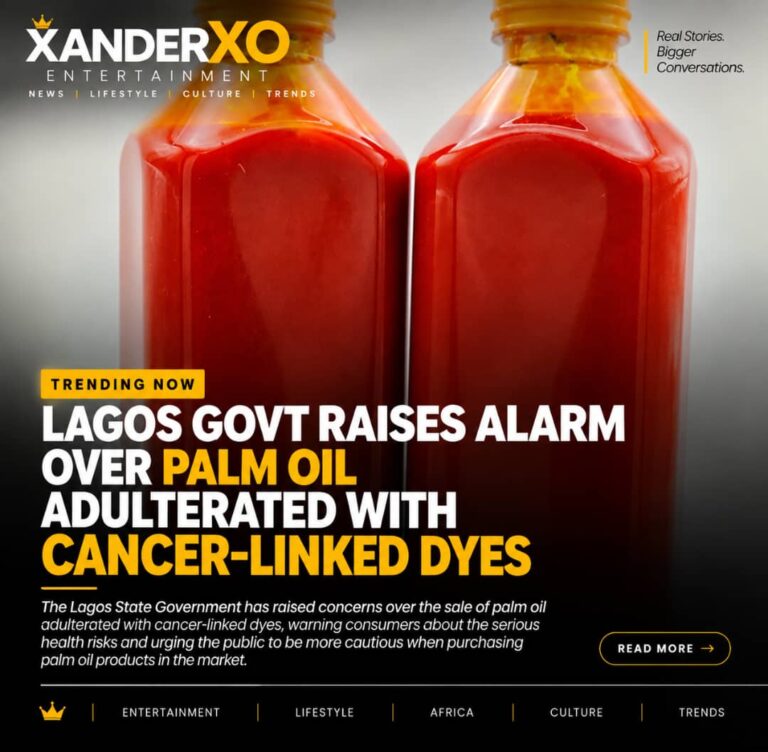
LAGOS GOVT RAISES ALARM OVER PALM OIL ADULTERATED WITH CANCER-LINKED DYES
The Lagos State Government has raised concerns over increasingly sophisticated adulteration of palm oil in markets across the state, urging residents to be more vigilant about the products they purchase.The warning was issued through the Lagos State Consumer Protection Agency (LASCOPA) following a technical presentation at the 2026 Lagos State Food Safety Conference and Exhibition….
The Silent Health Consequences of Physical Inactivity: What Happens When We Eat More and Move Less?
Physical inactivity is more than a lifestyle habit. When combined with excessive energy consumption, it can disrupt glucose metabolism, promote visceral fat accumulation and increase the risk of diabetes, cardiovascular diseases and certain cancers. Discover what happens inside the body when we eat more and move less.
Anambra vs Ebonyi Online Banter: The ‘Pack and Go’ Debate Takes an Unexpected Turn
The online banter between Anambra and Ebonyi has taken a humorous turn, raising questions about the people who live, work, study, and do business across state lines. Here’s why the debate is attracting attention.
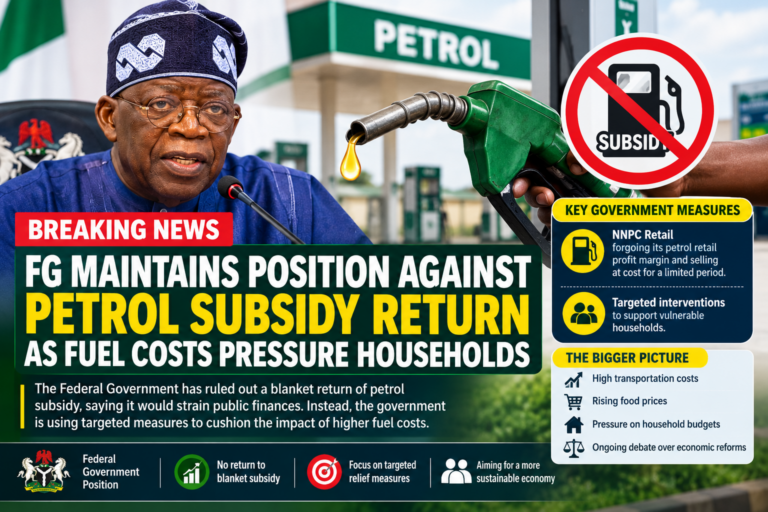
FG MAINTAINS POSITION AGAINST PETROL SUBSIDY RETURN AS FUEL COSTS PRESSURE HOUSEHOLDS
The Federal Government has maintained its opposition to restoring a blanket petrol subsidy, arguing that a return to the previous arrangement would place additional pressure on public finances. The position comes amid continuing concerns about petrol prices and the rising cost of transportation, food and other essential goods. In a statement published by the State…
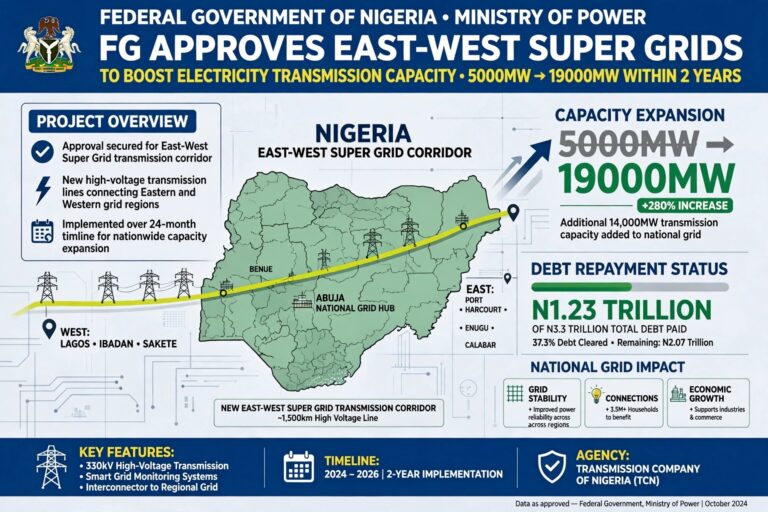
FG APPROVES EAST-WEST SUPER GRIDS TO BOOST ELECTRICITY TRANSMISSION CAPACITY
The Federal Government has approved plans for East-West Super Grids intended to expand Nigeria’s electricity transmission capacity, the proposed project aims to increase transmission capacity from approximately 5,000 megawatts to 19,000 megawatts within two years, the plan is expected to strengthen the national grid’s ability to transmit electricity and support efforts to address persistent power…