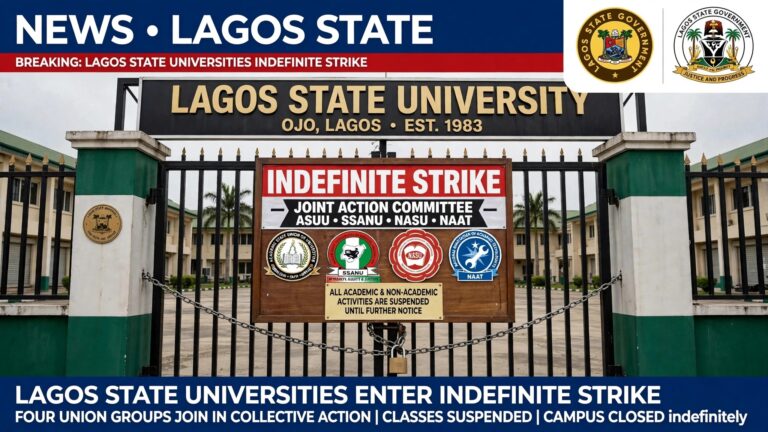
Funding, infrastructure and academic stability remain important issues facing Nigeria’s university system as students, lecturers and administrators seek a more predictable and effective learning environment. Universities play a central role in producing skilled graduates, supporting scientific research and preparing young people for employment. However, concerns about financing, facilities, staff welfare and interruptions to academic activities continue to influence public discussions about the future of higher education. Recent commentary has focused on the need to rebuild confidence in the university system following years of disruption and disagreements over working conditions and funding. Universities require adequate funding to maintain lecture halls, laboratories, libraries, student accommodation and other essential facilities. They also need resources to support research, recruit qualified staff and maintain the equipment required for teaching. When funding falls short of institutional needs, universities may struggle to maintain infrastructure or expand opportunities for students. The consequences can affect the quality of education and the ability of institutions to compete internationally in research and innovation. Industrial disputes between university unions and government authorities have historically contributed to disruptions in Nigeria’s higher education system. Such interruptions can delay examinations, extend academic calendars and create uncertainty for students approaching graduation. They can also affect researchers whose work depends on access to laboratories, field sites and other university facilities. Stable academic calendars are therefore important for students, parents, employers and institutions seeking to plan their activities. However, the current situation varies between universities, and a dispute affecting one institution should not automatically be attributed to every university in the country. Lecturers and other university employees play important roles in teaching, research, student supervision and institutional administration. Their working conditions can influence morale, productivity and the ability of universities to retain experienced professionals. Disagreements over salaries, allowances, pension arrangements and research funding have frequently featured in debates about university reform. Addressing these issues requires sustained engagement between government authorities, university management and staff representatives. The quality of campus infrastructure can directly influence students’ daily experiences. Reliable electricity, suitable accommodation, functioning laboratories, well-equipped libraries and access to digital learning resources are important for effective education. Where facilities are inadequate, students may encounter difficulties completing practical work or accessing the materials needed for their courses. Investment in infrastructure must therefore accompany wider efforts to improve academic quality and institutional management, universities are also expected to produce research that addresses social and economic challenges, strong research programmes can support innovation, improve public policy and create opportunities for cooperation with industry.At the same time, graduates need skills that enable them to participate effectively in the labour market, universities can strengthen this connection by supporting internships, entrepreneurship, digital skills development and collaboration with employers. Such initiatives should complement, rather than replace, the academic foundations of degree programmes. Improving confidence in Nigeria’s universities will require more than temporary agreements or isolated infrastructure projects. It will depend on consistent funding, transparent management, constructive industrial relations and a commitment to maintaining academic standards. Students also need clear information about academic calendars, examinations and graduation requirements so they can plan their education with greater certainty. Government authorities and university administrators must work together to create conditions that support uninterrupted learning and sustainable institutional development. The future of Nigeria’s university system depends on its ability to provide reliable academic programmes, effective research opportunities and a supportive environment for students and staff. Funding, infrastructure and academic stability remain closely connected challenges that require sustained attention. Although individual institutions face different circumstances, improving the overall system will be essential to preparing graduates for the country’s social and economic needs.
Similar Posts
Atiku- Tinubu Legal Battle: Court Fixes November 20 for Ruling on Fresh Application
The Federal High Court in Abuja has fixed November 20, 2026, to rule on an application by former Vice President Atiku Abubakar and the African Democratic Congress (ADC) seeking to amend their suit challenging President Bola Tinubu’s eligibility for the 2027 presidential election. The matter came up on Tuesday, October 13, 2026, before Justice Inyang…
Osun on Alert as DSS Warns of Alleged Terror Plot Targeting Worship Centres
Osun State has been placed on heightened security alert following a warning from the Department of State Services (DSS) over an alleged plan by terrorists to attack places of worship and other crowded locations in the state. The warning has sparked increased security awareness among religious communities, with Christian and Muslim leaders urged to take…
CBN Moves to Strengthen Bank Oversight After N4.65tn Recapitalisation
The Central Bank of Nigeria has announced plans for continued regulatory oversight of banks following the completion of the financial sector’s recapitalisation programme. The apex bank said greater attention would be placed on areas including corporate governance, asset quality, liquidity and large exposures as it continues to monitor the banking sector. The CBN disclosed that…
SOWORE ALLEGES KIDNAPPING AND ARMED ATTACK IN EKITI AS POLICE DISPUTE AAC CANDIDATE’S ACCOUNT
XANDERXO ENTERTAINMENT Presidential candidate of the African Action Congress (AAC), Omoyele Sowore, has alleged that he and members of his team were attacked by armed men in Ado-Ekiti, Ekiti State, triggering renewed concerns over political safety and freedom of political participation in Nigeria. The incident reportedly occurred on Friday, October 30, shortly after Sowore concluded…
LAGOS UNIVERSITIES SHUTDOWN LOOMS AS FOUR STAFF UNIONS DECLARE INDEFINITE STRIKE
Academic and non-academic activities across Lagos State-owned universities face disruption after four university staff unions declared an immediate, indefinite strike. The unions include the Academic Staff Union of Universities, Senior Staff Association of Nigerian Universities, Non-Academic Staff Union of Educational and Associated Institutions and National Association of Academic Technologists. The Joint Action Committee of the…
LAGOS POLICE DETAIN FOUR OFFICERS AFTER VIRAL HARASSMENT VIDEO
The Lagos State Police Command has reportedly detained four police officers and disbanded their tactical team following the circulation of a viral video allegedly showing officers harassing a young man in the Odogunyan area of Ikorodu. The development was reported on October 23, 2026, after the command announced that the officers had been identified and…