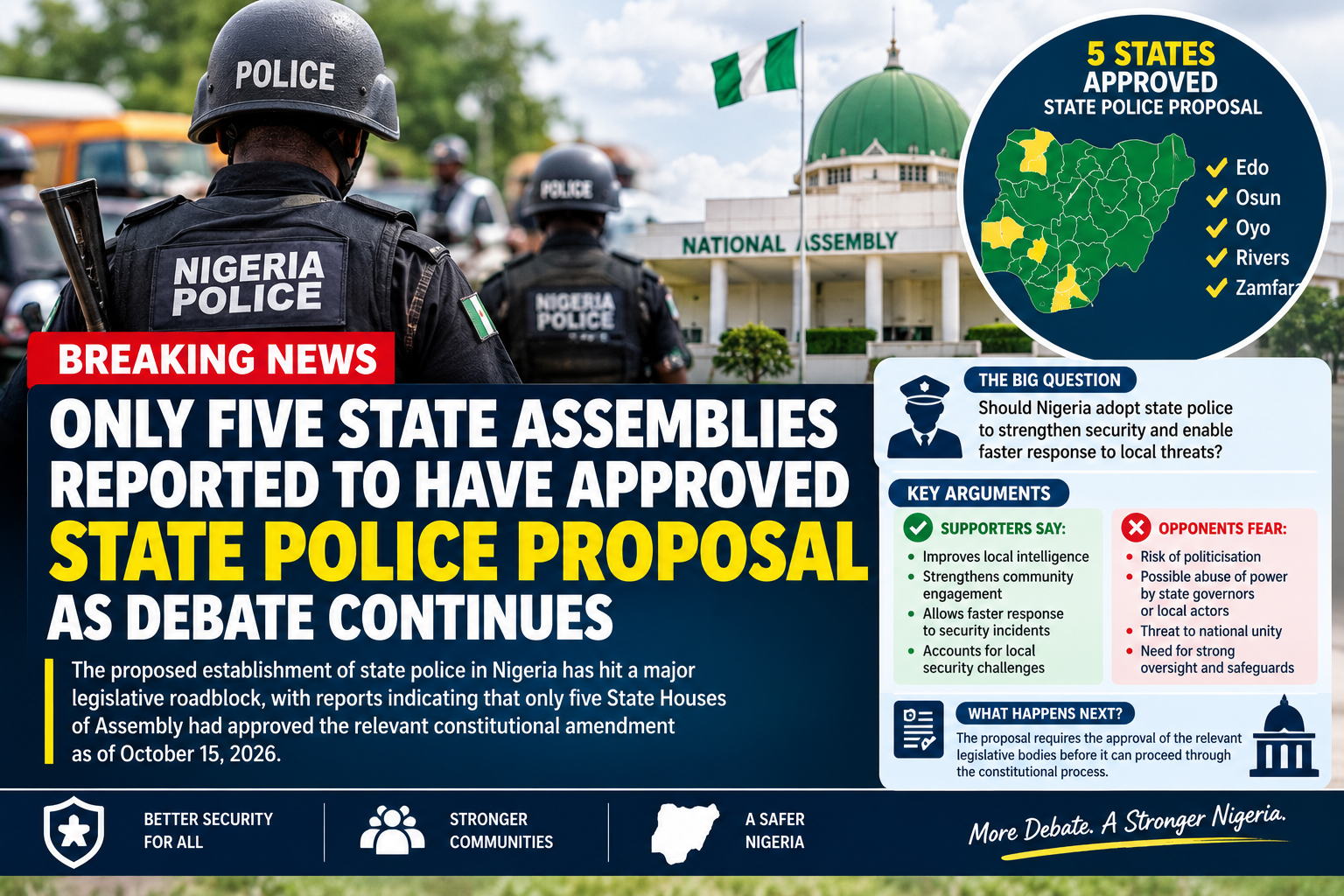
The proposed establishment of state police in Nigeria has encountered a legislative challenge, with reports indicating that only five State Houses of Assembly had approved the relevant constitutional amendment by the reported October 15 deadline. The development has renewed debate over whether Nigeria should decentralise its policing structure to allow states to establish their own police services. According to media reports published on October 16, the states whose assemblies approved the proposal were Edo, Osun, Oyo, Rivers and Zamfara. The reported figure remains far below the number of state legislatures required for the constitutional amendment to proceed. The proposal is part of a wider debate about the country’s security architecture and the ability of law-enforcement agencies to respond effectively to threats across different communities. Nigeria currently operates a federal police structure, with the Nigeria Police Force responsible for policing across the country. Supporters of state police argue that state-level services could improve local intelligence, strengthen community engagement and enable faster responses to security incidents. They also contend that policing arrangements should account for differences in local security challenges. However, opponents have raised concerns about the potential politicisation of state police and the risk that governors or powerful local actors could misuse law-enforcement agencies against opponents. These concerns have made constitutional safeguards, oversight and accountability central to discussions about the proposal. A constitutional amendment requires the relevant legislative approvals before it can proceed through the remaining stages of the constitutional process. The reported low number of approvals means the proposal faces significant obstacles. However, the precise procedural position should be established through official records from the National Assembly and individual State Houses of Assembly. The issue is likely to remain important as security challenges continue to shape national policy discussions.
Similar Posts
The Silent Health Consequences of Physical Inactivity: What Happens When We Eat More and Move Less?
Physical inactivity is more than a lifestyle habit. When combined with excessive energy consumption, it can disrupt glucose metabolism, promote visceral fat accumulation and increase the risk of diabetes, cardiovascular diseases and certain cancers. Discover what happens inside the body when we eat more and move less.
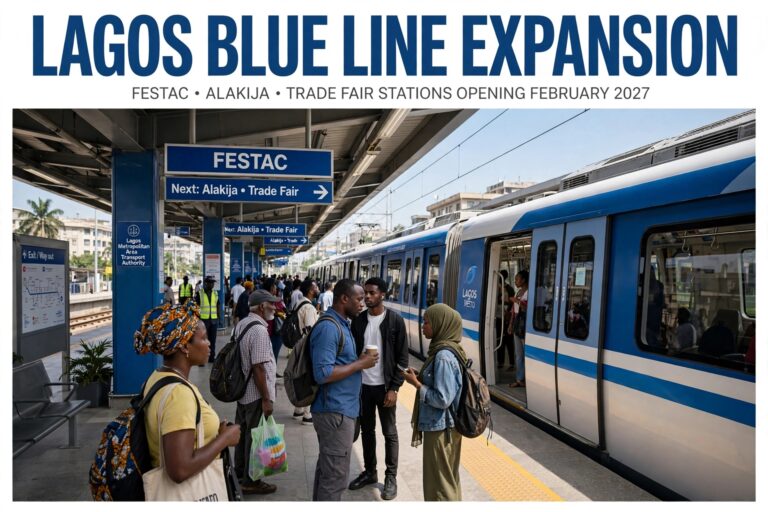
LAGOS TO OPEN THREE ADDITIONAL BLUE LINE RAIL STATIONS BY FEBRUARY 2027
The Lagos State Government has announced plans to open three additional stations on the Lagos Rail Mass Transit Blue Line by the end of February 2027, the planned stations are FESTAC, Alakija and Trade Fair, according to information released by the Lagos Metropolitan Area Transport Authority, the expansion is expected to extend the reach of…
Nearly 700 Abducted Nigerians Still Missing One Month After Mass Kidnapping
Families in parts of Niger State are still waiting for answers nearly one month after hundreds of residents were abducted during a large-scale attack on communities in the Borgu area. Residents from Dekara and neighbouring communities staged a protest on Monday, demanding urgent action to rescue people they say have remained in captivity since the…
FG Proposes ₦1,350 Petrol Price Ceiling as Nigerians Face Rising Costs
The Federal Government has proposed negotiating a ceiling of ₦1,350 per litre on petrol’s ex-gantry price as part of efforts to reduce fluctuations in domestic fuel prices. The proposal was disclosed by the Minister of Finance and Coordinating Minister of the Economy, Taiwo Oyedele, during a press conference in Abuja on Thursday. According to reports…
Nigeria Launches New Digital Postcode System for Buildings Nationwide
Nigeria is set to introduce a new National Digital Alphanumeric Postcode System, giving addressable buildings across the country unique digital codes. The system officially launches on October 1, 2026, as part of efforts to modernise Nigeria’s addressing infrastructure and make it easier to identify and locate buildings. According to the official National Digital Postcode platform…
First Niger Bridge Set to Reopen Next Week After Rehabilitation Works
The Federal Government has announced that the First Niger Bridge will reopen to traffic next week following ongoing rehabilitation work on the major bridge linking Anambra and Delta states. Minister of Works, David Umahi, gave the assurance after inspecting rehabilitation works at the Onitsha Bridge Head. The bridge was closed earlier this month after the…