Aba Women Riot
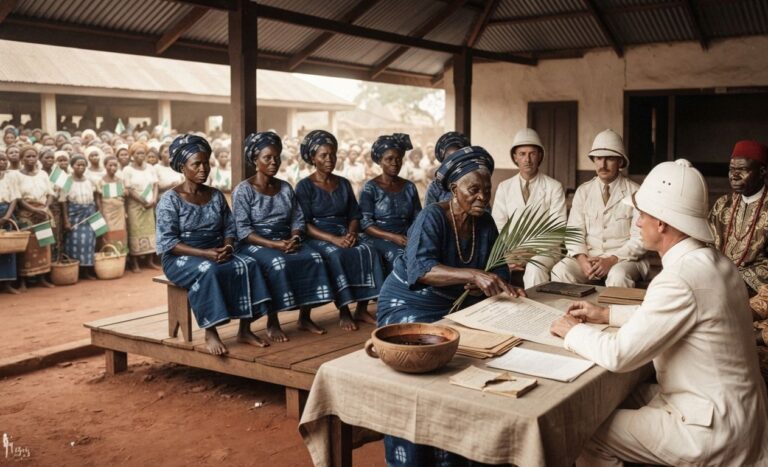
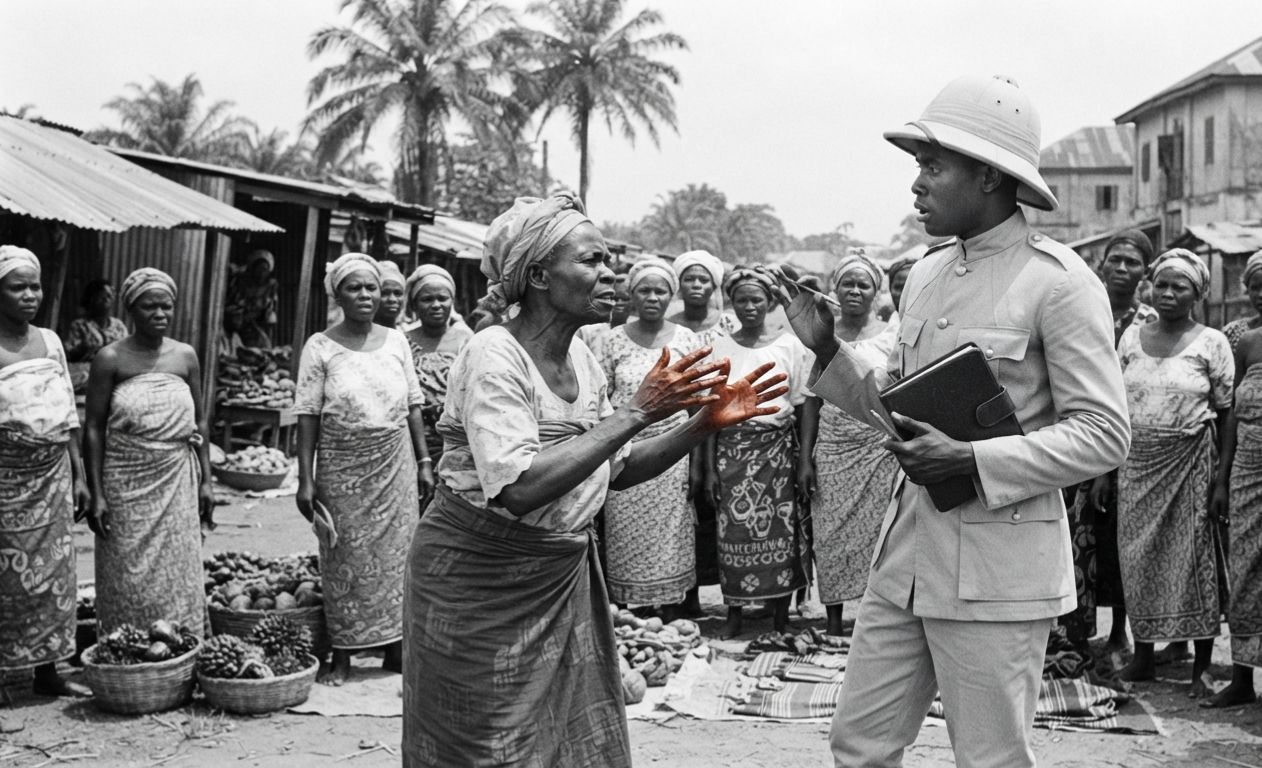
The morning air in Oloko was thick with the scent of fermenting palm fruit. It was November 18, 1929. Nwanyeruwa, a widow whose face bore the deep lines of a life carved out of the red earth, leaned heavily over her wooden mortar. Her arms moved in a rhythmic, ancient cadence, crushing the palm nuts to squeeze out the rich oil that kept her household afloat. To the British Empire, she was just an uneducated statistic. To her community, she was a rock.The rhythm broke with the crunch of heavy boots on dry leaves. Mark Emereuwa, a local man dressed in the stiff, starched clothes of a colonial lackey, stepped into her compound. He held a leather-bound ledger and a pencil. He was an enumerator, sent by the puppet Warrant Chief Okugo on the orders of British colonial authorities.”Count your livestock, your women, and the people living under your roof,” Emereuwa commanded.Nwanyeruwa stood straight, wiping sweat from her brow with an oil-stained hand. The market women had been whispering for weeks about a secret tax. The British had already bled the men dry; now they were coming for the women. In Igbo tradition, taxing a woman was an abomination, a declaration of war against life itself. It meant counting a person’s worth like a goat at a slaughterhouse.She looked him dead in the eye. “Was your widowed mother counted?” she fired back.The question hit him like a physical blow. Emereuwa stepped forward, his anger flaring, and a physical altercation erupted. Nwanyeruwa did not flinch. She let out a traditional cry of grievance and rushed to the market square where the Mikiri—the traditional assembly of women—was gathering. She burst into the circle of traders, her hands still stained with oil and defiance. “The white man is counting our wombs!” she declared. The spark had met the firewood.
Continue reading from CHAPTER TWO