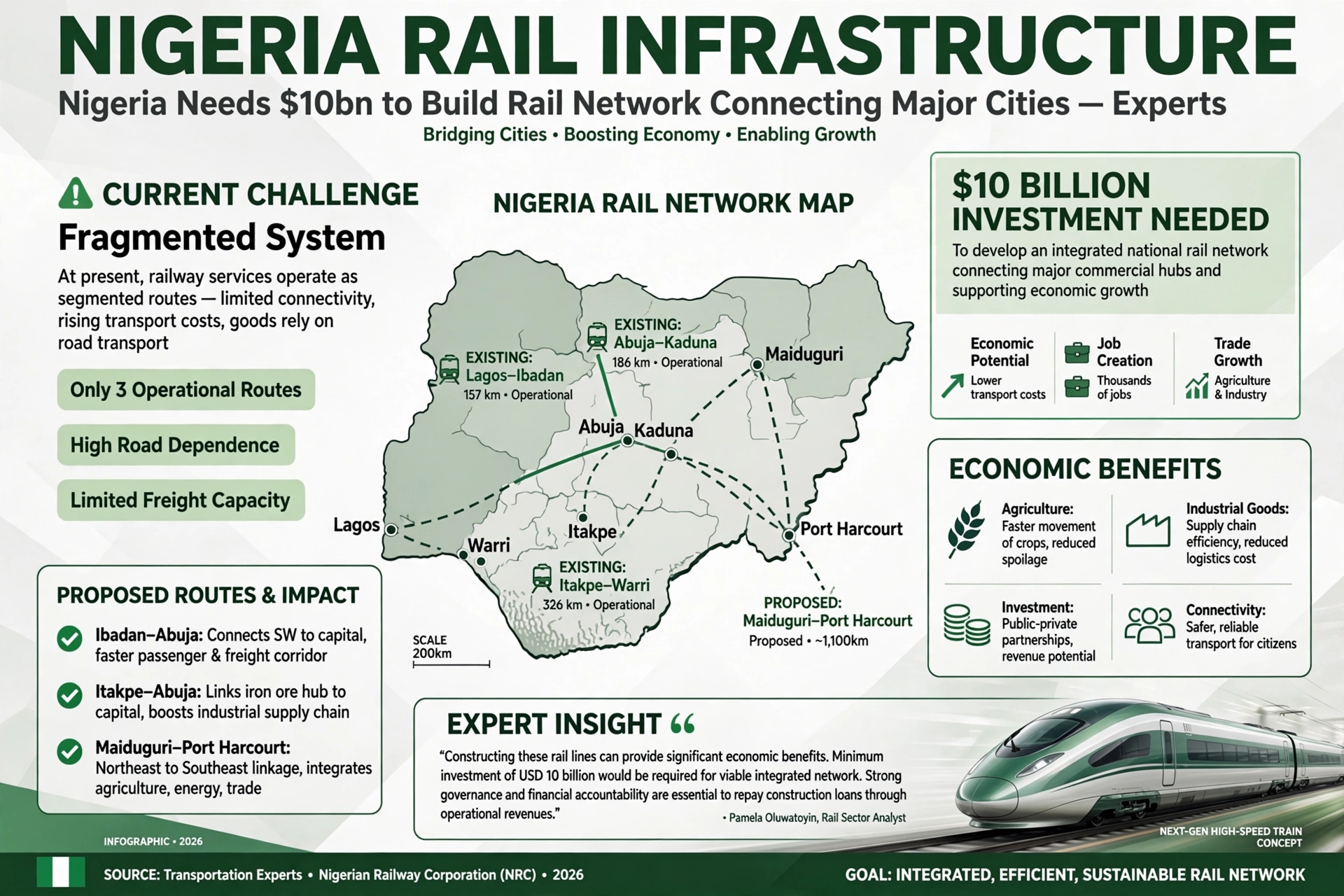
Nigeria may require at least $10 billion to develop an integrated railway network capable of connecting major parts of the country and supporting economic growth, transportation experts have said. The experts said the country’s existing railway system remains fragmented, limiting the ability of rail transportation to significantly reduce pressure on Nigeria’s roads and bring down transportation costs. Nigeria currently operates railway services on a number of routes, including Lagos-Ibadan, Itakpe-Warri and Abuja-Kaduna, while additional routes and projects have been under consideration. Transportation expert Pamela Oluwatoyin said an integrated system linking major commercial and economic centres would require substantial investment but could provide significant long-term benefits to the Nigerian economy. Among the routes identified as having potential are Ibadan-Abuja, Itakpe-Abuja and Maiduguri-Port Harcourt. According to the expert, the estimated $10 billion requirement is based on the scale of infrastructure needed to establish the proposed connections. She noted that an exact cost would depend on detailed engineering designs and project specifications. The proposed investment would cover the development of railway infrastructure needed to connect different parts of the country and improve the movement of passengers and goods. Experts have also pointed to the potential economic benefits of a more connected rail network, including easier movement of agricultural products, industrial goods and people between major economic centres. A functioning nationwide railway system could also provide an alternative to road transportation, particularly on long-distance routes where road travel is often affected by congestion, poor infrastructure and high fuel and operating costs. However, experts have stressed that financing alone would not guarantee the success of such an ambitious project. Strong governance, financial discipline, proper project management and a clear revenue framework would be necessary to ensure that investments are properly managed. There would also be significant recurring costs associated with maintaining railway infrastructure and operating train services. The proposal comes as Nigerians continue to face high transportation costs, with the cost of moving people and goods remaining an important component of household and business expenses. A modern and interconnected railway network could therefore play a role in improving national transportation and supporting economic activity, provided the required financing and implementation structures are secured.
Similar Posts
NIGERIAN MANUFACTURERS INVEST ₦4.54 TRILLION AS ₦2.12 TRILLION WORTH OF GOODS REMAIN UNSOLD
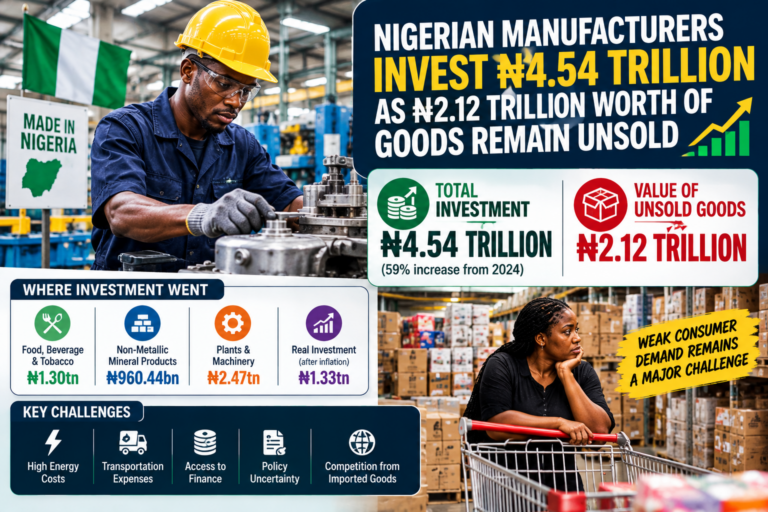
Nigerian manufacturers invested about ₦4.54 trillion in 2025, even as products worth approximately ₦2.12 trillion reportedly remained unsold. The figures present a mixed picture of Nigeria’s manufacturing sector. On one side, manufacturers significantly increased their investment in production facilities, machinery and other assets. On the other, weak consumer purchasing power made it difficult for some…
NiDCOM Says It Lacks Capacity to Evacuate Nigerians Seeking to Leave Libya
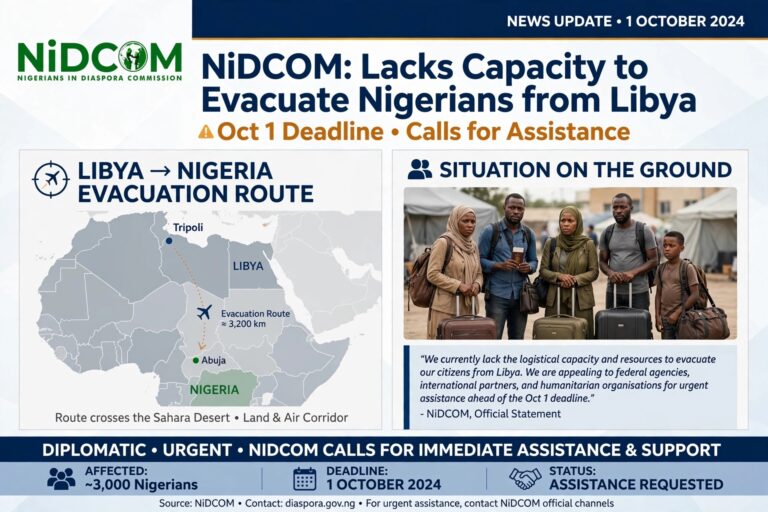
The Nigerians in Diaspora Commission (NiDCOM) has disclosed that it currently lacks the capacity to evacuate Nigerians in Libya who wish to return home. The disclosure comes amid growing concerns over Nigerians living in Libya and reports surrounding an October 1 deadline for foreigners seeking to leave the country. NiDCOM reportedly confirmed that it has…
Military Court Postpones Ruling in Alleged Coup Plot Trial to October 5
A General Court Martial in Abuja has postponed its ruling in the ongoing case involving military officers accused of an alleged coup plot. The ruling, which had been scheduled for Wednesday, September 30, has now been fixed for Monday, October 5, 2026. The court is sitting at the Scorpion Officers’ Mess in Asokoro, Abuja. A…
Dam Overflow Floods Edo Community as Residents Fear Bigger Disaster
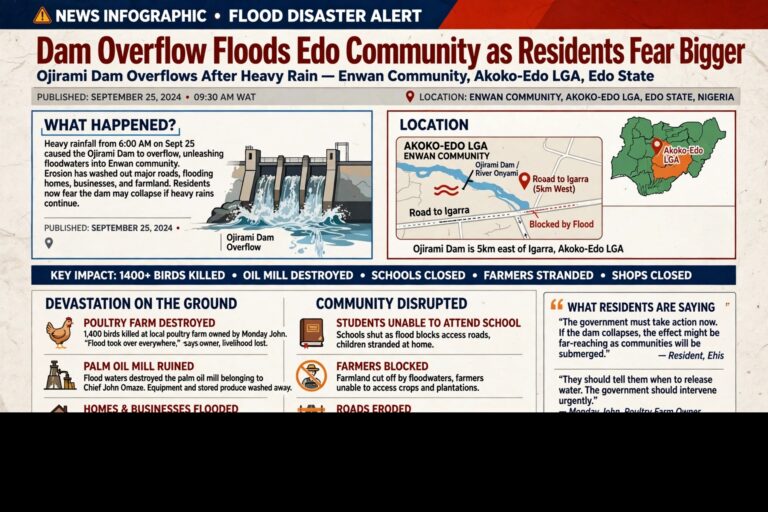
Residents of Enwan community in Akoko-Edo Local Government Area of Edo State are counting their losses after heavy rainfall caused the Ojirami Dam to overflow, flooding parts of the community and disrupting daily activities. The flooding has reportedly destroyed property and businesses, while residents are now worried that continued rainfall could worsen the situation and…
Olu Jacobs Dies at 84: Nollywood Loses One of Its Most Celebrated Actors
Nigeria’s entertainment industry has been thrown into mourning following the death of veteran actor and film executive, Oludotun Baiyewun Jacobs, popularly known as Olu Jacobs, at the age of 84. The actor died on Wednesday, September 16, 2026. His family announced the news through a statement shared by his son, Olusoji Jacobs, bringing an end…