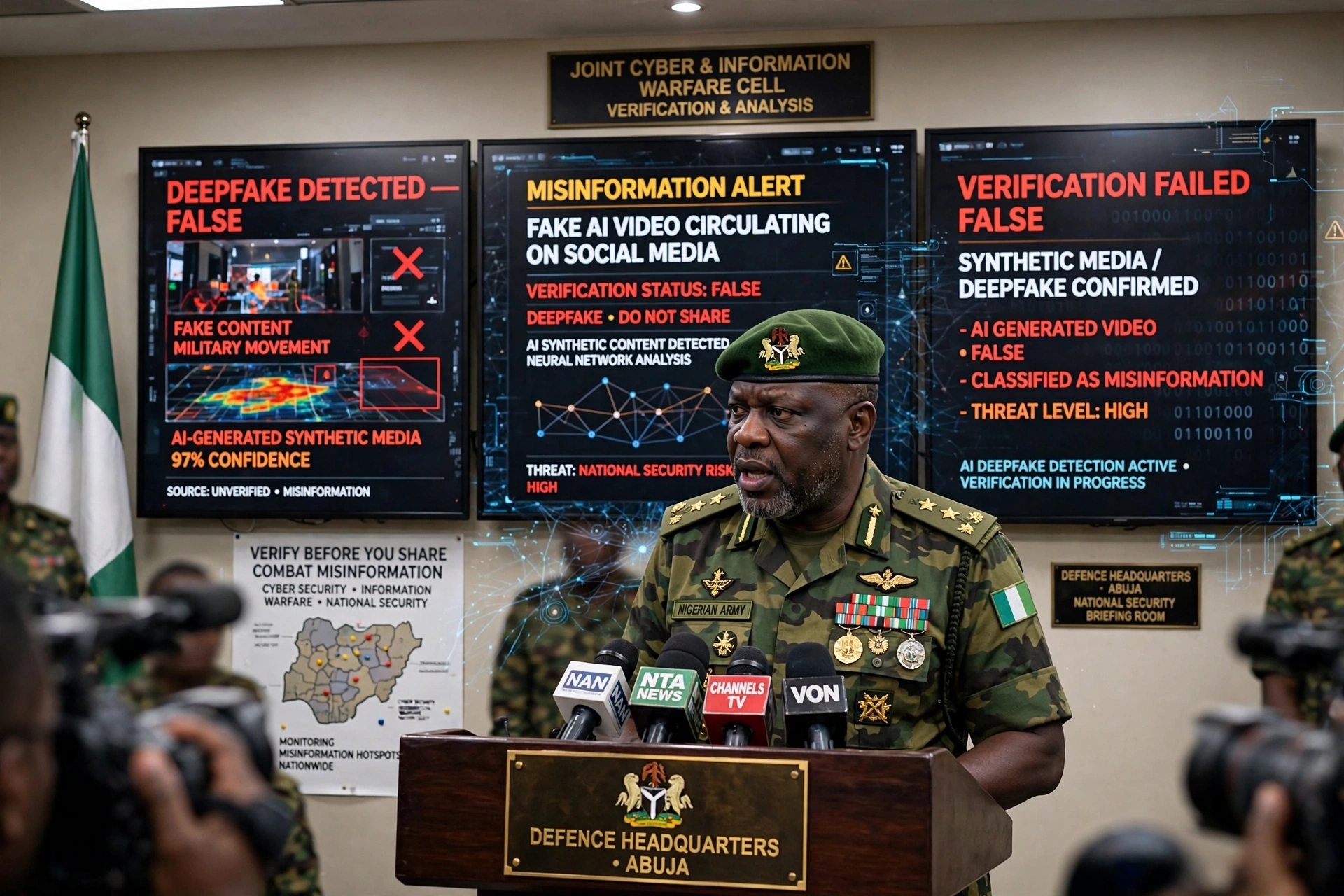
Nigeria’s military leadership has reportedly raised concerns about the growing use of artificial intelligence to produce misleading videos that could threaten national security, spread panic and undermine public confidence in security institutions. The warning highlights a growing challenge facing governments around the world as artificial intelligence tools make it easier to generate convincing images, audio recordings and videos depicting events that never happened. In a country dealing with multiple security challenges, fabricated footage involving military operations or public officials could complicate efforts to communicate accurate information during emergencies. Artificial intelligence tools can produce realistic-looking videos showing people making statements they never made or appearing at events they never attended. Such content can be shared rapidly through social media platforms and messaging applications, sometimes reaching large audiences before its authenticity is checked. When fake content concerns military operations, it can create confusion about the situation on the ground, the safety of personnel or the government’s response to an incident. Even when a misleading video is eventually debunked, the initial claims may continue circulating among people who never see the correction. Misinformation involving military personnel can have consequences beyond online arguments. Fabricated claims about troop movements, casualties or security operations may affect public confidence and complicate communication between authorities and affected communities. In some circumstances, misleading content may also expose people to harassment or encourage dangerous reactions based on false information. The concern is particularly significant during security incidents, when people urgently need reliable information. The growing availability of AI-generated content makes verification increasingly important for journalists, social media users and public institutions. Before sharing a video claiming to show a major security development, users should check whether credible news organisations have reported the incident and whether relevant authorities have issued a statement. A video that appears realistic should not automatically be treated as authentic. Journalists should also establish the original source of footage, verify its date and location where possible, and seek independent confirmation before publication. Although AI-generated misinformation presents risks, artificial intelligence can also support security and public services when used responsibly. Technology can assist with data analysis, administrative efficiency and other legitimate tasks. The challenge is to establish appropriate safeguards, improve public awareness and ensure that technology is not used to deceive or endanger people. Social media companies, regulators, security agencies and media organisations all have roles to play in reducing the circulation of harmful false information. Clear reporting procedures, effective fact-checking and timely corrections can help limit the damage caused by fabricated content. However, measures against misinformation must also respect legitimate journalism and freedom of expression. The military’s reported warning serves as a reminder that digital literacy is increasingly important to national security. In an environment where convincing fake videos can be created with relative ease, the ability to distinguish verified information from fabricated content has become an essential responsibility for every media consumer.
Similar Posts
TINUBU LAUNCHES 2027 RE-ELECTION CAMPAIGN IN KADUNA, BLAMES OPPOSITION FOR HUNGER
President Bola Ahmed Tinubu has officially launched his re-election campaign ahead of Nigeria’s 2027 general election, using a rally in Kaduna State to defend his administration’s economic policies and criticise opposition politicians over the country’s economic challenges. The campaign flag-off took place on Saturday, October 24, 2026, at Ranchers Bees Stadium in Kaduna, where the…
NIGERIA MAINTAINS EBOLA MONITORING MEASURES AS HEALTH AUTHORITIES TRACE CONTACTS
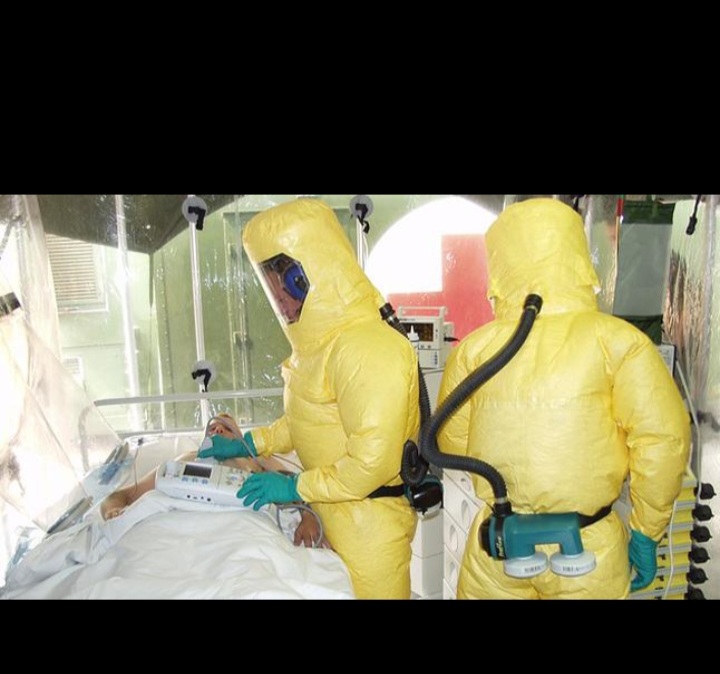
Nigerian health authorities are continuing to monitor people linked to the country’s confirmed Ebola case as part of efforts to prevent further transmission. The case has prompted renewed attention to public health preparedness, laboratory testing and coordination between health agencies, officials were tracking 53 contacts connected to the confirmed patient as of October 26, 2026….
NIGERIA CALLS FOR GREATER AFRICAN ECONOMIC INDEPENDENCE, URGES INVESTMENT IN INFRASTRUCTURE
Nigeria’s delegation at the Berlin Global Dialogue says African countries must strengthen domestic resources, process raw materials locally and build strategic partnerships that support development. Nigeria has called for greater African economic independence, stronger domestic resource mobilisation and strategic investment in infrastructure as part of efforts to accelerate sustainable development across the continent. The position…
Nigeria-South Africa Tensions Escalate as Two Nigerians Are Killed Amid Anti-Migrant Violence
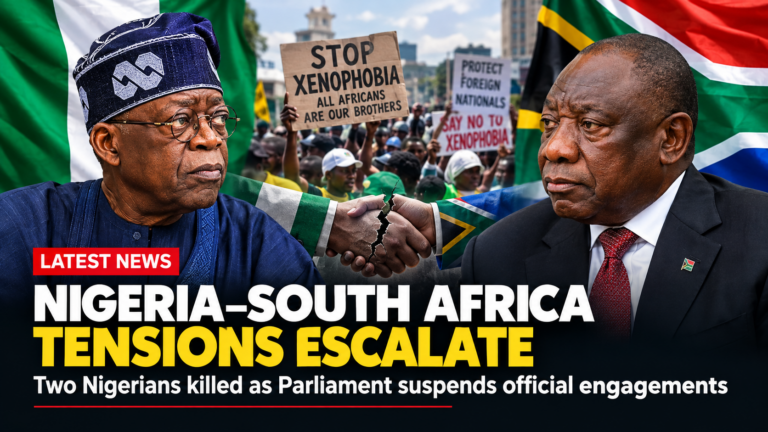
Tensions between Nigeria and South Africa have intensified following the reported deaths of two Nigerian nationals in South Africa, as concerns over the safety of Nigerians living and doing business in the country continue to grow. Nigeria’s Ministry of Foreign Affairs confirmed that two Nigerian citizens, James Uchechukwu Nwankwo and Bishop Taiwo Michael Fakunle, were…
Borno Attack: At Least 8-10 Soldiers Reportedly Killed as ISWAP Militants Target Military Base in Kukawa
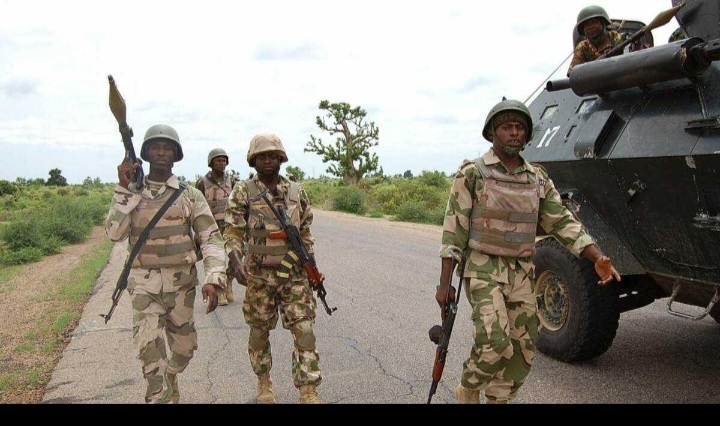
The reported attack highlights the continuing security challenges facing communities and military formations in northeastern Nigeria. At least 8 to 10 Nigerian soldiers were reportedly killed when suspected Islamic State West Africa Province (ISWAP) militants attacked a military base in Kukawa Local Government Area of Borno State. The attack, which occurred on Tuesday evening, October…
Abia LG Workers Threaten Three-Day Strike Over Alleged Unpaid Salaries
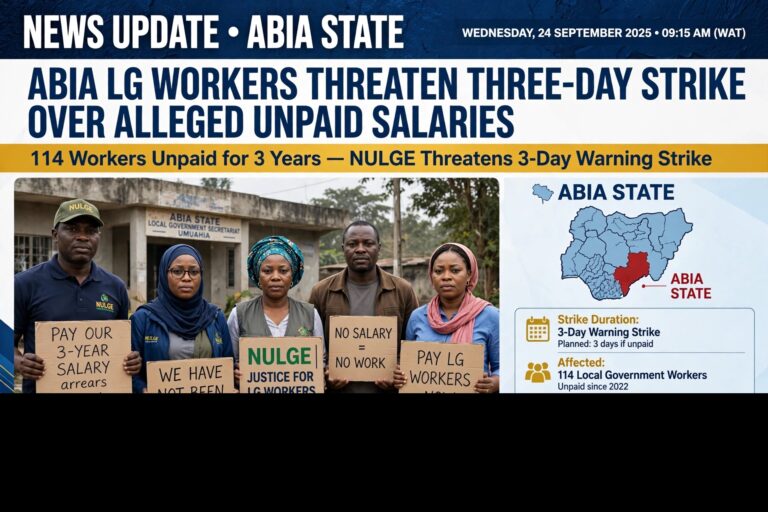
Local government workers in Abia State have threatened to embark on a three-day warning strike over alleged unpaid salaries, salary arrears and outstanding promotion benefits. The Nigeria Union of Local Government Employees (NULGE) said some affected workers have allegedly remained without salaries for almost three years. The union reportedly made its position known in a…