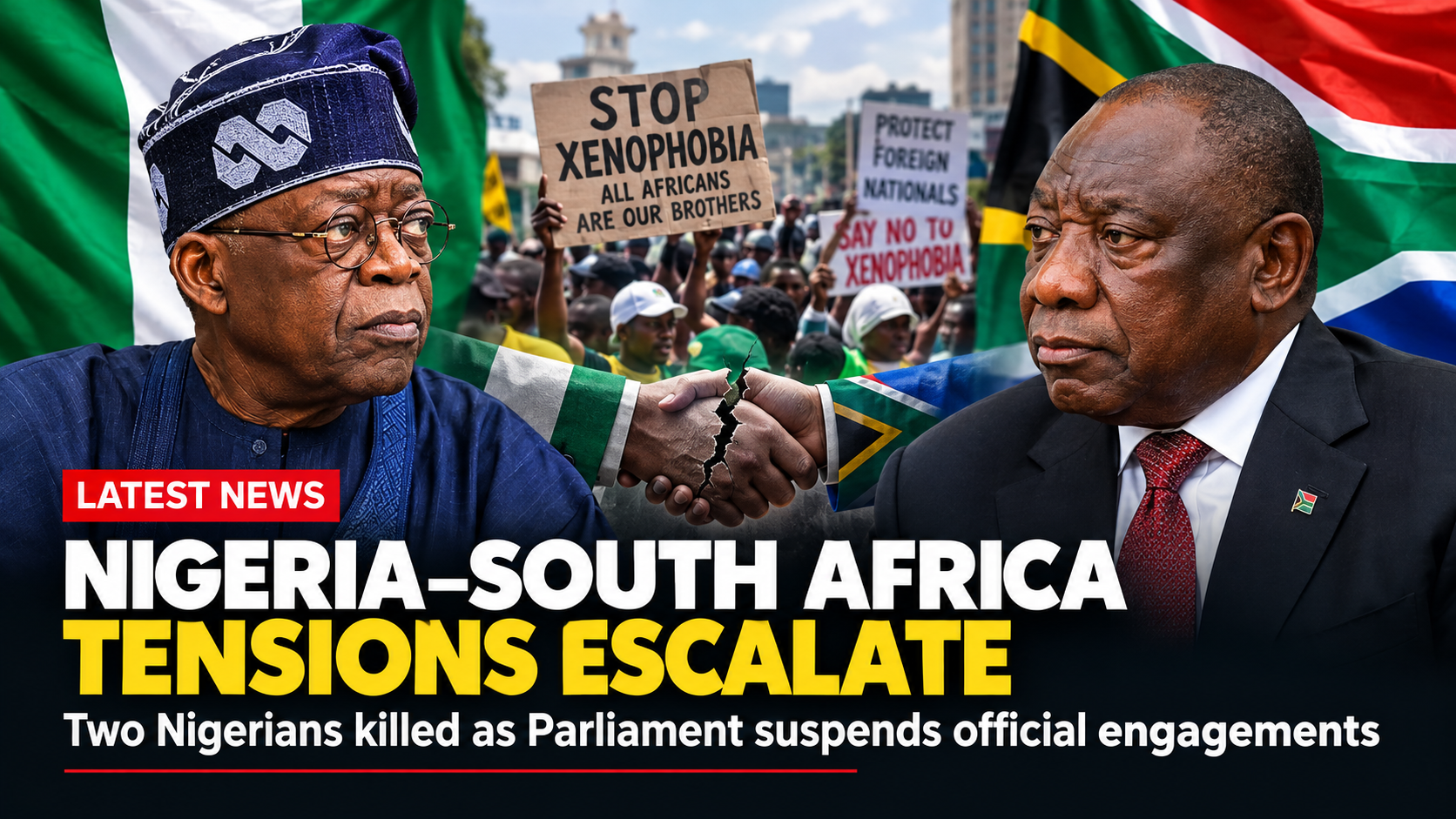
Tensions between Nigeria and South Africa have intensified following the reported deaths of two Nigerian nationals in South Africa, as concerns over the safety of Nigerians living and doing business in the country continue to grow. Nigeria’s Ministry of Foreign Affairs confirmed that two Nigerian citizens, James Uchechukwu Nwankwo and Bishop Taiwo Michael Fakunle, were killed in separate incidents in South Africa. According to the ministry, Nwankwo died in Cape Town on September 5 following what Nigerian officials described as “gruesome interrogation techniques” allegedly used by South African police officers. Fakunle, a bishop, was killed at his residence in Kensington, Johannesburg, on September 4. Authorities have not publicly identified suspects or established a motive in Fakunle’s death. The latest incidents have added to already strained relations between the two African countries and renewed concerns about xenophobic and anti-migrant violence in South Africa. The development comes just one day after Nigeria’s National Assembly announced that it would suspend official visits and legislative engagements with South Africa indefinitely. The parliamentary decision means Nigerian lawmakers will not undertake official visits to South Africa or participate in legislative activities hosted or organised by South African institutions until further notice. The move was described as a strong expression of concern over the safety, dignity and welfare of Nigerians living and conducting legitimate businesses in South Africa. However, the suspension does not cover government-to-government visits and meetings. The latest killings have also brought renewed attention to the broader pattern of violence against Nigerians in South Africa. Nigeria’s Minister of State for Foreign Affairs, Ambassador Sola Enikanolaiye, said in July that at least 98 Nigerians had died in South Africa since 2022 in incidents involving mob attacks, hate-related violence and alleged extrajudicial killings. Nigerian officials have also reported that 1,695 Nigerians were voluntarily evacuated from South Africa in 2026 amid concerns surrounding xenophobic violence. South Africa has long been an important destination for Nigerians and other African migrants seeking business and employment opportunities. However, tensions between local communities and migrants have periodically resulted in xenophobic violence. Protesters in South Africa have blamed foreign nationals for problems including unemployment, crime and pressure on public services. Nigerian officials and other critics have strongly opposed attacks against migrants and have repeatedly called for stronger protection of foreign nationals.The recurring violence has become a major diplomatic concern between Nigeria and South Africa, two of Africa’s largest economies. Nigeria’s Foreign Ministry has condemned the latest deaths and raised concerns about the safety of Nigerians and other foreigners living in South Africa. The ministry also criticised the alleged conduct of South African police in the death of Nwankwo, saying the incidents raise questions about the authorities’ commitment to protecting foreigners and preventing targeted attacks. The situation is likely to remain closely watched as Nigerian and South African officials face growing pressure to address the security concerns and prevent further escalation. The latest developments could place additional pressure on diplomatic relations between Nigeria and South Africa. While Nigeria’s parliamentary suspension is a significant political statement, it does not amount to a complete diplomatic break between the two countries. Government-to-government engagements remain possible. For Nigerians living, working or operating businesses in South Africa, however, the immediate concern remains personal safety and protection of their lives and property. As investigations into the latest deaths continue, Nigerians at home and abroad will be watching closely for further action from both governments. This story will be updated as more verified information becomes available.
Similar Posts
Dangote Refinery Launches $1.6 Billion IPO, Plans $14.3bn Expansion to 1.4m Barrels Per Day by 2029
Africa’s largest refinery is about to get even bigger. The Dangote Petroleum Refinery has secured approval from the Securities and Exchange Commission, SEC, to launch a $1.6 billion Initial Public Offering, IPO, in what will be Africa’s biggest share sale ever. At the same time, the refinery announced plans for a $14.3 billion expansion that…
Lagos Govt Gives Police Officers 3 Months Free Transport on BRT, Train, and Boats
The Lagos State Government has launched a 3-month free transportation scheme for police officers in the state. The initiative was unveiled on Wednesday, September 9, 2026, to recognize the sacrifices of police officers in maintaining peace and security across Lagos. The state government presented 2,000 Cowry Cards to the Nigeria Police Force. Each card gives…
“Who Gave You Audacity?” – Rep Chinedu Ogah Blasts Cubana Chief Priest, Asks EFCC To Probe Him Over Gov Nwifuru Comments
A fresh political drama is brewing in the South-East after popular socialite Pascal Okechukwu, better known as Cubana Chief Priest, clashed with Ebonyi State Governor Francis Nwifuru and was hit with a fiery response from federal lawmaker Hon. Chinedu Ogah. The controversy began days ago when Cubana Chief Priest publicly called on Governor Nwifuru to…
US GOVERNMENT ANNOUNCES $10MILLION REWARD FOR INFORMATION ON IRAN CYBER COMMAND LEADER
The United States Department Of states has announced a reward of up to $10million for information on Amir Yaryab, identified as the leader of the Cyber Operations Command of Iran’s Islamic Revolutionary Guard Corps Cyber Electronic Command (IRGC-CEC). The announcement was made under the Department Of State’s Rewards for Justice Programme, operated by the Diplomatic…
The 7-Billion-Naira Enterprise: Documenting Nigeria’s Exponential Kidnapping Crisis
Internal intelligence and security sector consensus figures have confirmed a devastating 66% surge in kidnapping incidents across Nigeria, illustrating a total breakdown of local containment strategies. Comprehensive data tracking abductions between July 2025 and mid-2026 reveals that Nigerian citizens paid a staggering minimum of 7.78 billion naira in direct cash ransoms to criminal syndicates and…