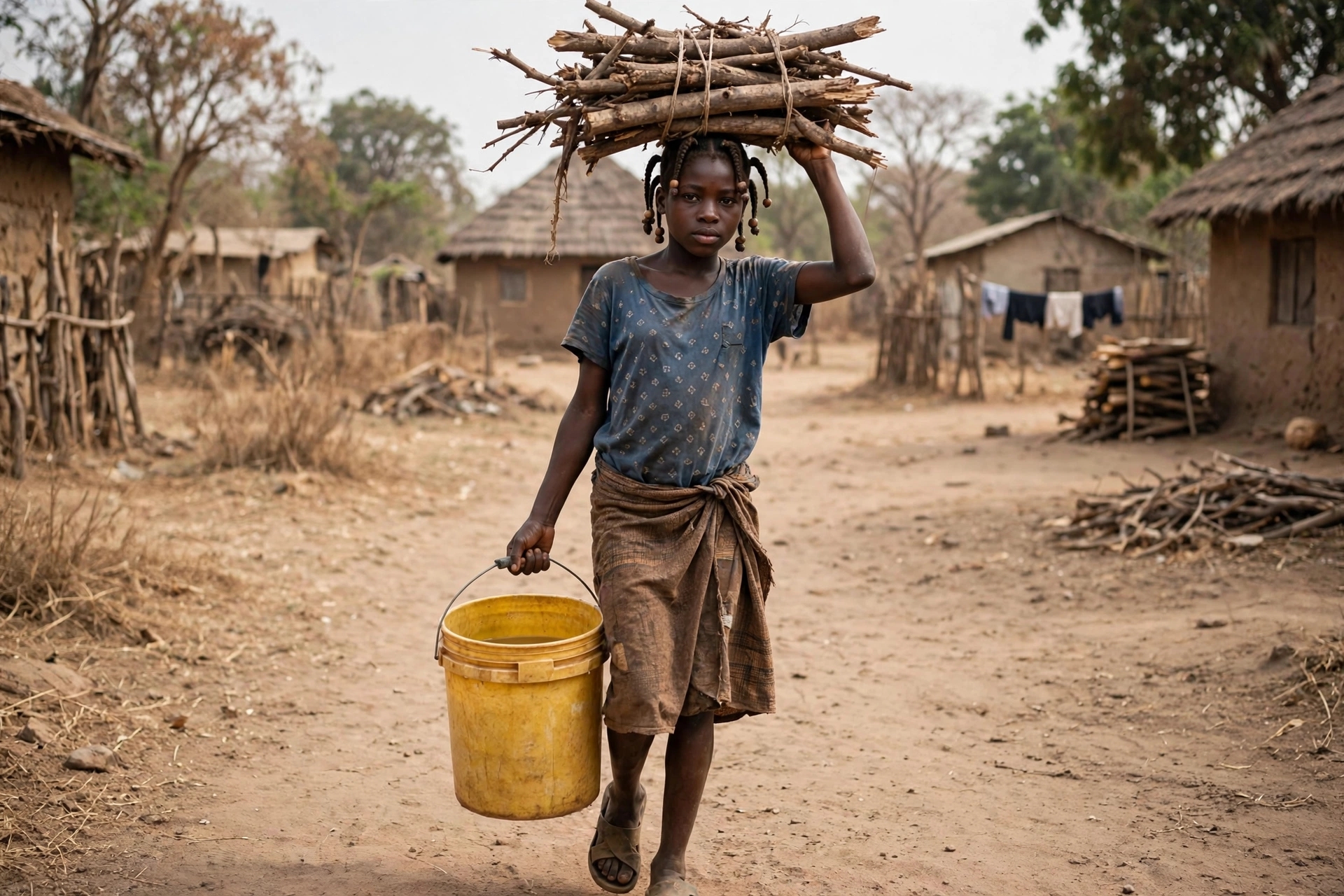
Before she becomes a woman, she is already at war. A war she did not start, for a body she did not choose, in a world that was not designed for her. Let us follow the life of a typical Nigerian girl child not the privileged one on Instagram, but the one in your street, your village, your compound. The one we see every day and pretend not to see. At 5 years old, she is already being taught to shrink. “Sit properly.” “Close your legs.” “Don’t talk like that, you are a girl.” Her brother is allowed to be loud; she is told to be humble. Her brother is allowed to be stubborn; she is told to be obedient. At an age when she should be learning confidence, she is learning apology. At 9 years old, she is already a second mother. She sweeps, she washes plates, she carries her younger siblings on her back while her mates are playing football. We call it training. But let’s be honest, it is child labour wrapped in culture. Her childhood ends before it even begins. At 12 years old, her body becomes public property. Her breasts bud and suddenly every uncle has an opinion. Her period starts and she is shamed for it. She will miss 3 to 5 days of class every month because there is no toilet, no water, no pad. Her education starts to bleed with her. And somewhere, an older man is already calling her “small madam” sexualizing a child. At 14 years old, she is in danger in her own home. Statistics from Nigeria’s Demographic and Health Survey tell us 1 in 4 girls experiences sexual violence before 18. But numbers don’t tell the pain. The uncle who touches her at night. The teacher who says “if you want to pass my subject, come to my house.” The pastor who says “let me pray for you.” She cannot speak, because who will believe her? If she speaks, she is blamed: “What did you wear?” “Why did you go there?” At 16 years old, she is brilliant but she is being negotiated. Her parents are calculating bride price. Her mates are being married off in the North because of poverty. In the South, she is being told “education is good, but marriage is better.” She dreams of becoming a doctor, an engineer, a pilot but the world keeps reminding her that her ultimate CV is marriage and childbirth. At 18 years old, if she manages to enter university, a new battle starts. Sex-for-grades. Campus cultists who think her body is their entitlement. Safety when walking at night. The constant fear of being drugged at a party. And if she gets pregnant, she carries the shame alone. The boy continues his education. She drops out. Society calls her wayward. At 20 years old, she is now a woman, but she is already tired. Tired of being catcalled. Tired of being told she is “too ambitious.” Tired of being paid less for the same work. Tired of being told to “manage” abusive relationships because “that is how men are.” Tired of fighting to be seen as human first, before being seen as a woman. This is what the girl child goes through in Nigeria.It is not just poverty. It is not just culture. It is a SYSTEM. A system that gives her less food, less education, less protection, but expects more sacrifice, more silence, more endurance. A system that teaches boys how to be strong, but never teaches them how to respect girls. A system where laws exist, the Child Rights Act, the VAPP Act but implementation is zero in many states. Where a man can defile a 13-year-old and come out on bail in two days because her family was offered N100,000 to settle.We are failing her.And when we fail the girl child, we fail the nation. Because you cannot build a prosperous Nigeria while breaking half of your population before they even turn 18. To be a girl child in Nigeria is to be strong before you even understand what strength is. She deserves more than pity. She deserves protection. She deserves education. She deserves safety. She deserves the right to be a child. Until every Nigerian girl can walk to school, grow up, dream, and live without fear we have no right to call ourselves a progressive nation. The girl child is not asking for too much. She is asking for what we freely give to boys: A chance to live.
Similar Posts
THE RISE OF FAKE PRODUCTS IN NIGERIA: WHAT EXACTLY ARE WE BUYING?
There was a time when the word “fake” in Nigeria mostly brought to mind imitation clothes, shoes, phones or designer products.Today, the question is becoming much more serious:What if the product we are calling fake is something we are eating, drinking, applying to our bodies or taking as medicine?That is the disturbing reality behind Nigeria’s…
SIX YEARS AFTER #ENDSARS: NIGERIANS REMEMBER LEKKI SHOOTINGS
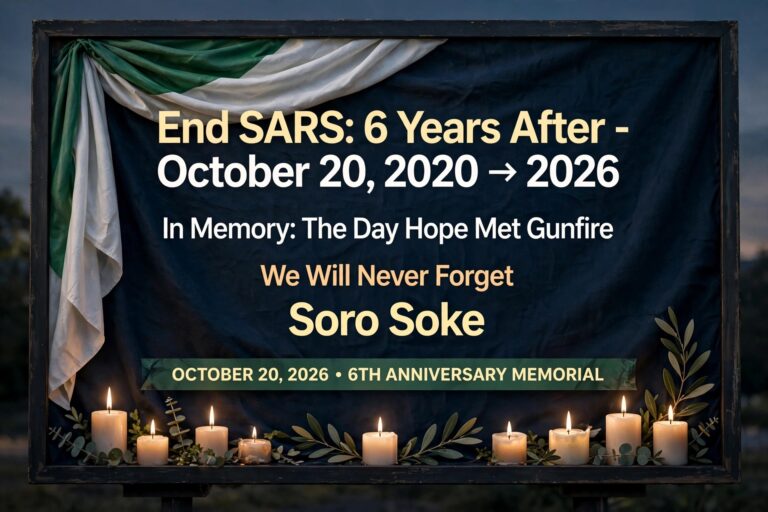
October 20, 2026, marks six years since the #EndSARS protests and the tragic shootings at the Lekki Toll Gate in Lagos, an event that remains one of the most defining moments in Nigeria’s recent history.The anniversary commemorates the young Nigerians who took to the streets in October 2020 to demand an end to police brutality,…
When a Community Says Thank You to the Land: Inside Amawbia’s 2026 New Yam Festival
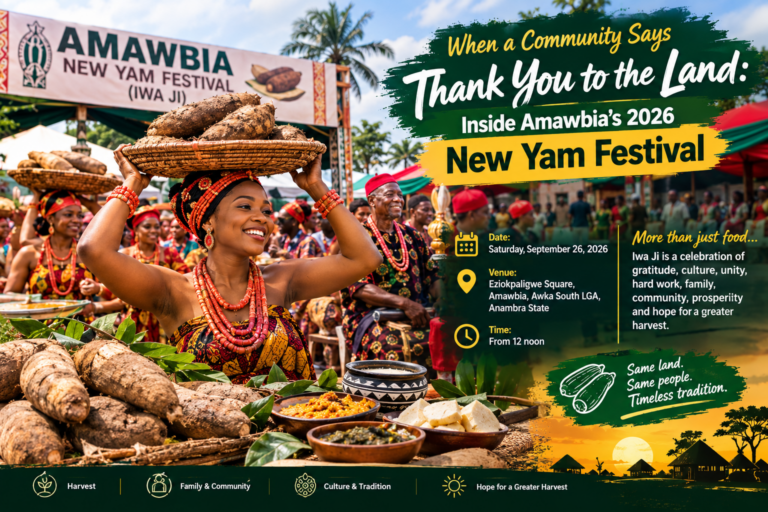
There are celebrations where the food on the table is simply food, and then there are celebrations where food carries a story. For many Igbo communities, yam belongs to the second category, it can represent harvest, it can represent hard work, it can represent family. And during the New Yam Festival, it becomes part of…
Nigeria Has Talent. So Why Are Our Young Creatives Still Struggling to Scale?
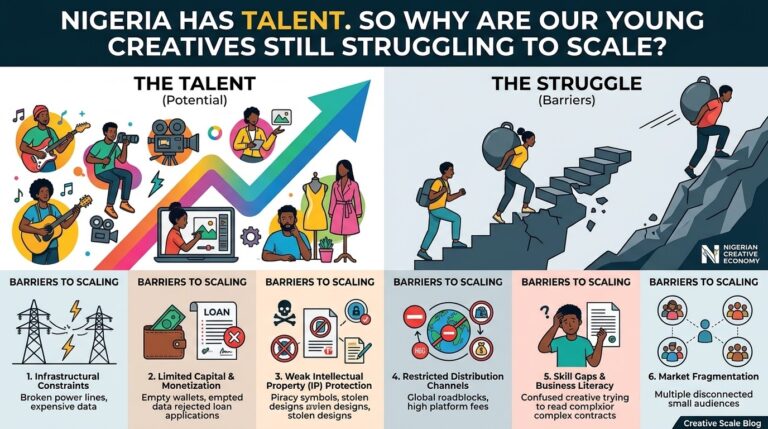
There is probably a Nigerian student somewhere right now with a song sitting unfinished on their phone.Another has a business idea but no money to start it. Someone else knows how to take amazing pictures but cannot afford a proper camera. A young filmmaker has the ideas but no equipment, while another talented creator is…
Clean Looking Water Is Not Always Safe Water
We drink water every day. When we are thirsty, we grab a bottle or sachet of water, open it and drink. Most times, we do not stop to think about where the water came from, how it was treated, or how it was handled before it reached us. It looks clean. It is sealed. So…
NIGERIAN MARRIAGE LISTS: IS IT TIME FOR FAMILIES TO REDUCE THE COST OF TRADITION?
Marriage is supposed to be the beginning of a new chapter in the lives of two people. It represents love, commitment, responsibility and the willingness to build a future together. In Nigeria, however, before many couples can begin that journey, they must first navigate a traditional marriage process that can be financially demanding. Across different…