We drink water every day.
When we are thirsty, we grab a bottle or sachet of water, open it and drink. Most times, we do not stop to think about where the water came from, how it was treated, or how it was handled before it reached us.
It looks clean. It is sealed. So we assume it is safe.
But is it always?
The uncomfortable truth is that contaminated water does not always look dirty. It can appear perfectly clear and still contain microorganisms or other substances capable of making people sick.
WHERE CAN CONTAMINATION COME FROM?
The problem can begin at the source.
If a water source is exposed to sewage, waste, chemicals or other pollutants, the water may already be contaminated before it reaches a treatment facility.
That is why proper treatment is so important.
But treatment is not the end of the story.
If the treatment process is poorly managed or inadequately monitored, some contaminants may remain in the water. Contamination can also occur later through dirty equipment, poor hygiene, contaminated surfaces or improper handling during packaging.
Even the packaging matters.
A damaged bottle, poorly sealed sachet or unhygienic handling can compromise the quality of drinking water.
Then there is transportation and storage.
Water may leave a production facility in good condition, but poor handling afterwards can expose the packaging to dirt, damage or other conditions that may affect its quality.
WHY SHOULD WE CARE?
Because contaminated water can carry things we cannot see.
Harmful microorganisms in drinking water can cause waterborne illnesses, including infections that affect the digestive system and may lead to diarrhoea and other health problems.
Some chemical contaminants can also be harmful, particularly when people are exposed to them repeatedly over a long period.
And this is what makes the problem even more concerning.
You may not know that the water is contaminated.
It may not smell bad.
It may not taste unusual.
It may not look dirty.
You could look at a bottle or sachet of water and see nothing wrong with it, while harmful contamination is still present.
SO, HOW DO WE KEEP WATER SAFE?
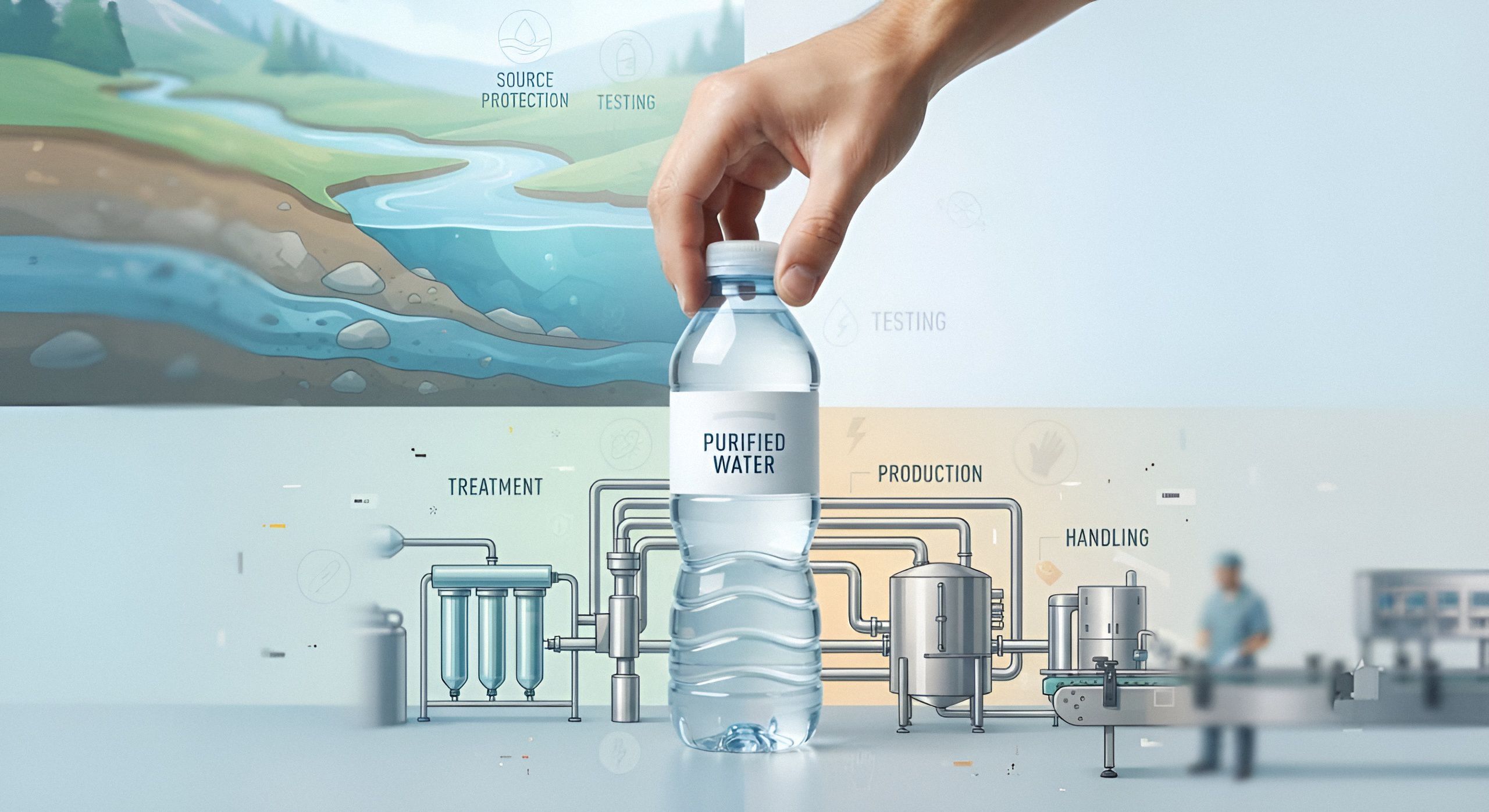
Keeping drinking water safe is not simply about putting it into a bottle or sachet. Safety has to be maintained from the source all the way to the person who consumes it.
Protect the Water Source
Water sources should be protected from sewage, waste, chemicals and other pollutants. The quality of source water should also be checked regularly.
Treat the Water Properly
Water should be treated according to the quality and characteristics of its source. Treatment processes must also be properly monitored to ensure they are effective.
Keep Everything Clean
Production areas, equipment, containers and packaging materials need to be kept clean. Workers should also follow proper hygiene practices throughout the production and packaging process.
Test the Water
This is one of the most important steps.
You cannot always determine whether water is safe by looking at it, smelling it or tasting it. Laboratory testing is necessary to detect microorganisms and other contaminants that our senses cannot identify.
Handle Packaging Properly
Bottles and sachets used for drinking water should be suitable for their intended purpose, properly sealed and handled hygienically.
Store and Transport It Safely
Good-quality water can still be put at risk if it is poorly stored or transported.
Packaged water should be protected from dirt, damage, excessive exposure to unsuitable conditions and other potential sources of contamination.
QUALITY CONTROL AND QUALITY ASSURANCE
This is where quality control and quality assurance become particularly important.
Quality control focuses on checking the water and production processes to identify problems.
Quality assurance goes a step further. It involves establishing proper systems, procedures and standards designed to prevent those problems from occurring in the first place.
Both are important.
Testing can tell us when something has gone wrong. Effective quality assurance helps ensure that the same problem does not continue to occur.
BEFORE YOU TAKE YOUR NEXT SIP
Water is essential to life, but simply seeing clear water inside a sealed bottle or sachet does not prove that it is safe.
Safe drinking water depends on what happens before it reaches the consumer.
It starts with a safe source.
It requires proper treatment.
It requires good hygiene.
It requires testing.
And it requires proper packaging, storage and transportation.
So the next time you pick up a bottle or sachet of water, remember this:
Clean-looking water is not necessarily safe water.
Sometimes, the things that can harm us are the things we cannot see.