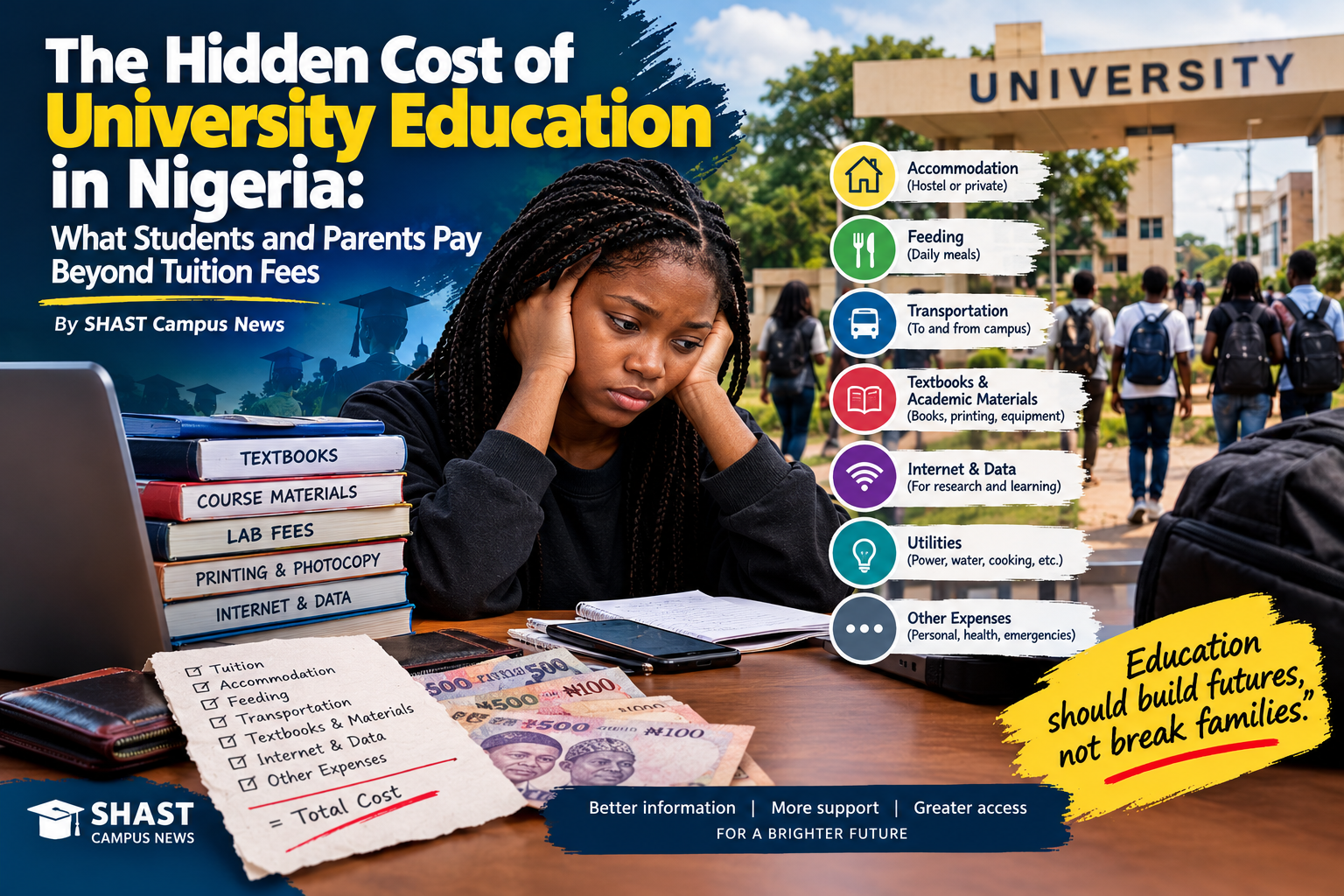
For many Nigerian families, gaining university admission is a moment of joy and hope. However, beyond the excitement lies a financial reality: the cost of obtaining a degree extends far beyond tuition and acceptance fees, from accommodation and feeding to transportation, textbooks, internet data, and departmental expenses, university education places a significant financial burden on students and their families. Although some public universities charge relatively low tuition fees, students must still meet several other expenses. Those who cannot secure hostel accommodation may have to pay for private housing, transportation, electricity, and other basic needs, academic requirements add to the burden. Textbooks, laboratory materials, printing, and internet access are often necessary for successful learning. While these expenses may seem manageable individually, their combined cost can become overwhelming throughout an academic session. Financial difficulties can interfere with students’ academic performance. A student struggling to afford food may find it difficult to concentrate, while another may miss lectures because of transportation costs, some students also experience emotional stress from depending on parents who are already struggling financially. Others seek part-time jobs to support themselves, sometimes finding it difficult to balance work with academic responsibilities. These challenges do not necessarily reflect a lack of commitment or intelligence. They highlight how financial circumstances can influence educational opportunities, behind many students are parents and guardians making difficult sacrifices to sustain their education. Families must balance school expenses with food, healthcare, rent, and other household needs. The real challenge is not merely paying for admission but ensuring that students have the resources to continue their studies until graduation, Universities should provide transparent information about approved fees, accommodation, and available financial assistance. Government scholarship and student-loan programmes should also be accessible, properly communicated, and fairly administered. Student unions can help by identifying welfare concerns and presenting practical recommendations to university management, prospective students and their families should equally investigate accommodation costs, transportation, academic requirements, and other expenses before accepting admission. However, personal budgeting alone cannot solve the wider financial challenges facing students. Effective institutional support and broader efforts to make education affordable remain essential, university education remains a valuable pathway to knowledge, professional development, and a better future. However, gaining admission should not be the only measure of educational access. The real question is whether students can afford to remain in school, participate fully in academic activities, and graduate successfully. Nigeria must look beyond admission figures and tuition fees to address the wider financial realities of university life. A university admission creates an opportunity, but adequate support helps students turn that opportunity into success.
Similar Posts
What the Girl Child Goes Through — And Why Nigeria Can No Longer Look Away
Before she becomes a woman, she is already at war. A war she did not start, for a body she did not choose, in a world that was not designed for her. Let us follow the life of a typical Nigerian girl child not the privileged one on Instagram, but the one in your street,…
7 Things Every 100-Level Student Should Know Before Their First Semester
100 Level Students, Freshers, University Life, Student Tips, Academic Success, First Semester, Study Tips, Undergraduate Students, Education, AE-FUNAI
NIGERIAN MARRIAGE LISTS: IS IT TIME FOR FAMILIES TO REDUCE THE COST OF TRADITION?
Marriage is supposed to be the beginning of a new chapter in the lives of two people. It represents love, commitment, responsibility and the willingness to build a future together. In Nigeria, however, before many couples can begin that journey, they must first navigate a traditional marriage process that can be financially demanding. Across different…
THE GENERATION THAT KNOWS EVERYTHING BUT UNDERSTANDS NOTHING: ARE WE BECOMING MORE INFORMED OR SIMPLY MORE DISTRACTED?
We live in a generation where information is everywhere, yet genuine understanding appears increasingly difficult to find. A person can wake up, scroll through social media for twenty minutes and encounter political arguments, celebrity controversies, relationship advice, financial lessons, religious debates, breaking news and opinions about almost every subject imaginable. Within a few minutes, they…
The Future of Medical Education in the Light of Evolving Career Dynamics.
The roots of medical education in Nigeria can be dated back to 1930. Before the establishment of the MBBS programme, medical training was offered in Yaba Training College as a diploma course and it was run by the colonial masters- the British Colonial government. The graduates were awarded Licentiate of Medicine and Surgery (LMS) and…
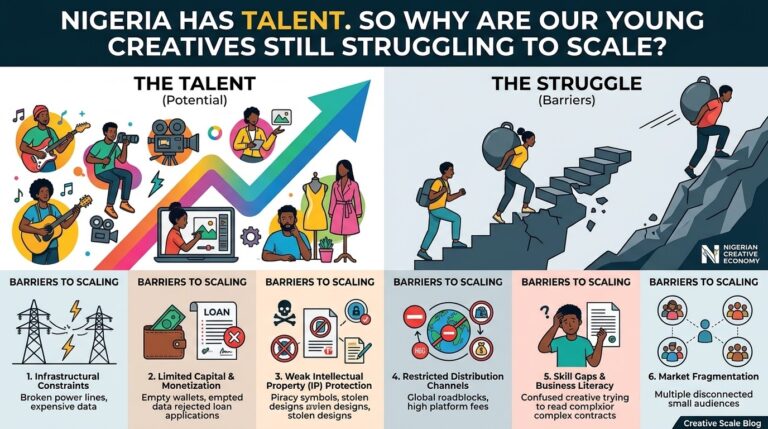
Nigeria Has Talent. So Why Are Our Young Creatives Still Struggling to Scale?
There is probably a Nigerian student somewhere right now with a song sitting unfinished on their phone.Another has a business idea but no money to start it. Someone else knows how to take amazing pictures but cannot afford a proper camera. A young filmmaker has the ideas but no equipment, while another talented creator is…