There was a time when the word “fake” in Nigeria mostly brought to mind imitation clothes, shoes, phones or designer products.Today, the question is becoming much more serious:What if the product we are calling fake is something we are eating, drinking, applying to our bodies or taking as medicine?That is the disturbing reality behind Nigeria’s growing counterfeit and adulterated-products problem. Recent public concern has focused on everything from fake toothpaste, cosmetics and beverages to adulterated food and medicines. NAFDAC said it received 225 complaints about suspected counterfeit products in August 2026 alone, while the agency has also acknowledged concerns surrounding adulterated palm oil and other food products. And palm oil has become one of the most disturbing examples. When palm oil becomes a laboratory experiment A viral conversation around adulterated palm oil has left many Nigerians asking how something as ordinary as cooking oil could become another source of anxiety.NAFDAC’s Director-General, Prof. Mojisola Adeyeye, acknowledged concerns about palm oil adulteration involving azo dyes and other potentially hazardous contaminants, particularly in traditionally packaged palm oil sold in open markets. The Lagos State Consumer Protection Agency has also warned consumers about increasingly sophisticated palm-oil adulteration and said market surveillance was being intensified. But there is an important point Nigerians should understand: viral videos and homemade experiments may raise an alarm, but they do not automatically prove that a particular product is dangerous. NAFDAC has stressed the importance of laboratory testing and regulatory investigation before claims about specific products are established as fact. distinction matters. The public deserves warnings when there is a genuine risk — but it also deserves evidence.The bigger problem Palm oil is only one part of the story.NAFDAC has reported concerns involving products ranging from food and beverages to cosmetics and medicines. The agency said it has seized or destroyed more than ₦1.5 trillion worth of fake and substandard products since 2023, according to its Director-General. That gap deserves serious attention. Fake products are also destroying legitimate businesses There is another victim in this crisis: the genuine manufacturer.A legitimate company spends money on research, production, workers, quality control, packaging, registration and compliance.A counterfeiter can imitate the product, exploit the established brand name and sell something cheaper.The consumer loses trust.The legitimate manufacturer loses money.And the counterfeit seller makes a profit.It is a business model built on somebody else’s reputation — and potentially somebody else’s health.Nigeria cannot normalise this . Nigeria already has regulations for recalling, handling and disposing of adulterated and unwholesome food products, including products affected by contamination, unsafe additives, adulteration and food fraud. NAFDAC The issue is whether enforcement, surveillance and coordination are keeping pace with the problem.A country should not require its citizens to become detectives every time they go shopping.Food should be food.Medicine should be medicine.A trusted brand should actually be what it claims to be.And when someone deliberately puts people’s health at risk for profit, the consequences should be serious enough to make the business of counterfeiting far less attractive.Because at some point, this stops being about fake products.It becomes a question of how much a human life is worth to the person selling them.

Similar Posts
How to Apply for the US Army as a Non-Citizen in 2026: Requirements, Green Card & Citizenship Process
Many Nigerians and other foreigners ask if it’s possible to join the United States Armywithout being a U.S. citizen.The short answer is yes, but with conditions. You don’t need to be a U.S. citizen to enlist, but you must be a legal U.S. resident. According to U.S. Army recruiting guidelines, non-citizens must meet these requirements:…
Clean Looking Water Is Not Always Safe Water
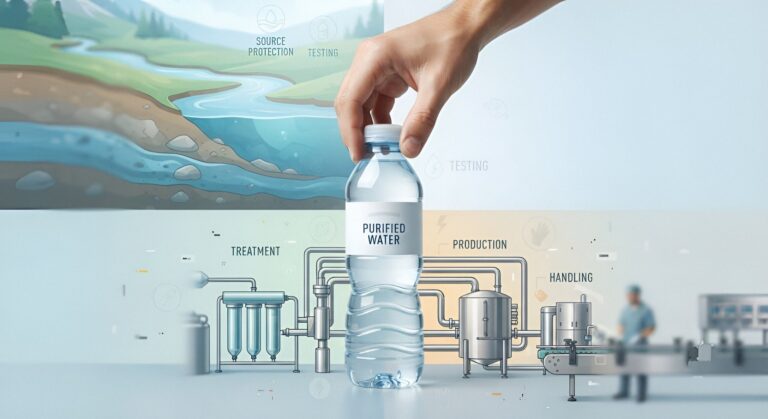
We drink water every day. When we are thirsty, we grab a bottle or sachet of water, open it and drink. Most times, we do not stop to think about where the water came from, how it was treated, or how it was handled before it reached us. It looks clean. It is sealed. So…
AFTER GRADUATION, THEN WHAT? NIGERIA’S SILENT WAR ON YOUNG JOB SEEKERS
The graduation gown comes off, the photographs are taken, congratulations pour in, and then reality arrives: “What next?” For many Nigerian graduates, finding a job can be harder than earning the degree itself. Applications are sent, interviews are attended, yet many employers still demand years of experience for entry level positions. It becomes a frustrating…
Educated, Unemployed and Unprepared: Is the Nigerian University Producing Graduates the Economy No Longer Needs?
CHIME CHUKWUAGOZIEM J. LL.bChukwuagoziem2003@gmail.com There is an uncomfortable question Nigeria must eventually answer: what is the social value of an education that confers a qualification but fails to confer meaningful economic capacity?For generations, the Nigerian university has operated almost as an article of faith. Go to university. Obtain a degree. Find a job. Build a…
They Went Looking for Gold. They Never Came Home.
Thirty-seven suspected illegal miners died in NSCDC custody in Niger State. As investigations continue, the tragedy raises questions not only about what happened inside the detention facility, but about the conditions that pushed people into dangerous mining work in the first place.
LEARNING TO ADJUST WHEN THE PACE CHANGES
Something happened while I was writing my exams last semester.It was as if my lecturers and exam invigilators all had a problem with time or somewhere very important to be. Where did they all want to go?Where were they rushing to? On the exam paper, the duration would be clearly stated:2 HOURS.But somehow, most times,…