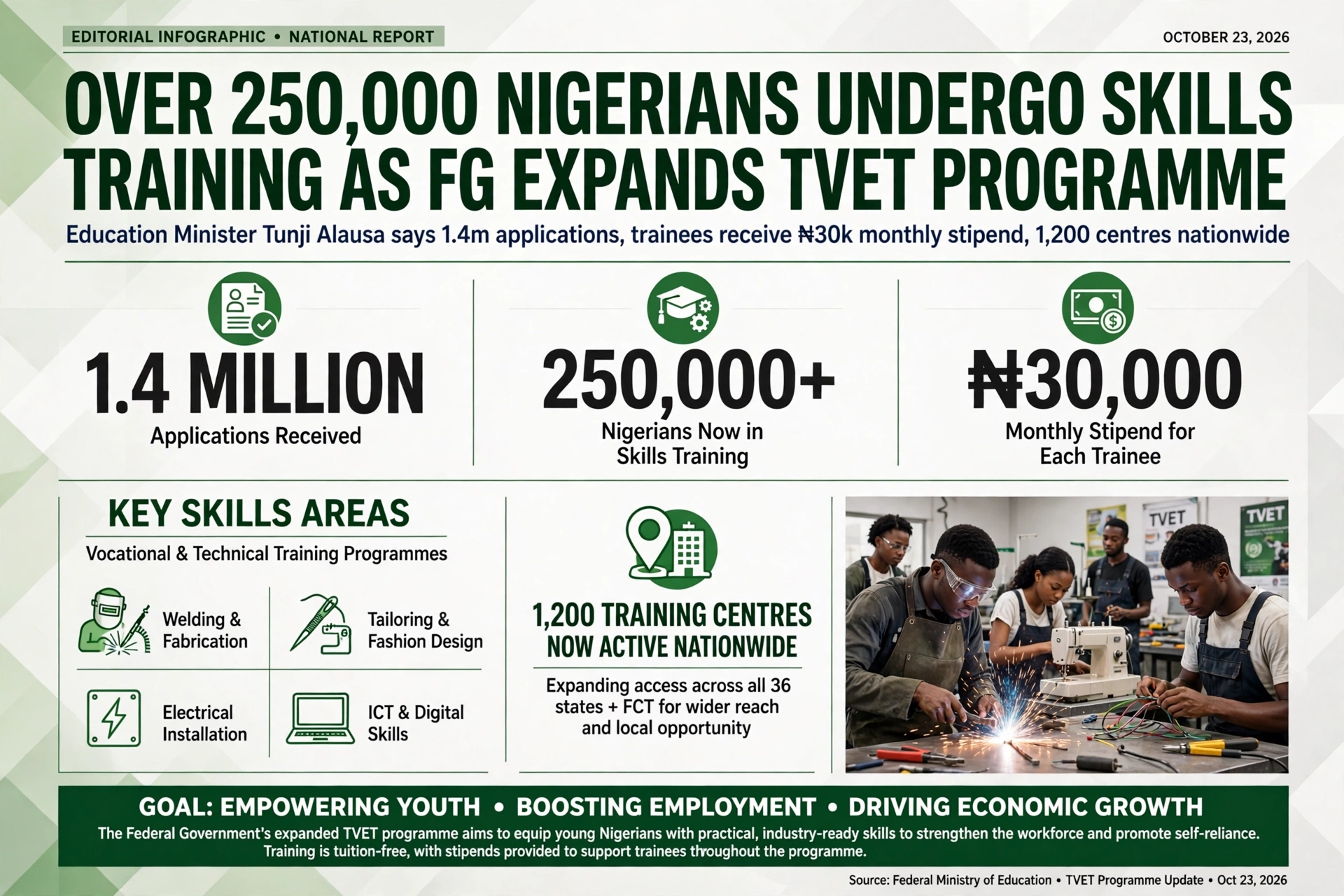
Education Minister Tunji Alausa says the programme has attracted millions of applications, with eligible trainees receiving monthly stipends under the government’s technical and vocational training initiative, more than 250,000 Nigerians are undergoing technical and vocational skills training across over 1,200 accredited centres nationwide, according to the Federal Government. The Minister of Education, Tunji Alausa, disclosed the figures during an engagement with the House of Representatives Committee on Polytechnic and Higher Technical Education. The update, reported on October 23, 2026, highlights the growing interest in technical and vocational education as the government seeks to equip Nigerians with practical skills for employment and entrepreneurship. The initiative, known as Technical and Vocational Education and Training (TVET), is intended to improve access to industry-relevant training and create pathways for young people to develop marketable skills. According to the minister, the latest application portal recorded nearly 1.4 million applications within two weeks, He said the figure exceeded the 1.3 million applications received during the programme’s first cohort within ten days, the high application numbers suggest substantial interest in vocational training opportunities. However, the number of applications should not be confused with the number of people who have been admitted or are currently receiving training, the government has indicated that available training capacity is limited compared with the number of applicants. The allocation process is reportedly designed to take geographical representation across states and local government areas into account. The TVET initiative focuses on practical skills that can help participants obtain employment, establish businesses or improve their existing economic activities, unlike programmes focused primarily on classroom instruction, technical and vocational training generally combines practical learning with occupation-specific knowledge, the government’s stated objective is to strengthen the country’s technical skills base and make it easier for trainees to compete in a labour market increasingly influenced by technology and specialised skills. The particular training opportunities available to an individual depend on the courses offered by accredited centres and the programme’s admission arrangements, applicants should therefore verify the courses, locations and requirements associated with their applications. Alausa reportedly stated that each trainee receives a monthly stipend of ₦30,000, accredited training centres also receive ₦50,000 per student monthly to support training delivery. The government has introduced biometric attendance verification to strengthen accountability and ensure that public funds are linked to actual participation. According to the minister, initial payment delays occurred during the implementation of the verification system, but the issue had been resolved and payments to trainees and centres were up to date as of September, the payment information is significant for beneficiaries who depend on the stipend to support their participation. However, applicants should not assume that submitting an application automatically guarantees admission or payment. Eligibility, selection, attendance and programme requirements remain important. The National Board for Technical Education (NBTE) is responsible for verifying the capacity of centres seeking accreditation, according to the minister. The accreditation process is intended to ensure that approved centres meet the necessary requirements to deliver training, such oversight is important because poor-quality training could undermine the programme’s objectives and waste public resources. The House of Representatives committee also has a role in monitoring the programme and examining how public funds are used, effective oversight will be essential to ensure that the number of trainees reported by the government translates into meaningful training outcomes. The government has said beneficiaries are expected to receive starter packs and relevant equipment after completing their training, such support could help graduates begin small businesses or apply their skills in practical settings. The long-term success of the programme will depend on the quality of instruction, the relevance of the courses and the availability of opportunities for trainees after graduation, training in itself does not guarantee employment, but effective practical instruction and appropriate equipment may improve participants’ ability to earn an income. Nigerians interested in the programme should consult official Federal Ministry of Education announcements and the designated TVET portal for accurate information about current applications, applicants should verify whether a particular application window is open, which courses are available and whether their preferred training centres are accredited. They should also be cautious of individuals who demand unofficial payments or promise guaranteed admission. The government’s reported figures demonstrate the scale of interest in vocational education, but the programme’s ultimate impact will be measured by the skills acquired and the opportunities created for participants.
Similar Posts
SUPREME COURT BACKS TRUMP’S DEPORTATION MOVE — FOR NOW
The United States Supreme Court has temporarily cleared the way for the administration of President Donald Trump to resume deporting migrants to countries other than their own, as a major legal battle over the policy continues. In a decision issued on Tuesday, September 29, the Supreme Court granted the Trump administration’s emergency request to put…
LAGOS POLICE DETAIN FOUR OFFICERS AFTER VIRAL HARASSMENT VIDEO
The Lagos State Police Command has reportedly detained four police officers and disbanded their tactical team following the circulation of a viral video allegedly showing officers harassing a young man in the Odogunyan area of Ikorodu. The development was reported on October 23, 2026, after the command announced that the officers had been identified and…
“NO MERCY”: IBRAHIM TRAORÉ WARNS FOREIGN OR LOCAL SPIES IN BURKINA FASO COULD FACE DEATH PENALTY OUAGADOUGOU, BURKINA FASO
Burkina Faso’s military leader, Captain Ibrahim Traoré, has issued a stern warning to individuals accused of espionage or treason, saying those caught spying for foreign powers could face the death penalty. Traoré made the remarks during an interview in Ouagadougou on September 28, 2026, as his government continues to adopt a tougher position toward what…
WHY APC GOVS ARE NOT HAPPY WITH ME _ WIKE
The Minister of the Federal Capital Territory, Nyesom Wike, has finally opened up on why APC Governors are not happy with him. Wike made this revelation during an interview on Arise TV Prime Time on Tuesday, September 16. According to him, the problem did not start today. Wike said APC governors were unhappy from the…
Nigeria Begins 66th Independence Anniversary Activities With Public Lecture
Nigeria is set to mark its 66th Independence Anniversary with a series of activities beginning with an Independence Day Public Lecture on Wednesday, September 30. The Federal Government has announced a relatively low-key programme for this year’s anniversary as the country prepares to commemorate 66 years since gaining independence from British colonial rule. Nigeria became…
Scrap Dealers Begin 15-Day Nationwide Warning Strike
Scrap and waste dealers across Nigeria have commenced a 15-day nationwide warning strike over a dispute with iron-smelting companies. The industrial action began on Thursday, October 1, according to the National Association of Scrap and Waste Dealers Employers of Nigeria. The association said the dispute centres on the prices paid for scrap metals and the…