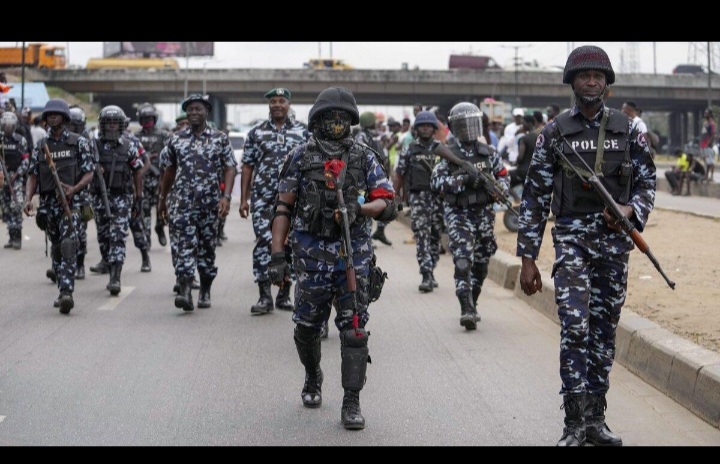
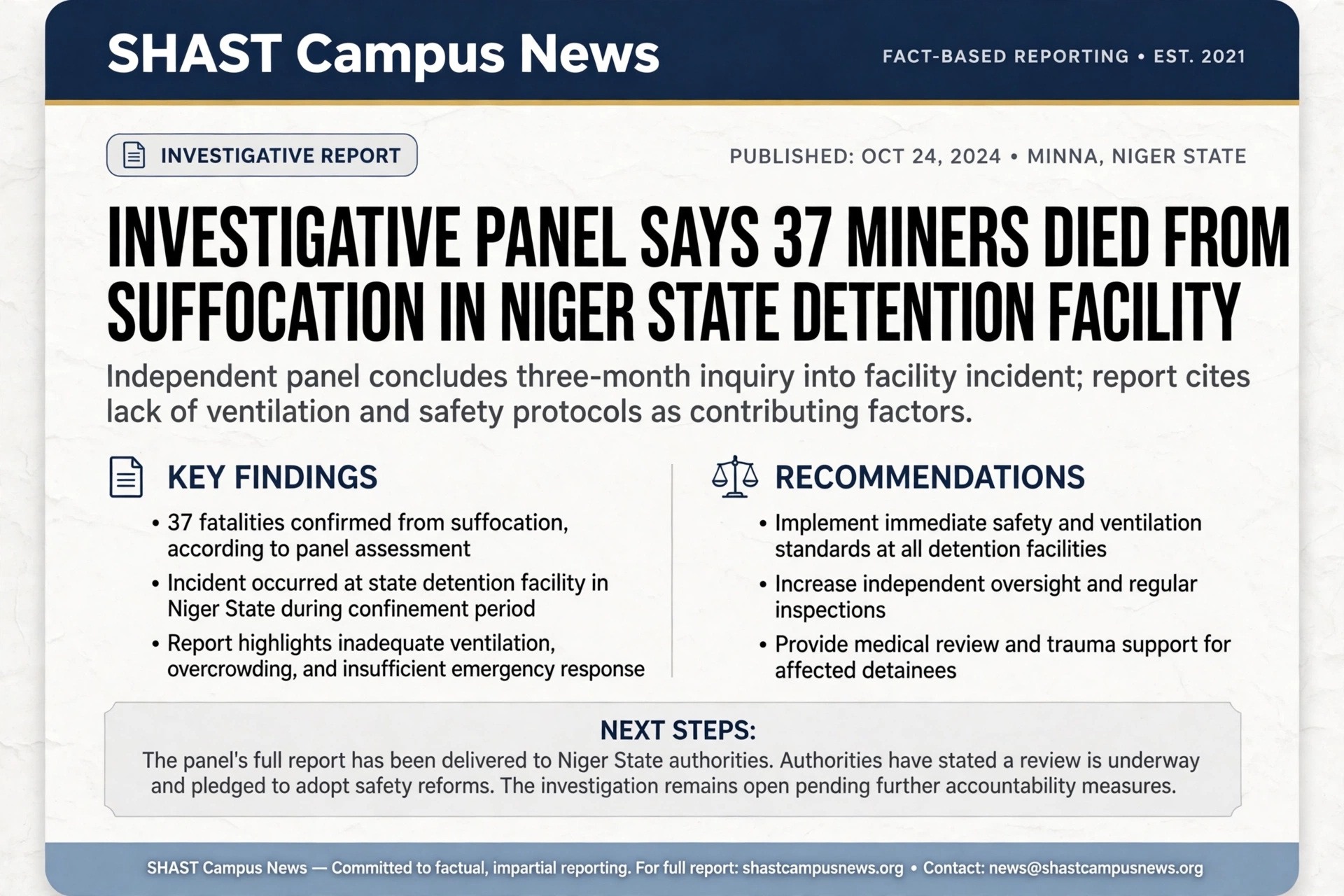
An investigative panel has attributed the deaths of 37 suspected illegal miners in detention in Niger State to suffocation linked to severe overcrowding, poor ventilation and failures in the treatment and supervision of detainees, the findings have renewed calls for accountability, improved detention conditions and stronger safeguards for people held by law enforcement agencies. The victims died after being detained by the Nigeria Security and Civil Defence Corps following their arrest over suspected illegal mining activities. The panel concluded that the deaths were preventable and identified serious deficiencies in the conditions under which the detainees were held.
The investigation identified overcrowding, unsuitable detention conditions, inadequate supervision and the failure to respond appropriately to distress warnings among the factors that contributed to the deaths, the findings also challenged earlier suggestions that a disease outbreak was responsible for the incident. The case has generated public concern about the treatment of suspects in custody and the responsibilities of government agencies charged with enforcing the law, the deaths also raise questions about the adequacy of detention facilities and the procedures used when large numbers of suspects are arrested. The panel recommended compensation for the victims’ families and survivors, alongside disciplinary measures and possible prosecution of officers found responsible. Reports indicate a recommendation of ₦30 million for each bereaved family and ₦10 million for each of 41 survivors, these recommendations should not be confused with proof that compensation has already been paid or that every recommended disciplinary measure has been implemented. The relevant authorities will need to clarify the next steps, including the implementation of the panel’s recommendations and any further investigations or prosecutions, the incident highlights a fundamental principle of law enforcement: people held in custody remain entitled to humane treatment and protection from preventable harm. An arrest does not amount to a conviction, and the responsibility for maintaining safe detention conditions rests with the relevant authorities, the outcome of this case will therefore be important not only for the affected families but also for public confidence in Nigeria’s security institutions.
Similar Posts
State Police Proposal Hits Roadblock as Only Four States Approve Amendment
Nigeria’s long-running debate over the establishment of state police has encountered another hurdle after only four state Houses of Assembly were reported to have approved the proposed constitutional amendment. The four states are Edo, Osun, Oyo and Rivers. The National Assembly transmitted the Constitution amendment bill to the 36 state Houses of Assembly in September,…
VDM FIRES BACK AT SENATOR NATASHA: “YOU DID NOT DENY THE VOICE NOTE”
Social media activist Martins Otse, popularly known as VeryDarkMan, has reacted after Senator Natasha Akpoti-Uduaghan accused him of being paid by Senate President Godswill Akpabio to publish stories against her.In a post on her X handle, Senator Natasha shared a screenshot that appeared to show a WhatsApp chat where VeryDarkMan’s Facebook video about her was…
POLICE BEGIN TRAINING 10,000 OFFICERS AHEAD OF 2027 GENERAL ELECTION
The Nigeria Police Force has commenced a nationwide training programme for 10,000 police officers as part of preparations for the 2027 general election. The exercise, announced on October 23, 2026, is being conducted in collaboration with the Nigeria Police Trust Fund, the initiative is intended to strengthen the capacity of officers to manage election-related security…
Nigeria Begins 66th Independence Anniversary Activities With Public Lecture
Nigeria is set to mark its 66th Independence Anniversary with a series of activities beginning with an Independence Day Public Lecture on Wednesday, September 30. The Federal Government has announced a relatively low-key programme for this year’s anniversary as the country prepares to commemorate 66 years since gaining independence from British colonial rule. Nigeria became…
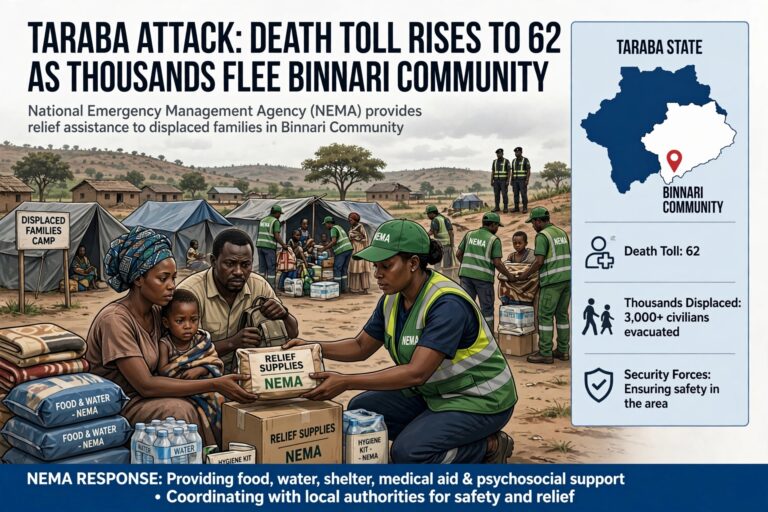
TARABA ATTACK: DEATH TOLL RISES TO 62 AS THOUSANDS FLEE BINNARI COMMUNITY
At least 62 people have reportedly been killed and 52 others injured following a deadly attack on Binnari community in Karim-Lamido Local Government Area of Taraba State, raising fresh concerns about the safety of rural communities in Nigeria. The attack occurred on Friday, October 23. The National Emergency Management Agency provided the updated casualty figures…
Shettima to Lead Nigeria’s Delegation to 81st UN General Assembly
Vice President Kashim Shettima will lead Nigeria’s delegation to the 81st Session of the United Nations General Assembly in New York, following a directive from President Bola Ahmed Tinubu. The development was announced on Sunday, September 20, 2026, by Stanley Nkwocha, Senior Special Assistant to the President on Media and Communications in the Office of…