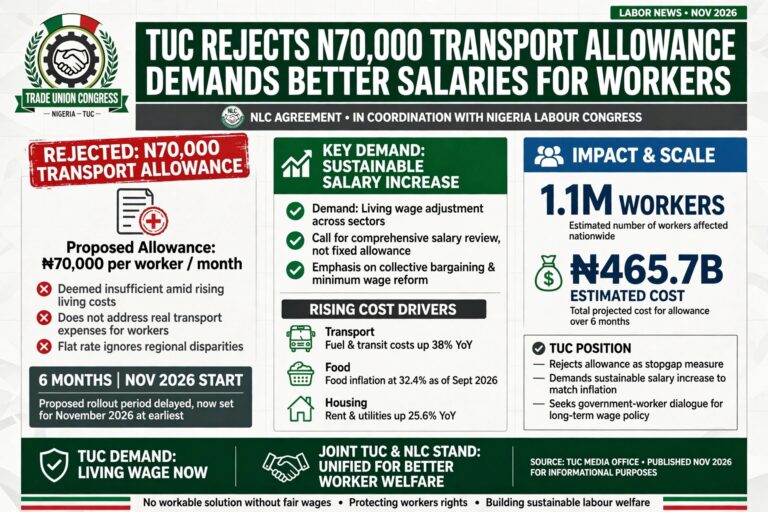
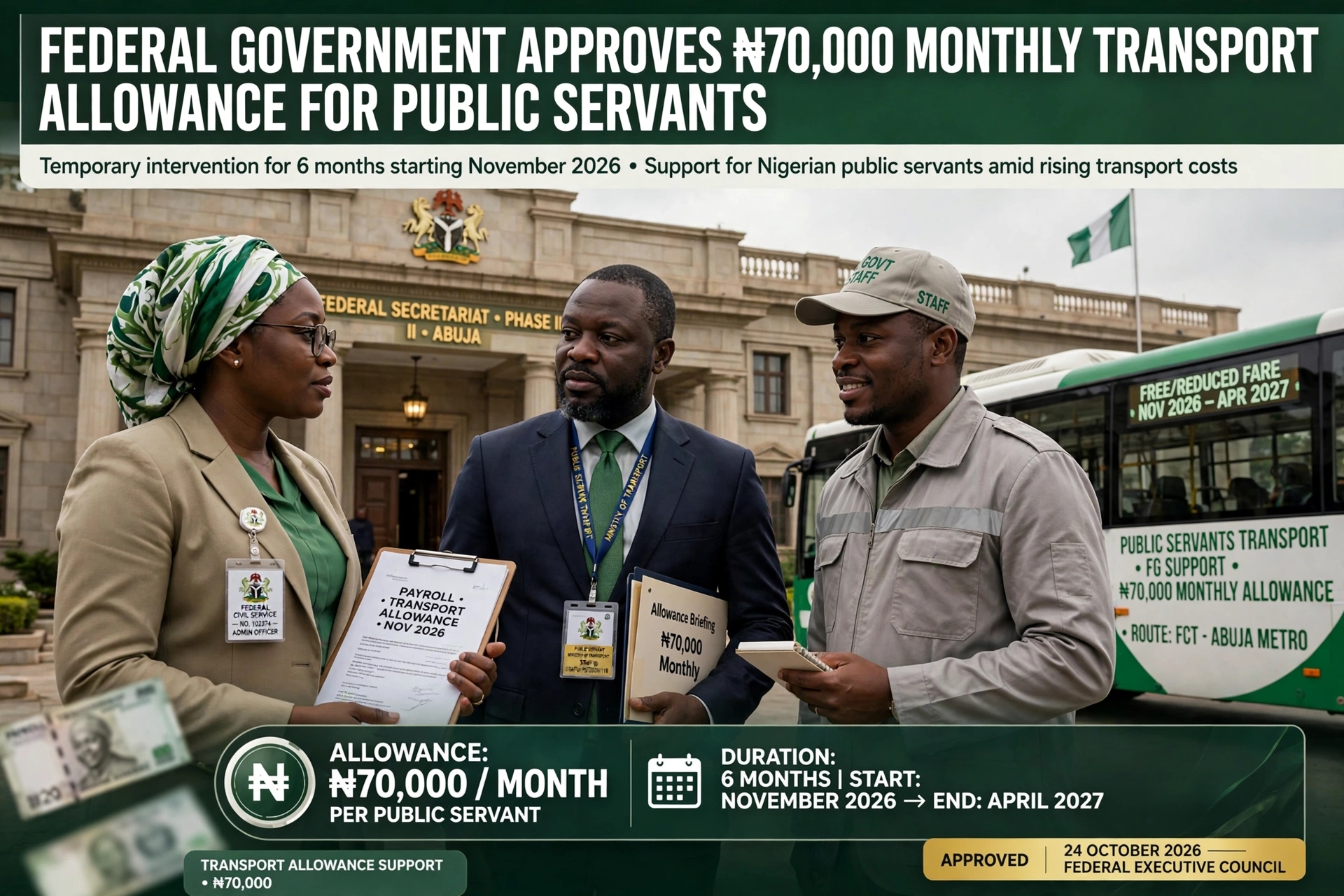
The Federal Government has approved a monthly transport intervention of ₦70,000 for federal public service workers for six months, beginning in November 2026, following discussions with organised labour over workers’ welfare and the rising cost of living, the agreement emerged from negotiations involving the government and the Nigeria Labour Congress in Abuja on October 27. The intervention is intended to provide temporary financial relief to workers struggling with transportation expenses and other living costs. Under the reported arrangement, eligible federal public servants are expected to receive the allowance monthly over the six-month period, the agreement also addressed outstanding peculiar-allowance arrears and unpaid allowances affecting health workers, with the government committing to payment arrangements. However, the negotiations did not settle every outstanding labour demand. The effective date for a revised national minimum wage remained unresolved, prompting the parties to agree on further discussions, the transport allowance should therefore be understood as a temporary intervention rather than a permanent increase in basic salaries. For many Nigerian workers, transportation has become a significant part of monthly expenditure. Rising fares, fuel costs and the general increase in the prices of essential goods have placed considerable pressure on household budgets, A monthly allowance could help eligible workers meet some of these expenses, particularly those who travel long distances to their workplaces. Nevertheless, the impact will depend on timely payment, the implementation guidelines and the actual transportation costs faced by individual workers, labour representatives are also expected to continue pressing for broader measures that address wages, unpaid entitlements and the purchasing power of workers. Attention will now turn to the implementation of the agreement and the government’s ability to begin payments as scheduled, workers will also be watching the outcome of further discussions on unresolved salary and allowance issues. The agreement represents a temporary response to the cost-of-living crisis, but the broader challenge of improving workers’ welfare remains.
Similar Posts
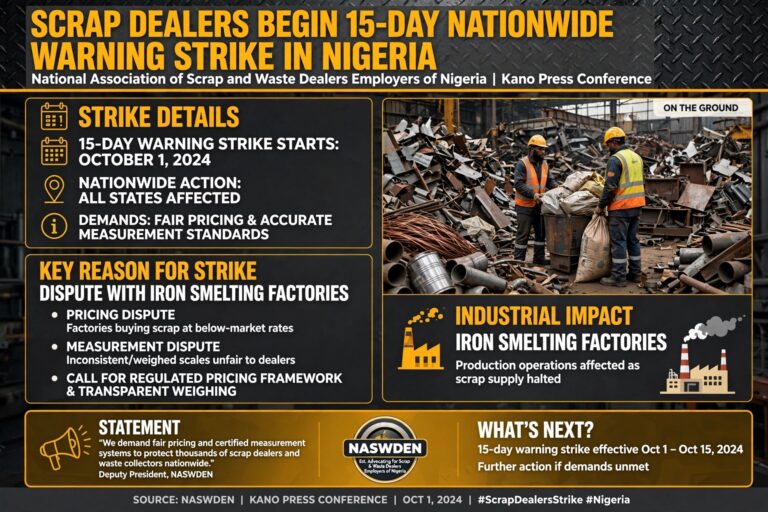
Scrap Dealers Begin 15-Day Nationwide Warning Strike
Scrap and waste dealers across Nigeria have commenced a 15-day nationwide warning strike over a dispute with iron-smelting companies. The industrial action began on Thursday, October 1, according to the National Association of Scrap and Waste Dealers Employers of Nigeria. The association said the dispute centres on the prices paid for scrap metals and the…
NMDPRA Says It Does Not Fix Petrol Pump Prices Under PIA
The Nigerian Midstream and Downstream Petroleum Regulatory Authority (NMDPRA) has clarified that it does not fix petrol pump prices under the Petroleum Industry Act (PIA) 2021.The clarification was contained in a press statement issued by the Authority amid concerns over the recent rise in Premium Motor Spirit (PMS) prices and the financial pressure it has…
TUC REJECTS #70,000 TRANSPORT ALLOWANCE, DEMANDS BETTER SALARIES FOR WORKERS
The Trade Union Congress of Nigeria (TUC) has rejected the Federal Government’s proposed ₦70,000 monthly transport allowance for federal workers, arguing that employees need a more sustainable improvement in their earnings, the disagreement comes as workers continue to face pressure from the rising cost of transportation, food, housing and other essential expenses. Reports indicate that…
JIDE KOSOKO SPARKS DEBATE AFTER SAYING ONE GOOD MEAL A DAY CAN BE ENOUGH
The veteran Nollywood actor has faced renewed public attention after comments about food, personal responsibility and the Tinubu administration’s handling of Nigeria’s economic challenges. Veteran Nigerian actor Jide Kosoko has sparked public discussion following remarks about the cost of living and the ability of Nigerians to manage their daily expenses. Kosoko reportedly made the comments…
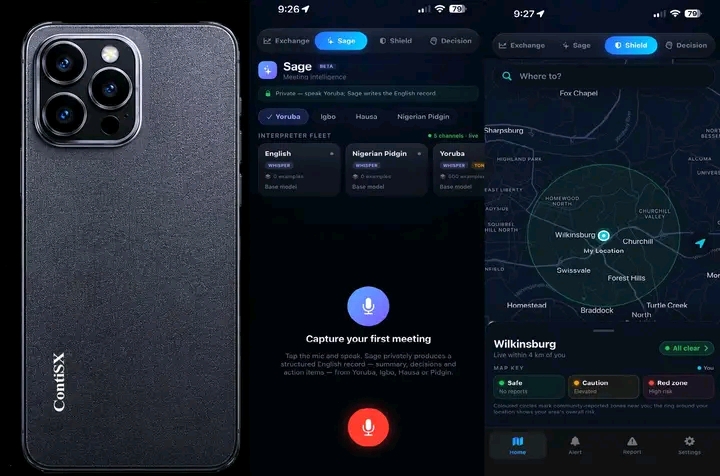
Nigerian Engineer Ndubuisi Ekekwe Unveils Contisx Phone, a Blockchain-Secured Communication Device
Nigerian engineer, inventor and entrepreneur Dr. Ndubuisi Ekekwe has announced the Contisx Phone, a blockchain-based smartphone designed to provide secure communication for individuals, businesses and governments.Ekekwe, who described himself as a Nigerian engineer and inventor, said his journey of building technology began during his university days at the Federal University of Technology, Owerri (FUTO), where…
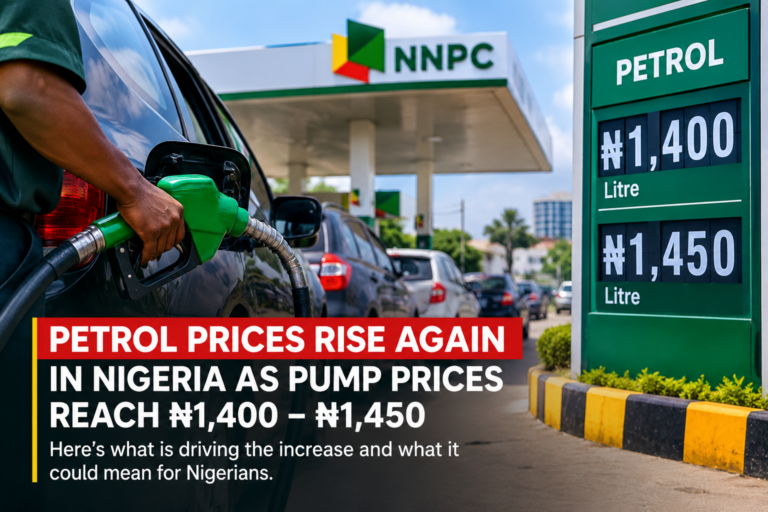
Petrol Prices Rise Again as Nigerians Face Fresh Cost-of-Living Pressure
Nigerians are once again facing higher petrol prices as filling stations across parts of the country adjust their pump prices, adding fresh pressure to households, transport operators and businesses. Reports from major cities indicate that petrol is now selling for around ₦1,400 per litre at some major outlets, while prices as high as ₦1,450 per…