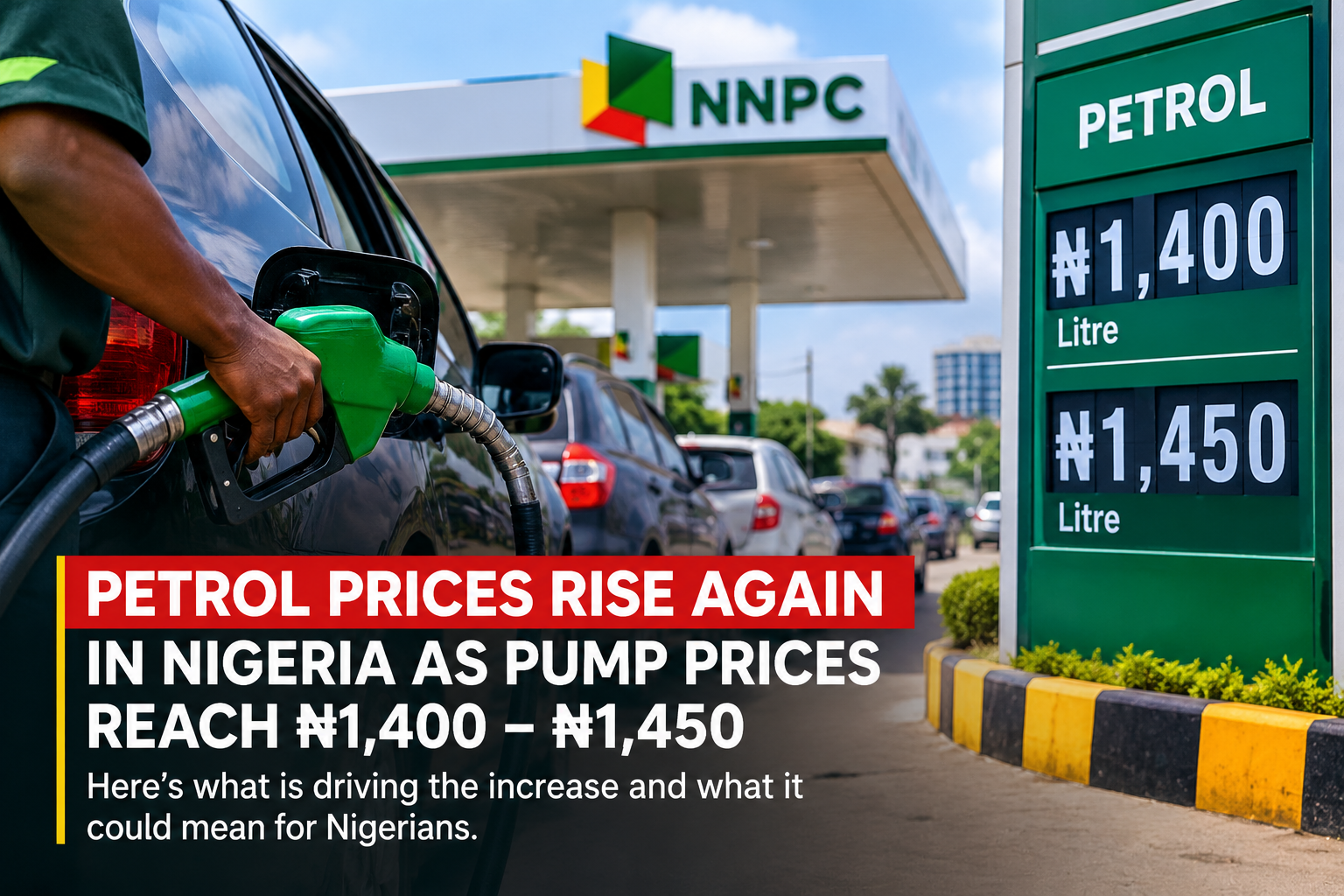
Nigerians are once again facing higher petrol prices as filling stations across parts of the country adjust their pump prices, adding fresh pressure to households, transport operators and businesses. Reports from major cities indicate that petrol is now selling for around ₦1,400 per litre at some major outlets, while prices as high as ₦1,450 per litre have also been reported in some locations. The exact amount Nigerians pay continues to depend on the filling station and location. In Lagos and surrounding areas, MRS stations have reportedly increased their pump price to about ₦1,400 per litre, up from ₦1,300. NNPC-operated stations have also raised their prices, with reports putting their current pump price at about ₦1,375 per litre in some locations. One of the major factors behind the latest increase is the rise in international crude oil prices, which have moved above $100 per barrel amid renewed concerns about global supply and geopolitical tensions. Higher crude prices can increase the cost of refined petroleum products and place pressure throughout the supply chain, eventually affecting what consumers pay at filling stations. Another important development is the recent increase in the price of petrol supplied from the Dangote Refinery. Reports say the refinery’s gantry price rose to about ₦1,350 per litre, contributing to higher retail. The effect of a petrol price increase does not stop with motorists. Transport operators may face higher operating costs, which can translate into increased fares for passengers. Businesses that depend on petrol-powered generators may also have to spend more to keep their operations running. Higher transportation and energy costs can subsequently put additional pressure on the prices of food, goods and services. For many households already trying to manage rising living costs, another increase at the pump could make budgeting even more difficult.
It is important to note that there is no single pump price being charged by every filling station across Nigeria.
Prices can differ depending on the marketer, location, supply costs and other market conditions. Nigerians are therefore likely to see different prices even between stations operating within the same city. The latest development comes at a time when NNPC Limited is also planning to introduce between 50 and 70 smart self-service filling stations across Nigeria within the next six months. The planned stations are expected to provide services including petrol, CNG, LPG, electric-vehicle charging and digital payments. For now, motorists and businesses are being advised to prepare for continued price fluctuations as market conditions change. With crude oil prices remaining elevated and petrol prices varying from one location to another, consumers will be watching closely to see whether prices continue rising or begin to stabilise in the coming days.
Similar Posts
Tinubu and Nigeria’s 2027 Political Race: The Battle for Aso Rock Takes Shape
Nigeria’s 2027 presidential election is beginning to take clearer shape as political parties and major contenders intensify preparations for what is expected to be another closely watched contest for the country’s highest political office. The Independent National Electoral Commission (INEC) has now released its final list of presidential candidates and their running mates for the…
Lagos Govt Gives Police Officers 3 Months Free Transport on BRT, Train, and Boats
The Lagos State Government has launched a 3-month free transportation scheme for police officers in the state. The initiative was unveiled on Wednesday, September 9, 2026, to recognize the sacrifices of police officers in maintaining peace and security across Lagos. The state government presented 2,000 Cowry Cards to the Nigeria Police Force. Each card gives…
FG Enrols 16,000 Nigerians in Free Digital Training Academy
The Federal Government has enrolled 16,000 Nigerians into the first cohort of its newly established Digital Training Academy (DTA), a free programme designed to equip young Nigerians with digital skills needed in today’s changing job market. The development comes as Nigeria continues to face growing demand for technology and digital skills, with young people increasingly…
ISRAELI STRIKES KILL12 SOUTHERN LEBANON AMID RENEWED TENSIONS WITH HEZBOLLAH
Israeli airstrikes have killed at least 12 people, including two children and four women, in Southern Lebanon as fighting between Israel and Hezbollah intensifies despite a ceasefire agreement reached more than two months ago.The Lebanese Health Ministry confirmed the deaths. The ministry said one strike hit a residential building in Kfar Rumman, killing 11 people…
BREAKING! Why Tinubu Doesn’t Want His US Records Released – Presidency Finally Speaks
The Presidency has explained why President Bola Ahmed Tinubu is opposing the release of unredacted records held by United States law enforcement agencies, saying the matter involves lawful exemptions under the US Freedom of Information Act (FOIA) and does not amount to a criminal case against the Nigerian leader. The Presidency, in a statement issued…