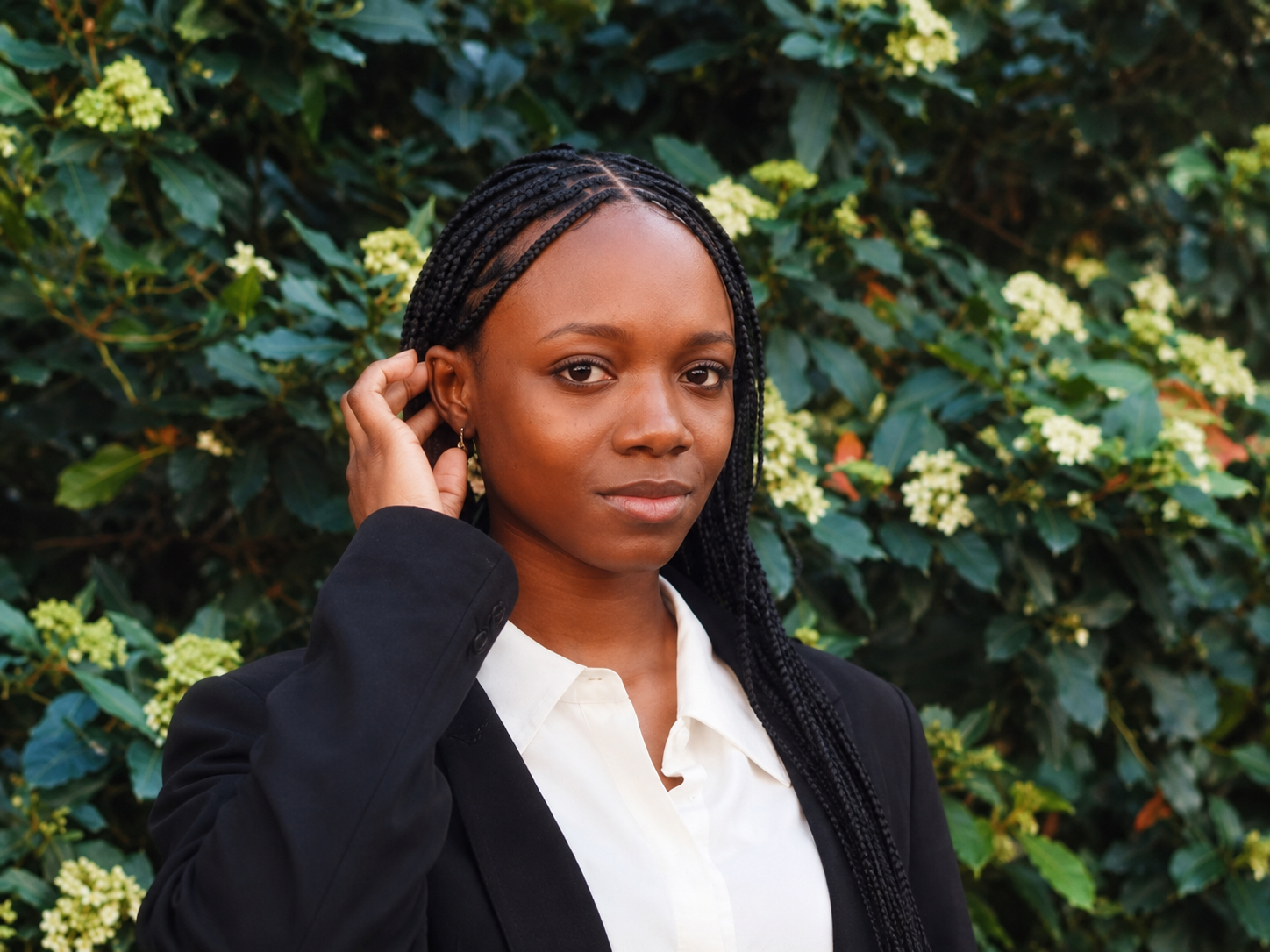
A Nigerian-American engineer and entrepreneur, Yinka Ogunbiyi, has attracted international attention after unveiling a demonstration of HaloBraid, a robotic device designed to help hairstylists complete individual braids up to five times faster. The demonstration, shared on October 29, 2026, has renewed interest in the technology, which aims to reduce the time and physical effort required for traditional hair braiding. HaloBraid is designed to assist professional hairstylists rather than replace them. Unlike a fully automated machine, HaloBraid requires the hairstylist to begin the process manually, the stylist sections the hair and starts each braid before feeding it into the device. The machine then assists with the repetitive weaving process, after which the stylist completes the hairstyle. The technology is intended to reduce the hours spent on lengthy braiding appointments while helping professional hairstylists manage their workload. However, the claim that it can complete individual braids up to five times faster comes from the company and should not be interpreted as a guarantee that every full hairstyle will take five times less time. Ogunbiyi reportedly conceived the idea during the COVID-19 pandemic after spending four days braiding her own hair, the experience inspired her to explore how engineering could make the process faster and less physically demanding. She subsequently partnered with David Afolabi to develop the technology, drawing on engineering expertise and feedback from hairstylists, the invention also seeks to address the repetitive physical strain experienced by professionals who spend long hours braiding customers’ hair. HaloBraid has attracted significant investor interest. In 2026, the company secured $7 million in seed funding in a round led by Seven Seven Six, the investment firm founded by Reddit co-founder Alexis Ohanian. Reports also indicate that more than 7,000 salons have joined the company’s waiting list, reflecting substantial interest in the technology. The funding is expected to support the company’s efforts to bring the device to market and expand its relationships with professional salons, if the technology performs as intended in everyday salon settings, it could help hairstylists reduce appointment times, manage repetitive tasks, and serve more customers, it could also influence how technology is applied to the beauty industry, particularly in protective hairstyles that often require several hours to complete. Nevertheless, its long-term impact will depend on practical performance, accessibility, affordability, and whether hairstylists and customers find it useful. Yinka Ogunbiyi’s HaloBraid demonstrates how engineering can be applied to everyday challenges in the beauty industry, rather than removing the hairstylist from the process, the invention is designed to combine human expertise with robotic assistance. As interest in the technology grows, its success will depend on how effectively it reduces braiding time and physical strain while maintaining the quality of the finished hairstyle, for Nigeria and the wider African innovation community, the story also highlights the potential of creative thinking to transform familiar experiences into technological opportunities.
Similar Posts
Francis Duru at 57: Remembering the Nollywood Actor Who Helped Shape a Generation of Nigerian Cinema
Nigerian cinema has lost one of its familiar faces with the death of veteran actor Francis Duru at the age of 57.The actor’s family announced his death on Friday, October 23, 2026, stating that he passed away following a brief illness. The family did not disclose further medical details but appealed for prayers, love and…
“I DON’T KNOW THEM” — OBASANJO REACTS TO DON JAZZY, CARTER EFE & POCO LEE, RECALLS CHANGING HIS PERCEPTION OF CHARLY BOY
Former Nigerian President Olusegun Obasanjo has sparked reactions following his appearance on comedian Isbae U’s popular interview show, Curiosity Made Me Ask.During the episode, which aired on Saturday, September 19, 2026, Isbae U tested the former president’s knowledge of some popular Nigerian entertainers, including Carter Efe, Poco Lee and Don Jazzy.When asked if he knew…
CRYSTAL NICOLE CALLS OUT UCHE MONTANA OVER ALLEGED CONTENT PLAGIARISM
American beauty and lifestyle content creator Crystal Nicole has called out Nollywood actress Uche Montana over an alleged case of content copying.Crystal Nicole reportedly accused Uche Montana of reproducing her content without giving her credit.According to the report making the rounds online, Crystal claimed that the content was copied “word for word” and questioned why…
KIZZ DANIEL BREAKS SILENCE ON MUSIC HIATUS: “I PAUSED FOR MY MOM, NOT AN ALBUM”
Nigerian Afrobeats star Kizz Daniel has revealed the personal reason behind his prolonged break from music in 2026, clarifying that his absence was not due to preparations for a new album. The singer made the revelation on Friday, September 25, while responding to a fan on X who assumed that he had stepped away from…
PORTABLE DEMANDS DNA TEST BEFORE TAKING RESPONSIBILITY FOR ASHABI’S CHILDREN
Nigerian singer Habeeb Okikiola, popularly known as Portable, has demanded DNA tests for his two children with actress Akinyanju Omobolarinde, also known as Ashabi Simple, before taking responsibility for their upkeep.Portable made the demand in an Instagram Story on Friday, September 18, 2026, amid an ongoing dispute between the singer and Ashabi over the welfare…
AKIN FAMINU BREAKS NEW GROUND AS NIGERIAN FASHION CREATIVE EARNS PLACE ON PRESTIGIOUS BOF 500 LIST
Nigerian fashion creative, medical doctor and content creator Dr. Akin Faminu has reached another major milestone on the global fashion stage after being inducted into The Business of Fashion (BoF) 500 Class of 2026. The recognition places Faminu among the influential figures shaping the direction of the global fashion industry, with his induction celebrated at…