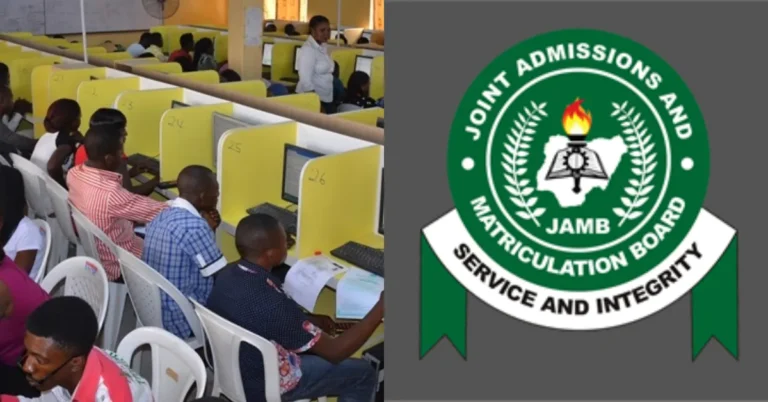

The Joint Admissions and Matriculation Board (JAMB) has issued an urgent directive to all tertiary institution applicants, setting a final deadline for the confirmation of admission status. Candidates from the 2021 through 2026 admission cycles who fail to formally accept or reject pending institutional offers on their profiles will have those admissions permanently revoked.
The enforcement drive is part of JAMB’s effort to clear systemic backlogs and ensure that federal, state, and private institutions can conclude their prospective enrollment exercises within the regulated national academic timeframe.
The September 30 Deadline and Revocation Penalties
JAMB has established a final extended deadline for candidates across multiple academic sessions to finalize their admission status. Registrants from the 2021, 2022, 2023, 2024, 2025, and the current 2026 unified tertiary matriculation frameworks must take action on their profiles.
The board’s Head of Public Affairs and Protocol emphasized that the board will not grant further administrative extensions. If a candidate has an outstanding institutional offer and fails to explicitly accept it on their profile, the offer will be automatically and permanently withdrawn. Once the system updates at midnight on the deadline date, the affected candidate’s status will revert to “Not Admitted,” and the slot will be returned to the institution’s available quota for other applicants.
Furthermore, JAMB warned that this cleanup exercise is crucial because thousands of current applicants are experiencing processing blockages. Many 2026 candidates who are qualified for admission are finding their profiles flagged or stalled by the system because they have old, unrejected admission offers from previous years still sitting active on their dashboards. The board clarified that the automated system cannot process a new matriculation number or admission line if an old slot remains open, making it mandatory for students to log in and reject past offers to clear their profiles for current processing.
To comply with the directive, candidates must navigate the Central Admissions Processing System (CAPS) via the official JAMB e-Facility platform. The board has digitalized the entire lifecycle of an admission to eliminate institutional manipulation, meaning that no admission issued by a university, polytechnic, or college of education is legally valid unless it is processed and approved through CAPS.
Applicants must log into their profile using their registered email addresses and passwords. Once inside the e-Facility dashboard, users must select the specific exam year and click on the “Access My CAPS” tab. Mobile phone users are specifically cautioned that the CAPS menu sidebars frequently fail to display on smartphone browsers due to scaling issues. To bypass this technical glitch, candidates must navigate to their mobile browser settings (typically the three dots in the top right corner) and manually toggle the option to “Request Desktop Site” or “Desktop Mode.”
Once the desktop view is active, candidates can select “Admission Status” to reveal their current standing. If offered admission, two distinct buttons will appear: “Accept Admission” and “Reject Admission.” Clicking “Accept” locks the choice and allows the generation of the official JAMB Admission Letter required for physical clearance at the university, while clicking “Reject” frees the student to be placed in the marketplace for other institutions to consideration.
Alternative SMS Commands for Low-Connectivity Areas
Recognizing the infrastructural challenges and internet connectivity deficits faced by candidates in rural or underserved areas, JAMB has maintained its automated mobile shortcode system. This alternative framework allows candidates to interact directly with the CAPS database using basic text messages, eliminating the absolute necessity of visiting a cybercafé or accessing a high-speed smartphone data connection.
Candidates can execute their admission decisions by sending specific commands to the board’s dedicated shortcodes: 55019 or 66019. To accept an institutional offer via text, an applicant must compose a message using the exact syntax, ensuring proper spacing and characters. The message must be sent from the unique mobile telephone number that was tied to the candidate’s profile during the initial UTME registration process.
Upon sending the command, the network provider charges a standard regulatory fee, and the system processes the request. The candidate will receive an automated SMS confirmation directly from JAMB validating that their profile status has been successfully updated on the central server. The board warns that attempting to send these commands from a different phone number, or one that is not linked to the candidate’s registration profile, will result in an absolute system error and non-delivery, potentially causing candidates to miss the deadline if they rely blindly on unconfirmed messages.
Alternative Pathways for Low-Scoring Candidates
With institutional cut-off marks strictly enforced across competitive federal and state universities, JAMB and various academic boards have highlighted alternative tertiary pathways for candidates whose UTME scores fell below their desired course thresholds. Candidates are actively searching for alternative routes to bypass the yearly bottleneck of the national matriculation examination.
One of the primary frameworks available is the Joint Universities Preliminary Examinations Board (JUPEB), an advanced-level program moderated by the University of Lagos. This pathway allows successful candidates to secure Direct Entry (DE) admission into the 200-level of their chosen course, completely bypassing the UTME for the following year.
Similarly, many public institutions continue to run internal Pre-Degree and Remedial programs designed to prepare students for core science and arts faculties, granting automated entry into 100-level upon successful completion of internal faculty examinations. Furthermore, education stakeholders are urging candidates to look toward the Interim Joint Matriculation Board (IJMB) and National Diploma (ND) programs offered by accredited polytechnics. These diploma pathways provide practical technical training and serve as a reliable platform for transferring into university degree tracks via Direct Entry later on, ensuring that a low UTME score does not completely stall a student’s academic progression.