
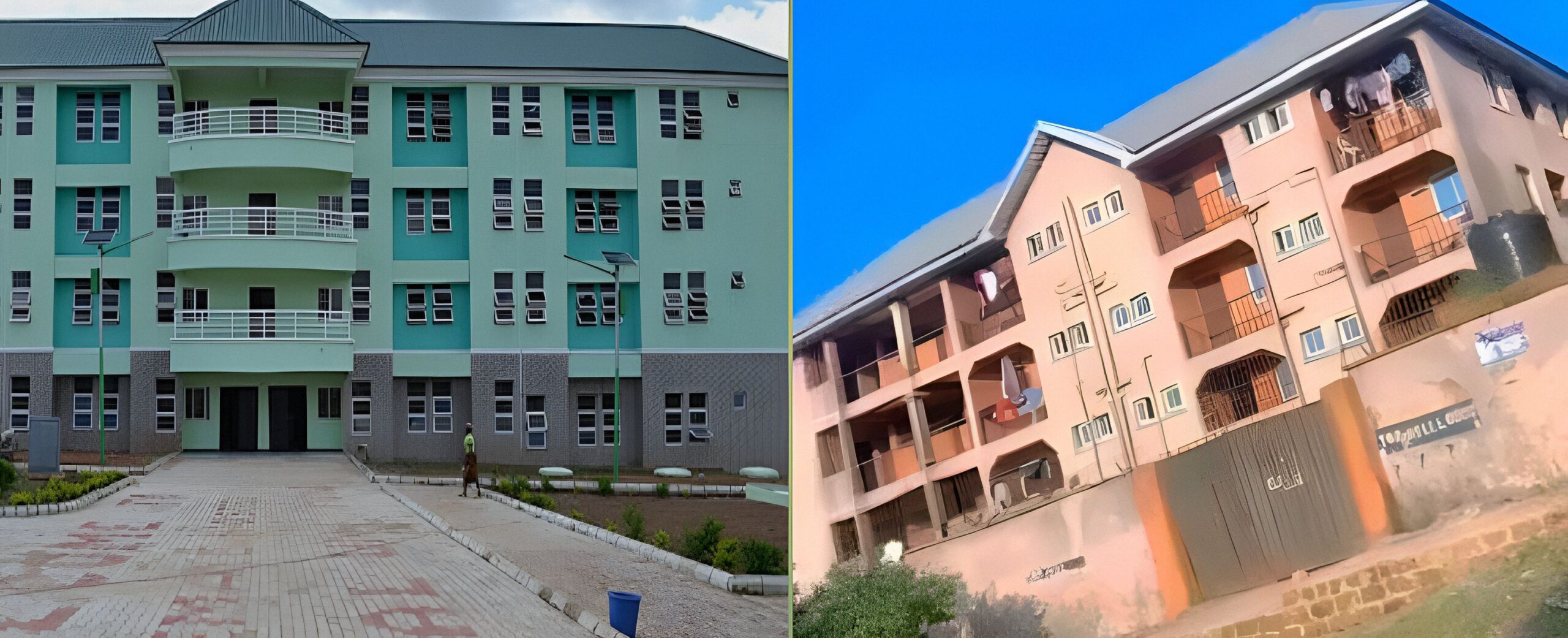
A definitive solution to the massive financial strain plaguing Nigerian university students is currently underway following targeted national policy implementations designed to stabilize campus welfare. Recent independent campus real estate metrics released for the *2026/2027 academic session* confirm that a staggering 70% of public university undergraduates are completely shut out from school-managed accommodation. This severe deficit leaves millions of students at the mercy of unregulated, skyrocketing off-campus rental markets.
To directly reverse this structural housing deficit, the Minister of Education, Dr. Maruf Tunji Alausa, announced a historic *N250 Billion emergency infrastructure commitment* funded via the Tertiary Education Trust Fund (TETFund). This nationwide project is engineered to build modern, high-capacity hostels across a minimum of 50 federal tertiary institutions, adding hundreds of thousands of affordable, heavily subsidized on-campus bed spaces to permanently shield students from external exploitation.
The Great Housing Divide: Proximity vs. Financial Hardship
Currently, public university students find themselves trapped between two highly flawed accommodation options, creating an extreme academic dilemma ahead of the new session:
The On-Campus Reality: School-managed hostels remain the absolute highest preference for the vast majority of undergraduates. They offer heavily subsidized, pocket-friendly seasonal rates, eliminate daily transit expenses due to close proximity to lecture theaters, and benefit from institutional security frameworks. However, severe overcrowding remains an unresolved issue, drastically lowering basic living conditions.
The Off-Campus Trap:* Private lodges external to university gates offer superior privacy, individual comfort, and independent facilities. Despite these benefits, off-campus students face crushing economic pressure. Local landlords execute unmonitored annual rent hikes, while students handle astronomical daily transportation costs and highly erratic mains electricity supply unless they pay steep premiums for private solar installations or diesel generator services.
By mobilizing massive public-private partnership (PPP) hostel interventions, the federal government aims to quickly lower off-campus demand, forcing external market rents to normalize while giving public university students safe, affordable, and dignified housing close to their classrooms.
Key Facts
The 70% Deficit: Comprehensive data reveals that over 70% of the public university student population is systemically forced off-campus due to an institutional bed-space shortage.
N250 Billion Lifeline: In a decisive response, the Federal Ministry of Education launched a multi-billion naira emergency infrastructure fund on *May 6, 2026*, directly targeting student accommodation expansion under the Renewed Hope Agenda.
Targeted Rollout: A minimum of 50 public tertiary institutions across Nigeria are designated to receive N2 Billion each to construct at least 500 new on-campus bed spaces per school.
Public–Private Safeguards: An additional N80 Billion has been mobilized for Public-Private Partnership (PPP) hostels across 24 selected federal tertiary institutions to deliver up to 1,500 premium bed spaces per campus.
Visual Documentation Matrix: Campus press networks capturing this crisis are provisioned to deploy specific media layouts: an analytical data infographic charting the rent-to-income disparity in student communities, and recent field photos documenting the ongoing TETFund hostel construction sites.





Good one