The Nigerian Education Loan Fund was created to help students continue their education without dropping out because of financial challenges. Since the programme began, hundreds of thousands of students across Nigeria have applied and received support through the scheme.
Here is what the loan actually covers.
What NELFUND provides:
The loan mainly covers two categories of support. First is the payment of institutional charges directly to your school. Second is a monthly upkeep allowance of ₦20,000 paid into the student’s personal bank account.
Claims circulating on social media that students receive ₦150,000 monthly from NELFUND are false. Both Nigerian Education Loan Fund and the NELFUND Beneficiaries Association of Nigeria have publicly dismissed those reports.
Why the loan is different from regular bank loans:
No interest is attached to the loan
No guarantor is required during application
School fees are paid directly to institutions
Repayment begins after beneficiaries complete NYSC and become employed
In cases of permanent disability or death, repayment may be waived
Who can apply:
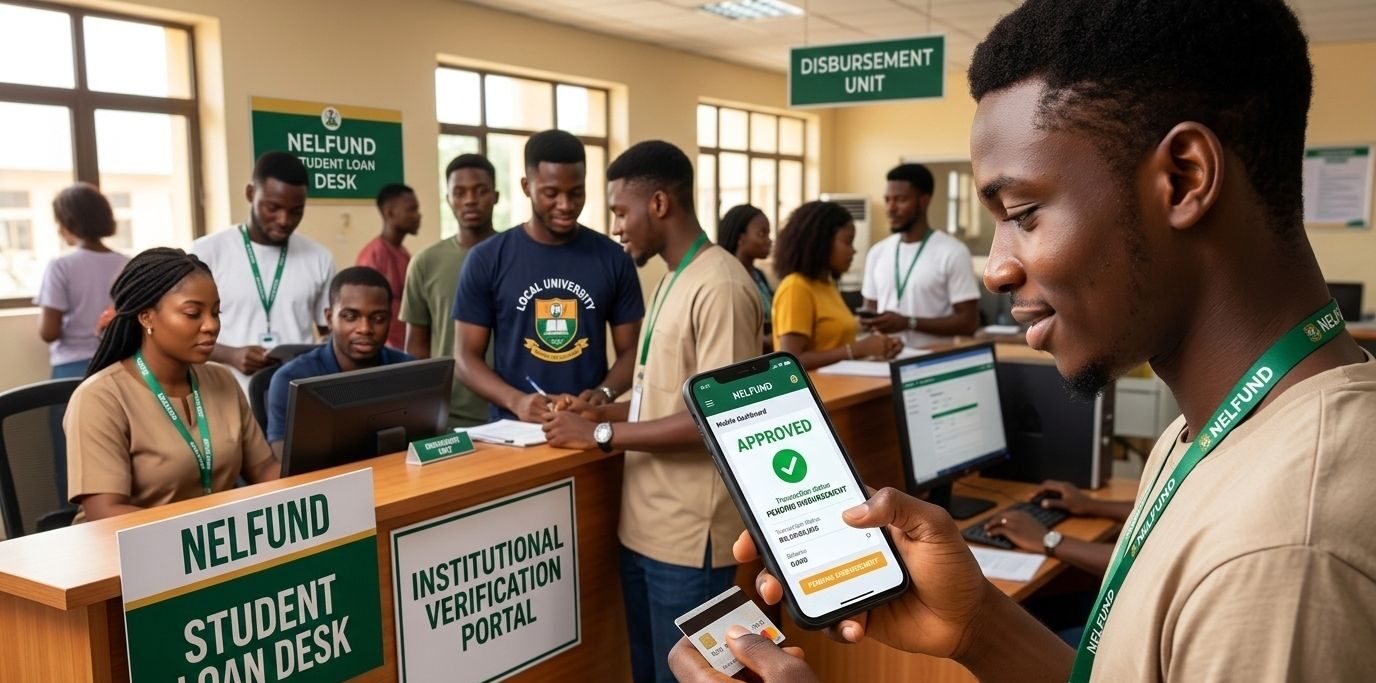
The scheme is open to students of public universities, polytechnics, colleges of education, and approved vocational institutions in Nigeria. However, applicants can only complete the process if their institution has uploaded and verified student records on the NELFUND portal.
Applicants may also face disqualification if they have unresolved loan defaults or criminal convictions linked to offences such as fraud or examination malpractice.
How to apply:
Visit nelf.gov.ng
Create an account using a valid email address
Enter your JAMB registration number or matriculation number
Confirm your institution and upload admission details
Submit your BVN and bank account information
Select the categories you are applying for and complete submission
After approval and institutional verification, disbursement is usually processed directly to the school and the student account.
One issue many students are facing is verification delay from institutions. Some applicants begin registration successfully but later discover their school has not uploaded or confirmed their records on the portal. Students affected by this are usually advised to contact their bursary department or student affairs unit for clarification before attempting the application again.