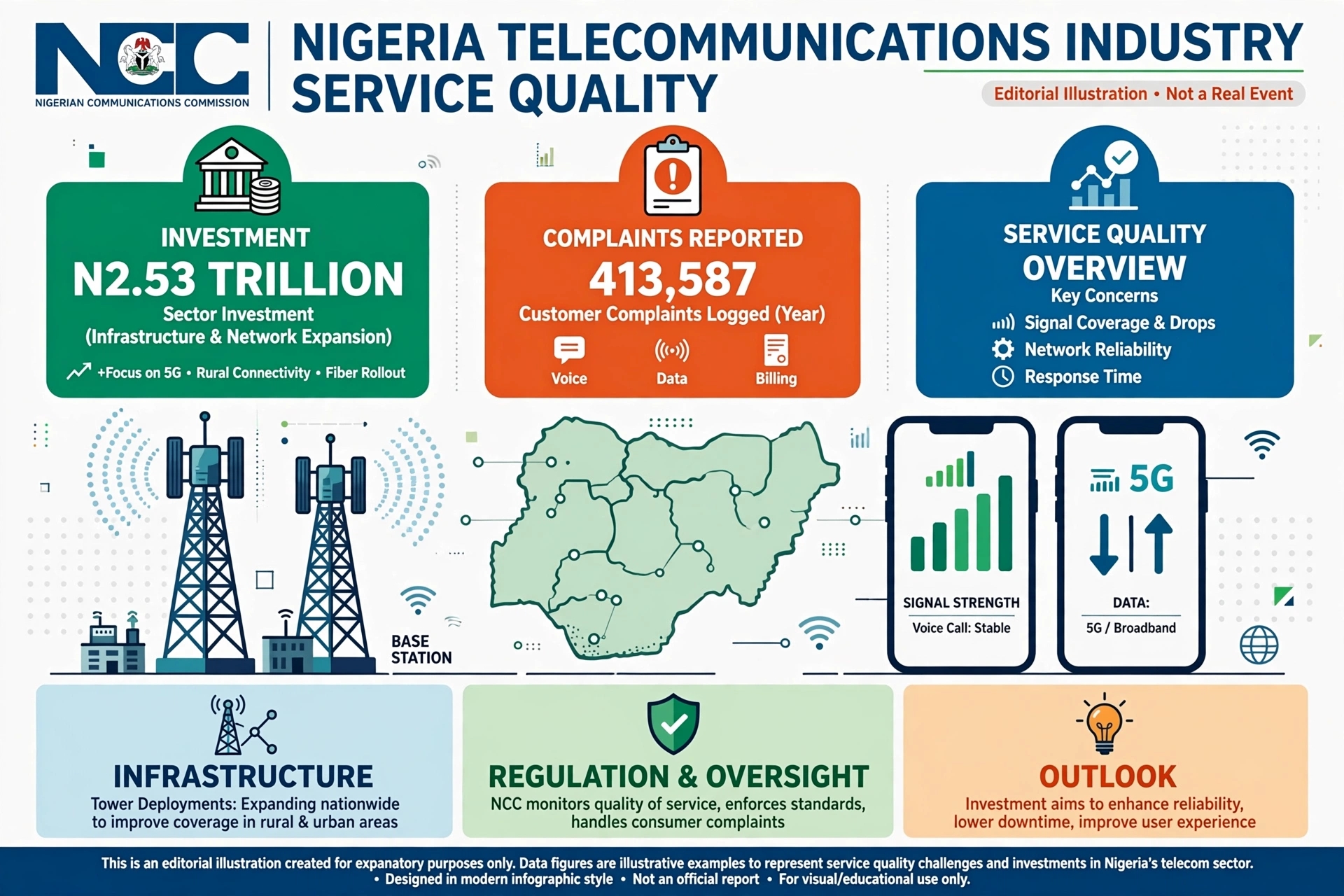
Nigeria’s telecommunications industry is facing renewed questions about service quality after a report highlighted ₦2.53 trillion in network investment alongside continuing complaints from subscribers. The report, published by The Guardian Nigeria on October 10, examined whether spending on telecommunications infrastructure was translating into better experiences for mobile phone users. Figures cited in the report indicated that the four major mobile network operators recorded 413,587 consumer complaints in the first half of 2026. The complaints reportedly covered a range of issues, including voice and data quality, billing disputes, rapid data depletion, failed payment transactions and SIM-related problems. The figures illustrate the scale of concerns that mobile subscribers continue to raise even as operators invest in network infrastructure. Reliable telecommunications services are essential to modern economic activity, supporting digital payments, online education, remote work, business communication and access to information. Poor network quality can disrupt these activities and create additional costs for households and businesses. For students attending online classes, unreliable connectivity may affect access to lectures and educational materials. Businesses can also experience delays when transactions or customer communications fail. However, improving telecommunications services involves more than increasing investment. Network performance can be affected by power supply, fibre-optic infrastructure, congestion, equipment maintenance and the growing demand for data. Regulatory oversight and transparent complaint-resolution procedures are also important in ensuring that subscribers receive the services promised by operators. The Nigerian Communications Commission has a role in monitoring industry performance and addressing consumer concerns. Subscribers experiencing persistent problems should document their complaints and contact their service providers through official channels. Where the issue remains unresolved, they can explore the commission’s established complaint procedures. Telecommunications operators, meanwhile, face pressure to demonstrate that capital expenditure is producing measurable improvements in coverage, reliability and customer experience. The industry will be judged not only by the amount of money invested but also by the quality of service available to subscribers across the country.
Similar Posts
FG, FOCI Train 200 Nigerian Youths in Construction Skills
The Federal Government, in partnership with the Federation of Construction Industry, has trained 200 Nigerian youths in construction-related skills. The training was carried out under a youth skills acquisition programme designed to improve employability and provide young Nigerians with practical vocational skills. The beneficiaries were trained in three major areas: masonry, plumbing and carpentry. The…
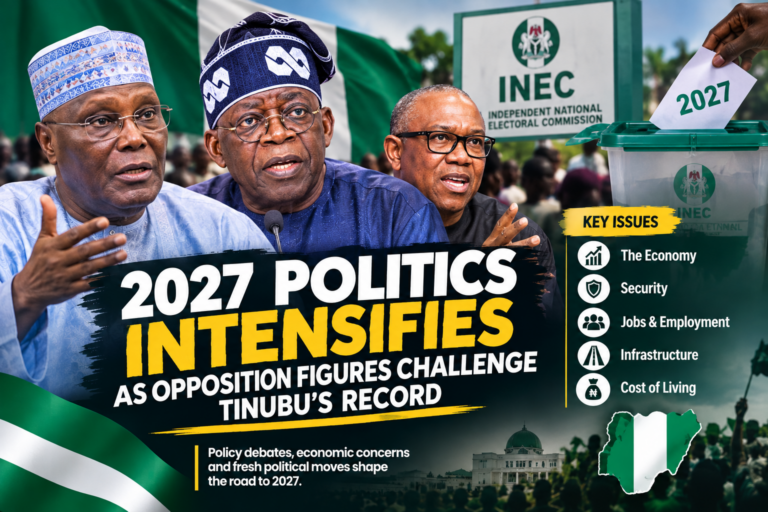
2027 Politics Intensifies as Opposition Figures Challenge Tinubu’s Record
Political activities surrounding Nigeria’s 2027 general elections have continued to intensify, with opposition figures increasingly challenging the Federal Government’s assessment of its performance. Former Vice-President Atiku Abubakar has criticised President Bola Tinubu’s Independence Day message, arguing that economic hardship remains a major challenge for Nigerians. Atiku’s comments came after the President used his national broadcast…
Olu Jacobs Dies at 84: Nollywood Loses One of Its Most Celebrated Actors
Nigeria’s entertainment industry has been thrown into mourning following the death of veteran actor and film executive, Oludotun Baiyewun Jacobs, popularly known as Olu Jacobs, at the age of 84. The actor died on Wednesday, September 16, 2026. His family announced the news through a statement shared by his son, Olusoji Jacobs, bringing an end…
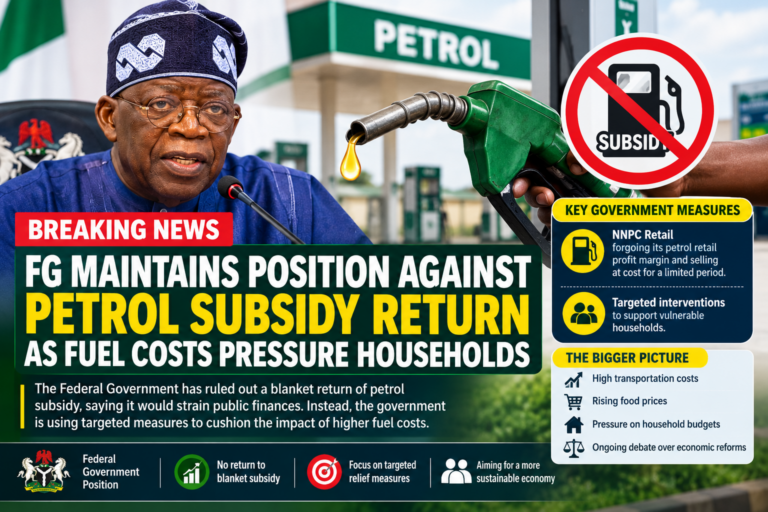
FG MAINTAINS POSITION AGAINST PETROL SUBSIDY RETURN AS FUEL COSTS PRESSURE HOUSEHOLDS
The Federal Government has maintained its opposition to restoring a blanket petrol subsidy, arguing that a return to the previous arrangement would place additional pressure on public finances. The position comes amid continuing concerns about petrol prices and the rising cost of transportation, food and other essential goods. In a statement published by the State…
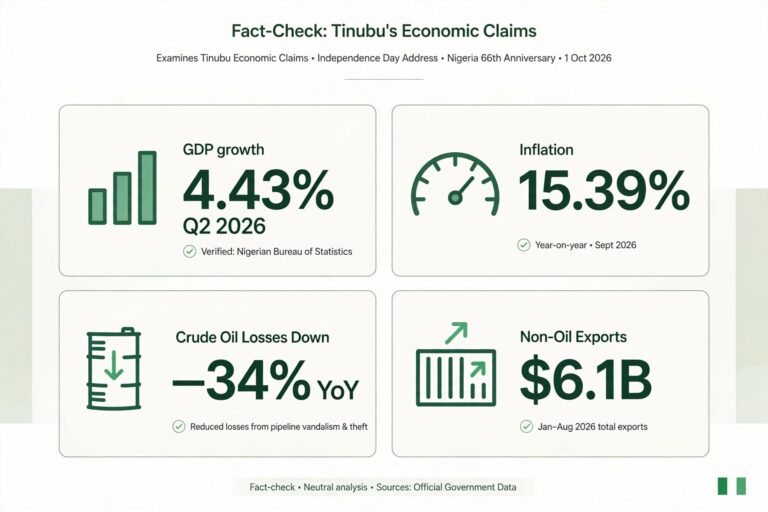
Fact-Check Examines Tinubu’s Economic Claims in Independence Day Address
Several economic claims made by President Bola Tinubu during his October 1 Independence Day address have been examined against official statistics and other verifiable records. In his address marking Nigeria’s 66th Independence anniversary, Tinubu highlighted developments in economic growth, inflation, crude oil losses and non-oil exports. A review published by FactCheckHub examined four of the…
Tinubu Calls for Greater Investment in Nigeria’s Creative Economy
President Bola Ahmed Tinubu has called for increased investment in Nigeria’s creative economy, saying the country must turn the global influence of its music, film, fashion and cultural industries into lasting economic opportunities. The President made the call as attention continues to grow around Nigeria’s influence in global entertainment and culture. According to the Federal…