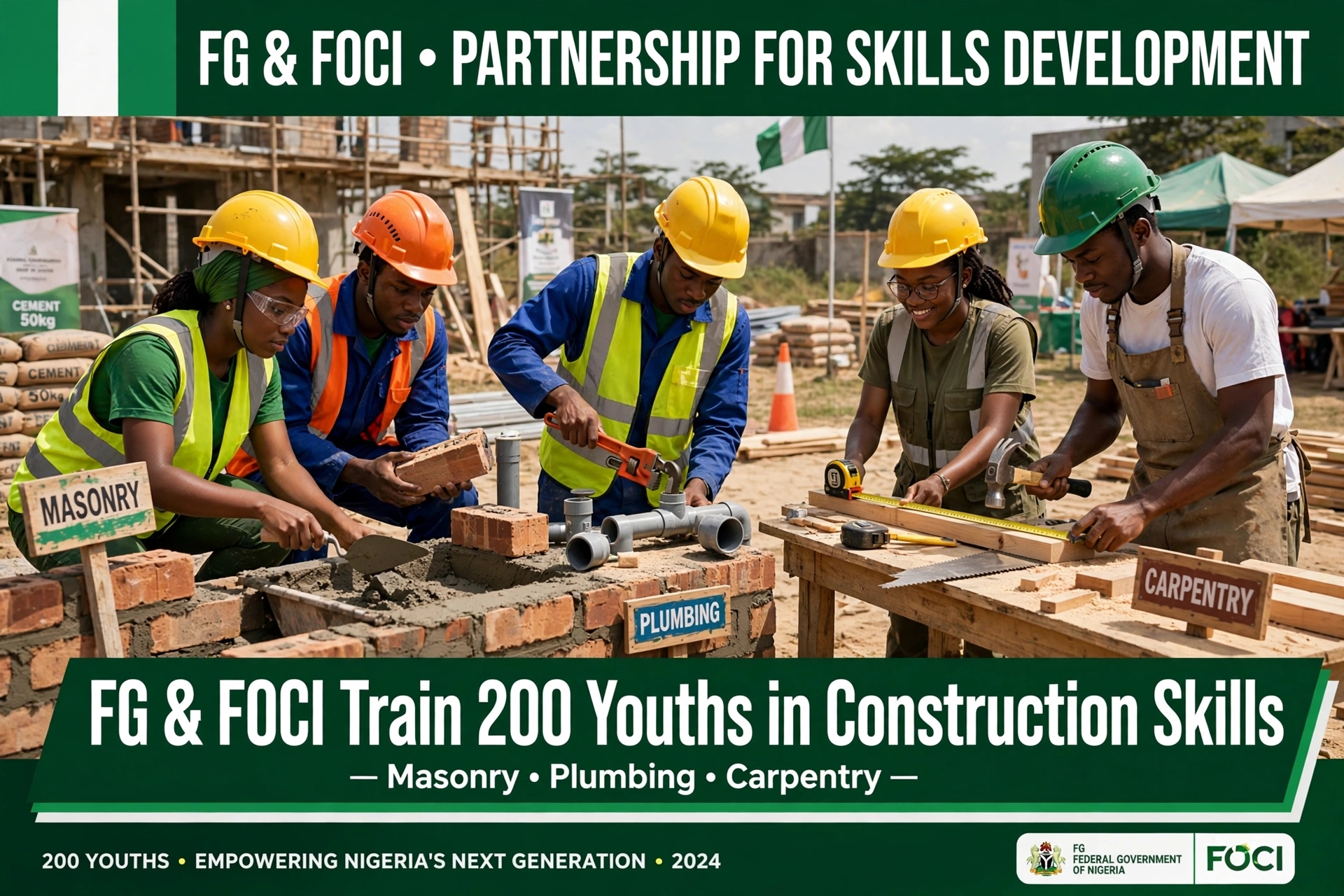
The Federal Government, in partnership with the Federation of Construction Industry, has trained 200 Nigerian youths in construction-related skills. The training was carried out under a youth skills acquisition programme designed to improve employability and provide young Nigerians with practical vocational skills. The beneficiaries were trained in three major areas: masonry, plumbing and carpentry. The group comprises 100 trainees in masonry, 50 in plumbing and another 50 in carpentry. The programme is being implemented through the Nigeria Youth Employment through Skills Acquisition Fund under the Innovation Development and Effectiveness in the Acquisition of Skills Project. Officials involved in the initiative said the training is intended to provide young Nigerians with practical skills that can help them secure employment or establish their own businesses. The Federation of Construction Industry also highlighted the importance of Technical and Vocational Education and Training in addressing the shortage of skilled workers in the construction sector. The FOCI Skills Academy, which has been involved in vocational training, is expected to expand its programmes to cover additional areas. Potential areas include electrical installation, welding and fabrication, solar installation and other technical trades. Young people and women are among the groups receiving attention under the skills development initiative. Beneficiaries are expected to meet attendance requirements to qualify for the final starter packs and other support associated with the programme. Officials said the initiative is part of broader efforts to address unemployment and equip young Nigerians with skills that can provide sustainable sources of income. The construction industry remains an important part of Nigeria’s infrastructure development, creating demand for skilled workers in areas such as building, plumbing, carpentry, electrical work and other technical services. The organisers said the training is expected to give the beneficiaries practical experience that can be applied both in formal employment and self-employment. With Nigeria continuing to invest in infrastructure and construction, vocational programmes such as this are expected to remain an important avenue for developing the skilled workforce required by the industry.
Similar Posts
WHY APC GOVS ARE NOT HAPPY WITH ME _ WIKE
The Minister of the Federal Capital Territory, Nyesom Wike, has finally opened up on why APC Governors are not happy with him. Wike made this revelation during an interview on Arise TV Prime Time on Tuesday, September 16. According to him, the problem did not start today. Wike said APC governors were unhappy from the…
Nigeria Raises ₦748.6bn Through FGN Bonds as Investor Demand Remains Strong
The Federal Government has raised ₦748.64 billion through its latest Federal Government of Nigeria (FGN) bond auction, with investors placing significantly more bids than the government offered. The September 2026 auction featured two long-term securities: a new 10-year FGN bond and a reopening of a 15-year FGN bond. According to the Debt Management Office (DMO),…
Petrol Price Surge Deepens Cost-of-Living Crisis as Nigerians Face Fresh Pressure
The rising price of petrol is putting fresh pressure on households and businesses across Nigeria, with pump prices reaching about ₦1,430 per litre in major cities and climbing as high as ₦1,500 in some parts of the country. The latest increase has triggered renewed concerns about transportation costs, food prices and the wider cost of…
Top 10 Richest People in Nigeria in 2026
Nigeria is home to some of Africa’s most powerful business figures, with fortunes built across cement, oil and gas, telecommunications, banking, manufacturing, investments and real estate. While Forbes’ 2026 Africa Billionaires ranking officially lists four Nigerians as billionaires, several other wealthy Nigerian business leaders have built fortunes worth hundreds of millions of dollars. Because many…
BREAKING: Former Kogi Governor Ibrahim Idris Dies at 77 in UK
Kogi State has been thrown into mourning following the death of former Governor Ibrahim Idris, popularly known as “Ibro,” who reportedly died in the United Kingdom at the age of 77. Idris died on Sunday, September 20, 2026, according to reports from multiple Nigerian news outlets. The death was confirmed to AIT by his nephew,…
Troops Rescue 41 Travellers After Kidnap Attempt in Zamfara
Nigerian troops have rescued 41 travellers after armed men allegedly attempted to abduct them in Zamfara State. The incident occurred in Tsafe Local Government Area after the commercial vehicle conveying the passengers reportedly developed a mechanical fault along a major highway. According to the military, the vehicle was travelling from Senegal towards Kano State when…