From medicines and cosmetics to food, drinks and other everyday consumer products, the growing presence of suspected fake and substandard products in Nigerian markets is raising fresh questions about regulation, enforcement and consumer safety. For many Nigerians, the concern is no longer simply about finding a cheaper product. The bigger question is whether consumers can confidently tell the difference between an original product and a counterfeit one before making a purchase. The issue has become particularly worrying for products that can directly affect health. A counterfeit or substandard medicine, cosmetic or food product can expose consumers to serious risks, making effective monitoring and enforcement essential. The National Agency for Food and Drug Administration and Control (NAFDAC) is legally responsible for regulating food, drugs, cosmetics, medical devices and other products under its mandate. NAFDAC’s current regulatory systems include a digital platform for checking registered products and a Greenbook database where consumers can search for registered products. The agency also provides a mechanism for reporting suspected substandard, falsified or unregistered medical products. NAFDAC’s 2024–2027 strategic plan also identifies surveillance, investigations and enforcement as key activities. Among its targets is the conduct of 800 surveillance operations annually, alongside investigations intended to result in enforcement actions. The existence of regulatory systems does not automatically eliminate counterfeit products from the market. Consumers continue to encounter products they suspect may be fake, improperly labelled, unregistered or otherwise unsafe. This has intensified calls for stronger market surveillance, more frequent enforcement operations and tougher action against manufacturers, importers and distributors involved in illegal products. There is also a responsibility on consumers and retailers to verify products before buying or selling them. NAFDAC’s online systems allow consumers to check registration information, while its reporting platform allows suspected falsified or unregistered medical products to be reported with details such as the product, source, location and photographic evidence. As fake and suspected counterfeit products continue to generate public concern, Nigerians are asking a straightforward question: If regulatory agencies are conducting inspections and surveillance, how are so many questionable products still reaching markets and consumers? The answer requires more than enforcement after fake products have already entered circulation. It also raises questions about supply chains, border controls, manufacturing standards, market surveillance, retailer compliance and consumer awareness. For NAFDAC, the challenge is not only registering products but ensuring that products already on the shelves remain compliant throughout the supply chain. For consumers, the message is equally important: check before you buy, verify registration where possible, and report suspicious products rather than assuming that every product carrying a regulatory number is automatically genuine. The growing public concern therefore puts renewed attention on the effectiveness of Nigeria’s entire product-regulation system and on whether existing enforcement measures are sufficient to keep counterfeit and substandard products away from consumers.

Similar Posts
FG Targets Five Million Nigerians Through Skills Acquisition Programme
The Federal Government has announced plans to empower five million young Nigerians through skills acquisition and entrepreneurship programmes designed to improve employability and support sustainable livelihoods. The initiative is being implemented under the National Poverty Reduction with Growth Strategy and is focused on equipping young people with practical skills that can be converted into employment…
First Niger Bridge Set to Reopen Next Week After Rehabilitation Works
The Federal Government has announced that the First Niger Bridge will reopen to traffic next week following ongoing rehabilitation work on the major bridge linking Anambra and Delta states. Minister of Works, David Umahi, gave the assurance after inspecting rehabilitation works at the Onitsha Bridge Head. The bridge was closed earlier this month after the…
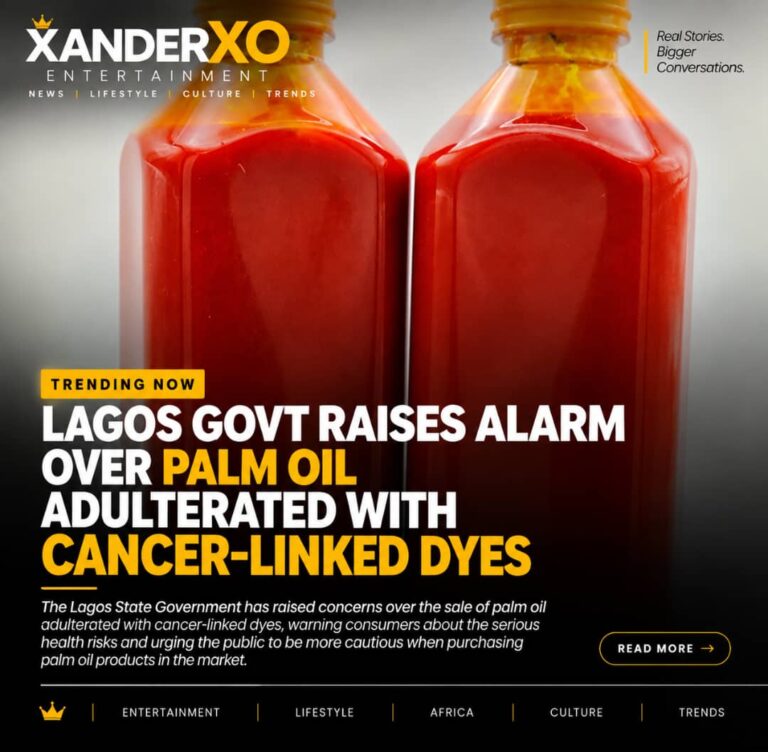
LAGOS GOVT RAISES ALARM OVER PALM OIL ADULTERATED WITH CANCER-LINKED DYES
The Lagos State Government has raised concerns over increasingly sophisticated adulteration of palm oil in markets across the state, urging residents to be more vigilant about the products they purchase.The warning was issued through the Lagos State Consumer Protection Agency (LASCOPA) following a technical presentation at the 2026 Lagos State Food Safety Conference and Exhibition….
Osun Governor Adeleke’s Ally Emir Ajagungbade Shot Dead in Ile-Ife
A political associate of Osun State Governor Ademola Adeleke, Olalekan Oyeyemi, popularly known as “Emir Ajagungbade,” has been shot dead in Ile-Ife, Osun State. Oyeyemi, who was also an Accord Party chieftain, was reportedly killed at the Mayfair Garage in Ile-Ife on Sunday, September 13, amid a dispute reportedly connected to the control and leadership…
Tinubu Calls for Greater Investment in Nigeria’s Creative Economy
President Bola Ahmed Tinubu has called for increased investment in Nigeria’s creative economy, saying the country must turn the global influence of its music, film, fashion and cultural industries into lasting economic opportunities. The President made the call as attention continues to grow around Nigeria’s influence in global entertainment and culture. According to the Federal…
New Commander Takes Charge of Operation Hadin Kai in Fresh Push Against Boko Haram
The Nigerian Army has appointed Major General Ibikunle Ademola Ajose as the new Theatre Commander of Joint Task Force North East, Operation Hadin Kai, putting a new commander at the centre of Nigeria’s fight against Boko Haram and ISWAP in the North-East. Ajose’s appointment was announced on September 9, 2026, as part of a wider…