In 1887, Maurice Koechlin and Émile Nouguier were stressed out. They were senior engineers working for a famous structural company, and the French government had just announced a massive competition to design a centerpiece for the 1889 World’s Fair. The deadline was brutal, and the expectations were impossibly high.
The two engineers locked themselves away, calculated the wind resistance, mapped out the physics, and created a brilliant, revolutionary blueprint for a 300-meter iron tower. Excited, they took the drawings to their boss, Gustave Eiffel.
Eiffel looked at the paper, scoffed, and called it uninspired. He flatly refused to fund it.
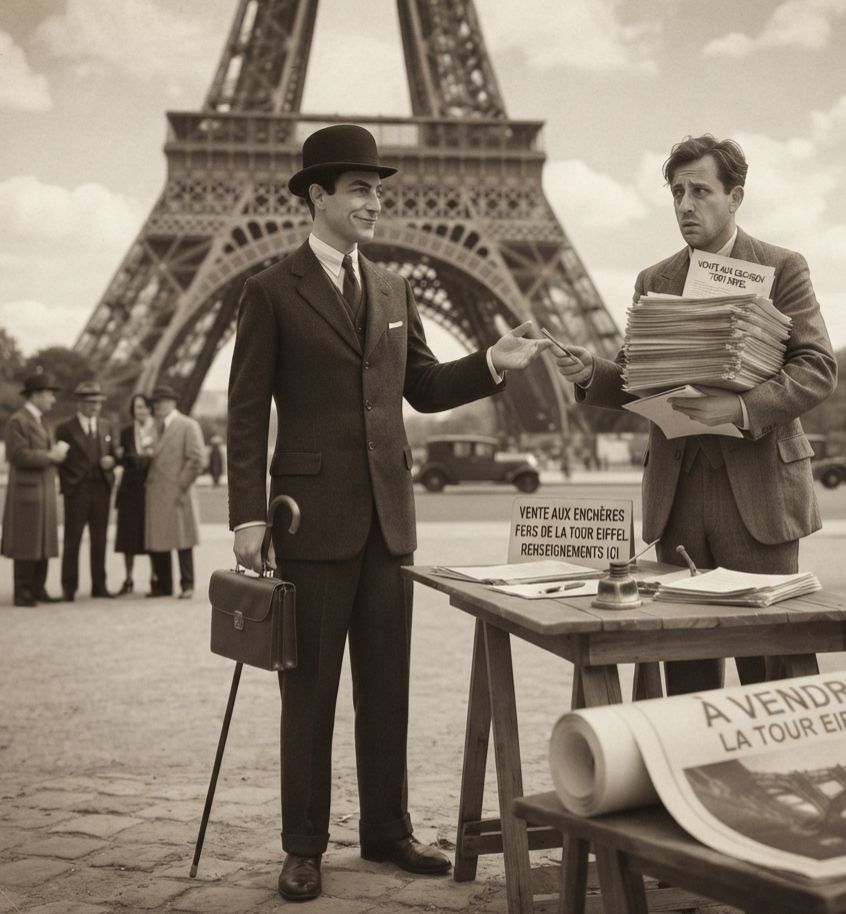
But as the months ticked by and the competition deadline loomed, Eiffel realized he had absolutely nothing else to submit. He quietly called Koechlin and Nouguier back into his office. He offered to buy the exclusive rights to their design. Desperate for their work to see the light of day, they signed the paperwork.
Eiffel added a few decorative arches to the base, stamped his own name in bold ink on the front page, and submitted it. The design won. Today, millions of people travel to Paris to take photos of the Eiffel Tower, while the names Koechlin and Nouguier are buried in footnotes, proving that history belongs to the guy who presents the slides.