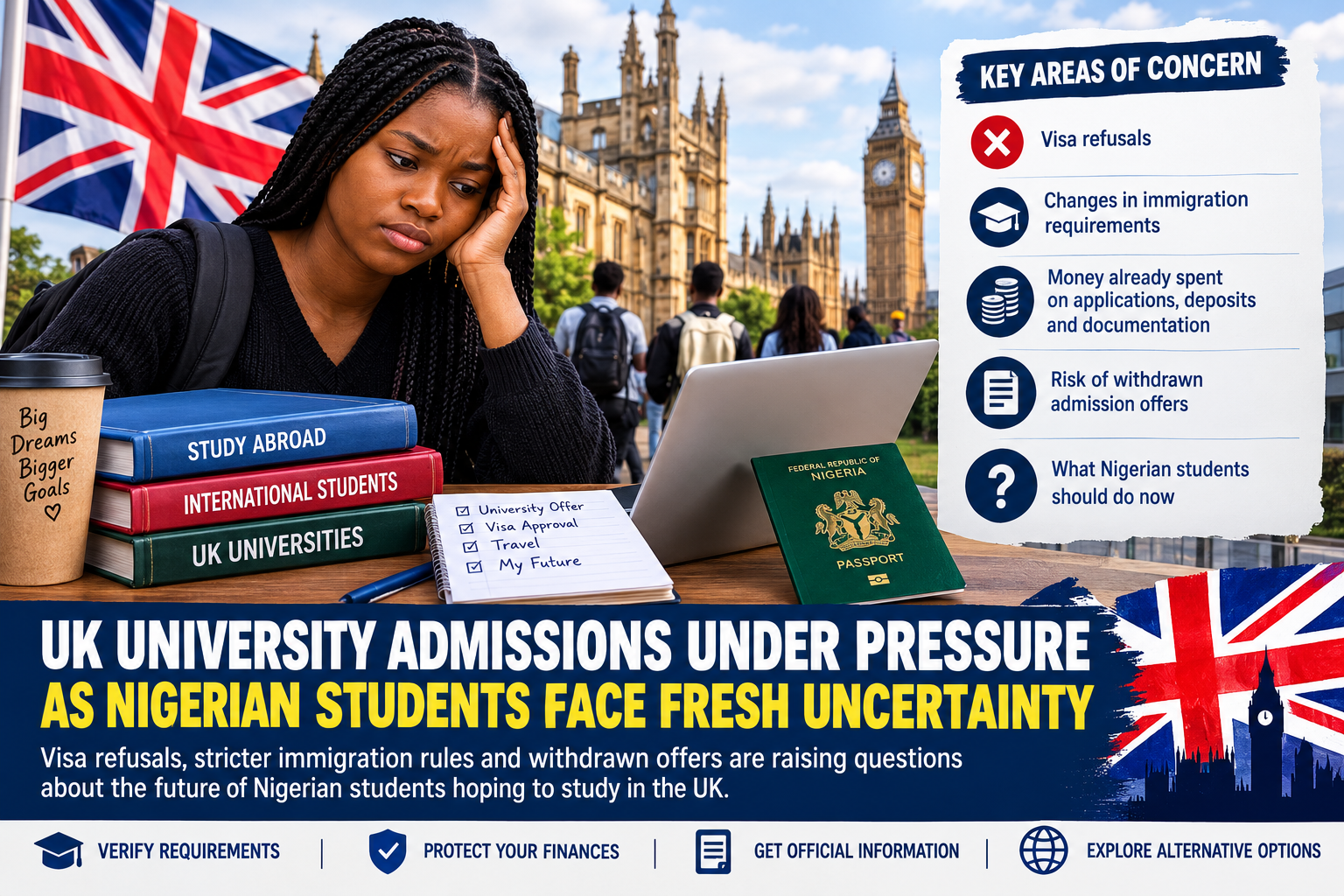
Concerns are mounting over the position of Nigerian students seeking admission to universities in the United Kingdom following reports that some international applicants have experienced difficulties linked to visa refusals and changes in immigration requirements. The reports have raised questions about the risks facing students who have already invested time and money in applications, tuition deposits, documentation and preparations for relocation. For many Nigerian families, studying abroad represents a major financial commitment. An unexpected change in admission or visa status can therefore have consequences extending beyond the applicant. However, the circumstances surrounding individual cases may differ, and it is important not to assume that all Nigerian students applying to UK institutions are facing the same problems. The United Kingdom remains an important destination for Nigerian students pursuing undergraduate and postgraduate qualifications. Students are attracted by the range of academic programmes, international exposure and opportunities to develop skills that may support their careers. The application process, however, often involves several stages. Applicants may need to satisfy academic requirements, demonstrate their ability to finance their studies, obtain the appropriate immigration permission and meet deadlines established by their universities. An admission offer does not automatically guarantee that a student will receive a visa. Likewise, a visa refusal does not necessarily mean that every applicant in a similar situation will experience the same outcome. The specific circumstances of each application remain important. One of the biggest concerns is the money students may spend before travelling. Depending on the institution and programme, applicants may face application-related expenses, tuition deposits, immigration charges, accommodation costs, medical-related fees and other preparation expenses. Exchange-rate movements can also make payments more expensive for families earning in naira. When a visa application is unsuccessful or an admission offer is withdrawn, students may have to negotiate refunds, defer their studies or reconsider their plans. Refund eligibility and deadlines depend on the relevant university’s terms and the circumstances of the case. Students should therefore obtain written confirmation of refund and deferral policies before making major payments. Nigerian students planning to study in the UK should carefully review the current requirements published by their universities and the relevant British immigration authorities. They should ensure that the information in their applications is accurate and that their financial and academic documentation meets the applicable requirements. Applicants who receive a visa refusal should read the decision carefully and seek qualified advice about the options available in their particular circumstances. They should not rely solely on social media posts or informal claims about what other applicants have experienced. Students whose plans are disrupted should contact their universities promptly to ask about deferral options, refund procedures and the consequences of missing enrolment deadlines. Universities must operate within the applicable immigration framework while maintaining their own academic and admissions policies. Where institutions face restrictions affecting their ability to enrol international students, applicants may need to consider alternative arrangements. However, any claim that a particular university has withdrawn offers, suspended admissions or changed its sponsorship status should be checked against an official university announcement or relevant government information. Without such confirmation, general reports should not be treated as proof that an institution has taken a specific action. Students who encounter difficulties with a UK application may wish to consider other institutions or destinations, depending on their academic goals and financial circumstances. Possible alternatives include universities in Germany, China, Turkey and other countries that offer programmes suitable for international applicants. Before changing plans, students should compare tuition fees, living expenses, language requirements, scholarship opportunities and immigration rules. They should also establish whether their existing qualifications meet the entry requirements for the intended programme. For students with limited financial resources, a scholarship or funded programme may be more realistic than accepting an offer that would require unaffordable borrowing. The reports serve as a reminder that international education planning requires more than securing an admission letter. Students need to understand the relationship between university admission, immigration permission, financial requirements and enrolment deadlines. They should also preserve copies of receipts, correspondence, application documents and official decisions in case they need to request a refund or challenge an outcome. For Nigerian students hoping to study in the UK, the priority is to verify every requirement, protect their finances and make decisions based on official information rather than rumours.
Similar Posts
Latest Nigerian University Admissions Updates – February 2026
The Nigerian education sector is buzzing with fresh updates on university admissions, UTME, Post-UTME screenings, and policies affecting students nationwide. Whether you’re applying to AE‑FUNAI, UNILAG, LASU, or other universities, here’s everything you need to know to stay ahead this 2025/2026 admission session. 1. National Admission Policies & JAMB Updates Minimum Age & Admission Requirements…
GSU 2026/2027 ADMISSION: CANDIDATES ADVISED TO CHECK FIRST-BATCH LIST
Gombe State University was reported to have released its first-batch undergraduate admission list for the 2026/2027 academic session on October 22. The report stated that the list covered candidates seeking admission through the Unified Tertiary Matriculation Examination and Direct Entry. Admission offers had been uploaded to JAMB CAPS and the university’s admission portal, candidates should…
EBSU 2026/2027 Admission: Process, Cut-off Mark, and How To Check Your Status
Ebonyi State University, EBSU, has officially begun releasing admission for the 2026/2027 academic session. Thousands of UTME and Direct Entry candidates who sat for the online Post UTME screening are now checking JAMB CAPS and the EBSU portal daily.If you applied to EBSU this year, here’s everything you need to know about the process, cut-off…
UNIBEN Sets September 21 Deadline for 2026/2027 Acceptance Fee Payment
The University of Benin (UNIBEN) has warned newly admitted candidates for the 2026/2027 academic session to complete payment of their acceptance fee on or before Monday, September 21, 2026. The university opened its acceptance-fee payment portal on August 24, 2026, for candidates who have been offered provisional admission. The payment window was set for four…
COOI OPENS 2026/2027 SUPPLEMENTARY ADMISSION AS APPLICATION DEADLINE APPROACHES
Chukwuemeka Odumegwu Ojukwu University has announced supplementary admission for the 2026/2027 academic session, giving eligible candidates another opportunity to seek placement in available programmes before the stated October 23 deadline. Chukwuemeka Odumegwu Ojukwu University, Anambra State, has opened its supplementary admission exercise for prospective undergraduate students seeking admission for the 2026/2027 academic session. According to…
Secure Your 2026 Admission Slot by Meeting the Official JAMB National Deadlines for All Nigerian Universities
The Joint Admissions and Matriculation Board (JAMB) has established a rigid timeline for the 2026/2027 academic session to ensure a synchronized and transparent transition for all candidates. Following the National Policy Meeting held in Abuja on Monday, May 11, 2026, JAMB Registrar Prof. Is-haq Oloyede announced strictly enforced deadlines for the conclusion of admission exercises…