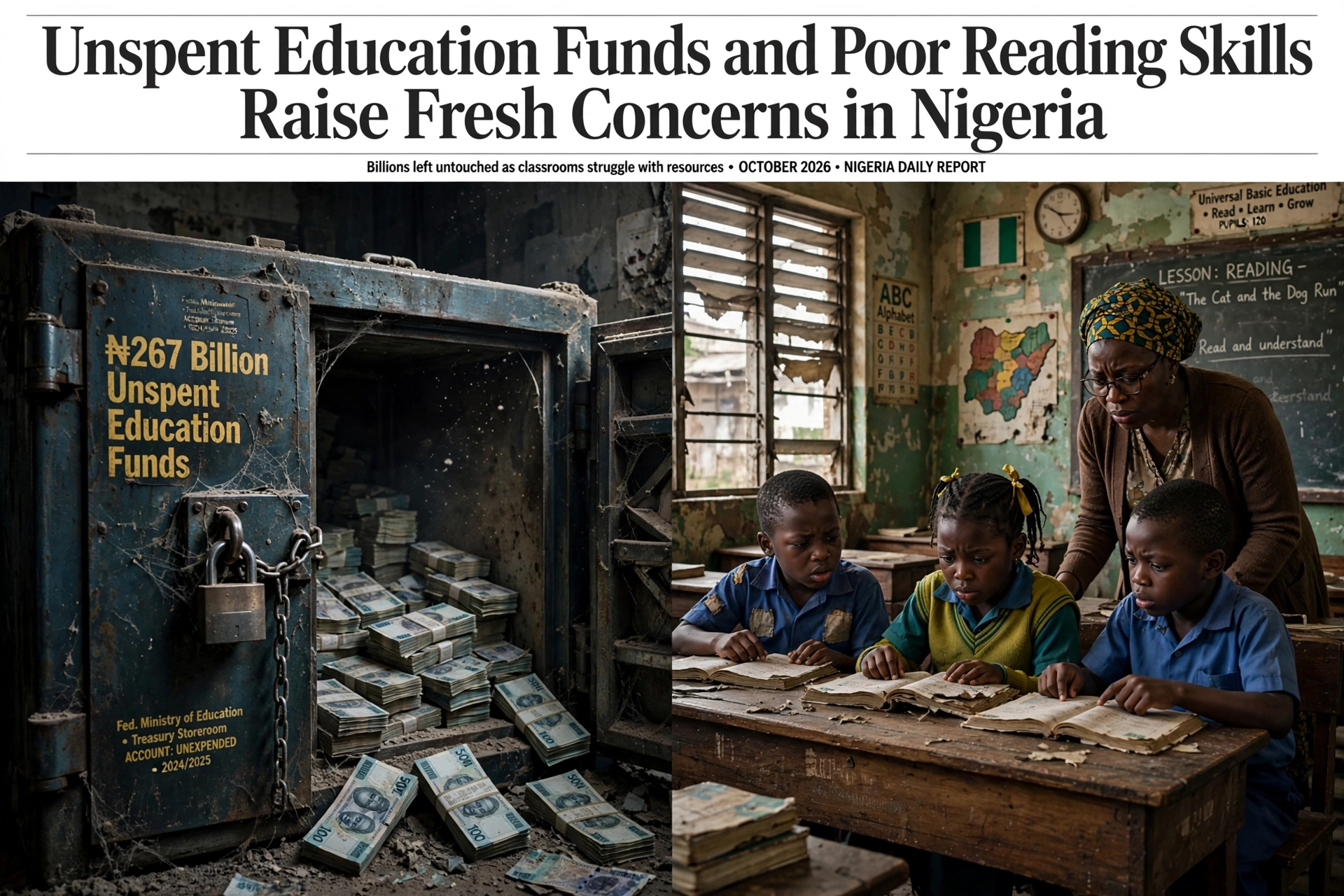
Fresh concerns have emerged over the management of education funding in Nigeria following a report highlighting unspent education resources alongside persistent difficulties with children’s reading skills. The report, has renewed attention on the relationship between public spending, school performance and the quality of basic education. The figures cited in the report include ₦267 billion in education funds reportedly left unused and claims that a substantial proportion of Nigerian children struggle with reading. The figures require careful examination of the underlying report, including the period covered, the institutions involved and the methodology used to assess learning outcomes. Nevertheless, the issues raise important questions about how education resources are allocated and whether spending translates into measurable improvements in learning. Nigeria’s education sector faces several challenges, including inadequate facilities in some schools, shortages of qualified teachers, overcrowded classrooms and unequal access to learning materials. These problems can affect pupils’ ability to develop basic literacy and numeracy skills. Even where funding is available, administrative delays, procurement difficulties and weak implementation can prevent money from reaching the schools and programmes that need it. Unspent allocations may therefore represent missed opportunities to improve classrooms, provide learning materials, train teachers or expand access to education. However, understanding the reported ₦267 billion figure requires establishing which funds were involved and why they were not spent. The ability to read confidently is essential for success across nearly every subject taught in school. Children who struggle with reading may find it difficult to understand mathematics questions, follow written instructions and progress to more advanced learning. Early literacy support can help identify learning difficulties before they become more serious. Teachers also need appropriate training, learning materials and classroom support to help pupils develop reading skills. Parents and caregivers can contribute by encouraging reading at home, although families’ ability to do so may be affected by access to books, language barriers and economic circumstances. Public funding should be accompanied by clear information about how money is allocated, released and used. Government agencies and education authorities need effective systems for monitoring expenditure and assessing whether programmes achieve their objectives. Where funds remain unused, authorities should explain the reasons and determine whether administrative, financial or operational problems contributed to the situation. Transparency can help identify weaknesses and strengthen public confidence in education spending. Addressing literacy challenges requires coordinated action involving federal and state governments, school administrators, teachers, parents and development partners. Priorities may include improving early-grade reading instruction, providing appropriate teaching materials, supporting teacher development and ensuring that available funds reach schools on time. Regular assessments can also help authorities determine whether interventions are improving children’s learning outcomes. The reported concerns provide an opportunity to examine whether education budgets are producing the results Nigerians expect. Ultimately, the success of education funding should be measured not only by how much money is allocated but also by whether children are learning, schools are improving and more pupils are acquiring the skills needed for future opportunities.
Similar Posts
Obasanjo Calls for Greater Benefits for Oil-Producing States
Former President Olusegun Obasanjo has reportedly called for increased derivation benefits for Nigeria’s oil-producing states, bringing renewed attention to the country’s longstanding debate over resource ownership and revenue distribution. The issue is particularly important to communities in the Niger Delta, where oil production generates substantial economic activity but environmental damage, infrastructure challenges and development concerns…
🇳🇬 FG Announces 100MB Free Daily Data for Nigerian Students From October 1
Nigerian students in public senior secondary and tertiary institutions are set to receive 100MB of free daily data from October 1, 2026, for accessing approved educational platforms and digital learning content.
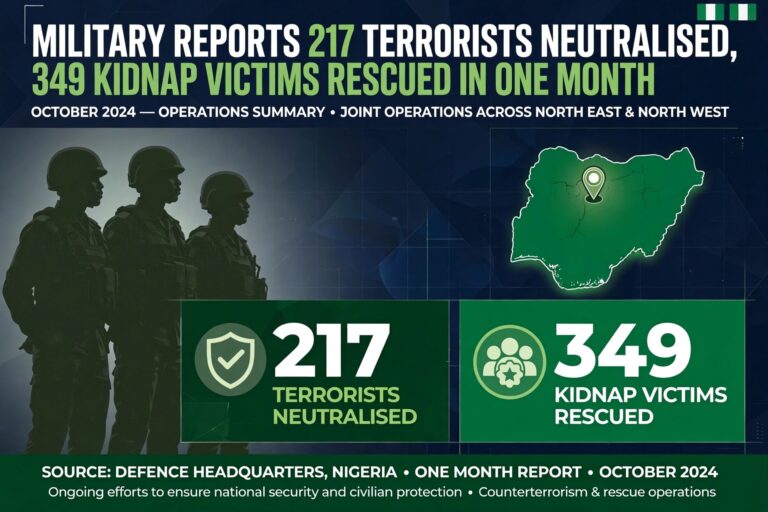
MILITARY REPORTS 217 TERRORISTS NEUTRALISED, 349 KIDNAP VICTIMS RESCUED IN ONE MONTH
The Armed Forces of Nigeria have reported that troops neutralised 217 terrorists and other criminal elements, arrested 333 suspects and rescued 349 kidnapped victims during military operations conducted between September 30 and October 30, 2026. The figures were disclosed by the Director of Defence Media Operations, Major General Michael Onoja, during a military briefing in…
TINUBU DEFENDS FRESH FOREIGN LOANS, SAYS BORROWING IS NECESSARY TO BUILD $1 TRILLION ECONOMY
President Bola Ahmed Tinubu has defended his administration’s plans to secure additional foreign loans, arguing that long-term infrastructure investments are necessary to achieve Nigeria’s ambition of becoming a $1 trillion economy by 2030. The President maintained that borrowing should not be judged solely by the amount involved but by the economic value of the projects…
TINUBU RULES OUT RETURN OF PETROL SUBSIDY AS NIGERIANS CONTINUE TO GRAPPLE WITH HIGH FUEL PRICES
President Bola Tinubu’s administration has maintained its position against restoring petrol subsidies, keeping the controversial policy at the centre of Nigeria’s economic debate as households and businesses struggle with rising living costs. The Federal Government has again defended the removal of petrol subsidies, insisting that Nigeria cannot afford to return to the previous system despite…
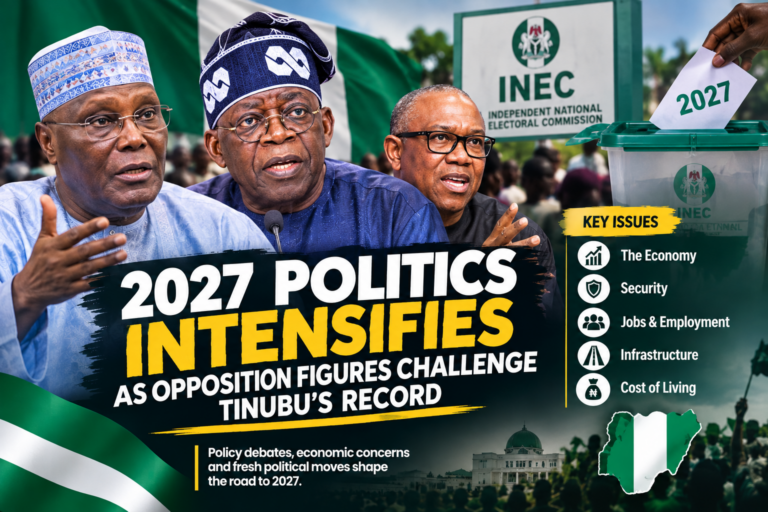
2027 Politics Intensifies as Opposition Figures Challenge Tinubu’s Record
Political activities surrounding Nigeria’s 2027 general elections have continued to intensify, with opposition figures increasingly challenging the Federal Government’s assessment of its performance. Former Vice-President Atiku Abubakar has criticised President Bola Tinubu’s Independence Day message, arguing that economic hardship remains a major challenge for Nigerians. Atiku’s comments came after the President used his national broadcast…