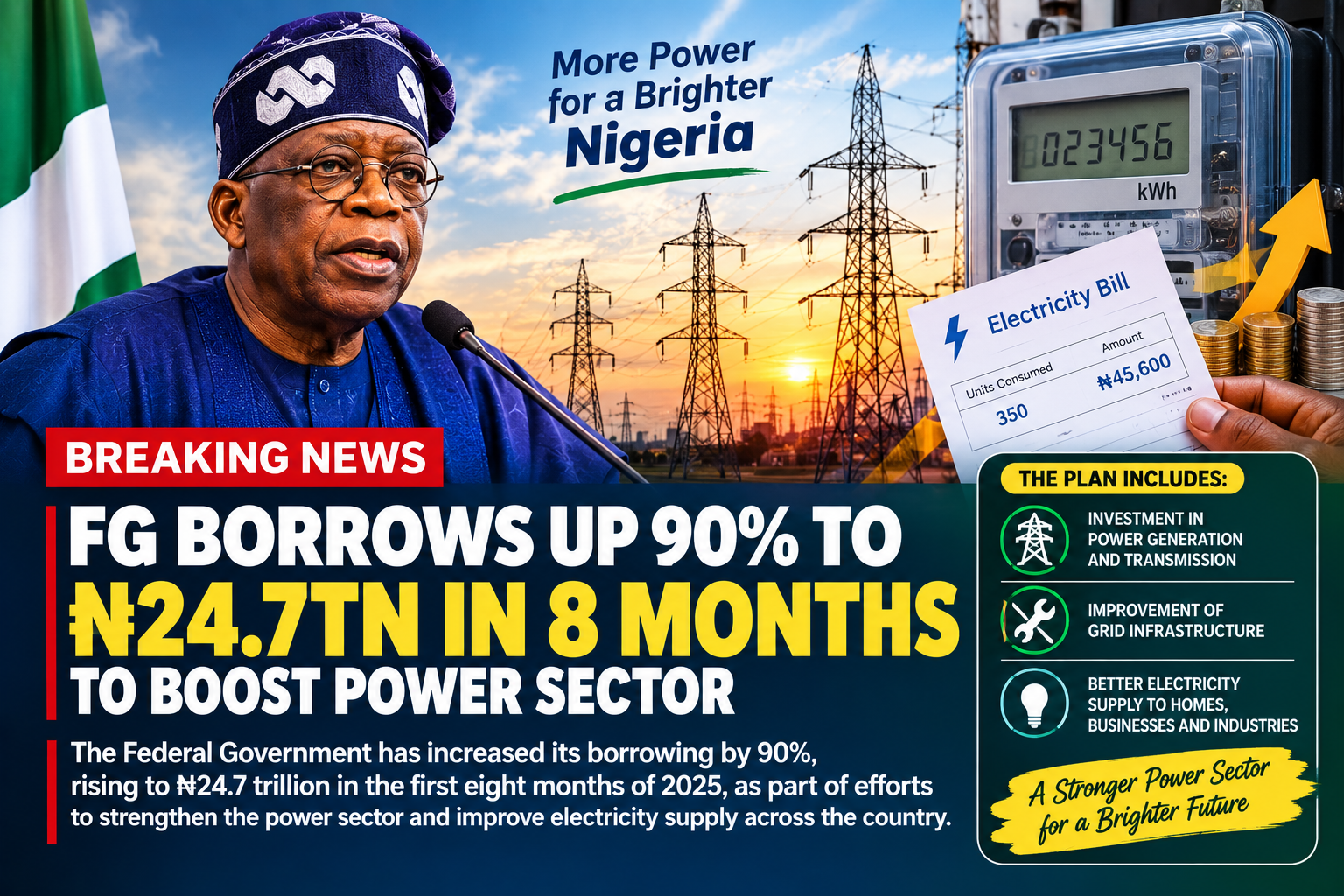
Nigeria’s Federal Government borrowed ₦24.7 trillion from domestic investors in the first eight months of 2026, representing a 90.5 per cent increase compared with the ₦12.98 trillion recorded during the corresponding period of 2025. The sharp increase in domestic borrowing has renewed attention on the government’s financing needs and the availability of credit for businesses and households across the country. The figures, based on public finance data from the Debt Management Office (DMO) and Central Bank of Nigeria (CBN), show that the Federal Government significantly increased its reliance on the domestic financial market between January and August 2026. The increase in government borrowing has occurred alongside a much faster expansion in credit to the public sector than to private businesses. According to CBN data cited in the report, credit to the Federal Government rose by 43 per cent year-on-year to ₦33.92 trillion in July 2026, compared with ₦23.69 trillion in July 2025. By comparison, credit to the private sector increased by 9.6 per cent, moving from ₦76.13 trillion in July 2025 to ₦83.43 trillion in July 2026. This means government credit expanded roughly 4.5 times faster than private-sector credit during the period under review. The trend has raised concerns about whether increased government demand for funds could make it more difficult or expensive for businesses to obtain financing. The rise in domestic borrowing was driven largely by increased issuance of government securities, including Federal Government bonds, Nigerian Treasury Bills and FGN Savings Bonds. Borrowing through FGN bonds increased by 145 per cent year-on-year, rising from ₦3.18 trillion in the first eight months of 2025 to ₦7.78 trillion during the corresponding period of 2026. Similarly, borrowing through Nigerian Treasury Bills rose by 78.6 per cent, from ₦9.47 trillion to ₦16.92 trillion. FGN Savings Bonds also recorded an increase, rising by about 22 per cent from ₦33.18 billion to ₦40.56 billion during the same period. Domestic borrowing allows the government to raise funds within Nigeria to finance its obligations and programmes. However, heavy demand for funds in the domestic market can also become an issue for businesses seeking loans and investment capital. When government securities offer attractive returns, financial institutions and investors may have greater incentives to place funds in government instruments rather than extending credit to businesses. The latest credit figures have therefore prompted concerns about the availability and cost of financing for Nigerian companies, particularly small and medium-sized businesses that already face high operating costs. The concern is particularly significant in an economy where businesses continue to contend with challenges involving electricity, transportation, foreign exchange, taxation, inflation and access to affordable capital. The increase in borrowing is also attracting attention because it comes at a time when government revenue has reportedly improved. Revenue collections from agencies including the Nigerian Revenue Service, Nigeria Customs Service and the Nigerian National Petroleum Company Limited have increased, while the Federal Government has also benefited from changes associated with petrol subsidy removal and the foreign-exchange reforms. The combination of higher revenue and increased borrowing has consequently generated questions about the government’s overall financing requirements and how borrowed funds are being deployed. These questions have also become part of a wider public discussion about Nigeria’s fiscal position and the sustainability of government borrowing. The power sector remains one of the areas where increased investment is widely considered important for Nigeria’s economic growth. Unreliable electricity supply has long imposed additional costs on businesses and households, with many companies relying on diesel and petrol-powered generators to maintain operations. However, the ₦24.7 trillion figure should not be interpreted as a ₦24.7 trillion borrowing programme specifically for the power sector. The reported amount covers the Federal Government’s domestic borrowing through various instruments during the first eight months of 2026. The broader fiscal question is how government borrowing is allocated among infrastructure, debt obligations, public services and other spending requirements. The scale of domestic borrowing in the first eight months of the year means attention is likely to remain focused on government financing for the remainder of 2026. For businesses, investors and households, the key issues will include borrowing costs, access to credit, inflation, government spending and the broader direction of Nigeria’s economic reforms. The government, meanwhile, continues to face the challenge of balancing the need to finance public programmes and infrastructure with the need to maintain sustainable debt levels and ensure that the private sector has sufficient access to capital. As Nigeria seeks to strengthen economic growth and improve infrastructure, the latest borrowing figures are likely to remain an important part of the national conversation over the country’s finances and economic direction. The central question is no longer simply how much the government can borrow, but how effectively those funds are converted into productive investment, infrastructure and improved economic opportunities for Nigerians.
Similar Posts
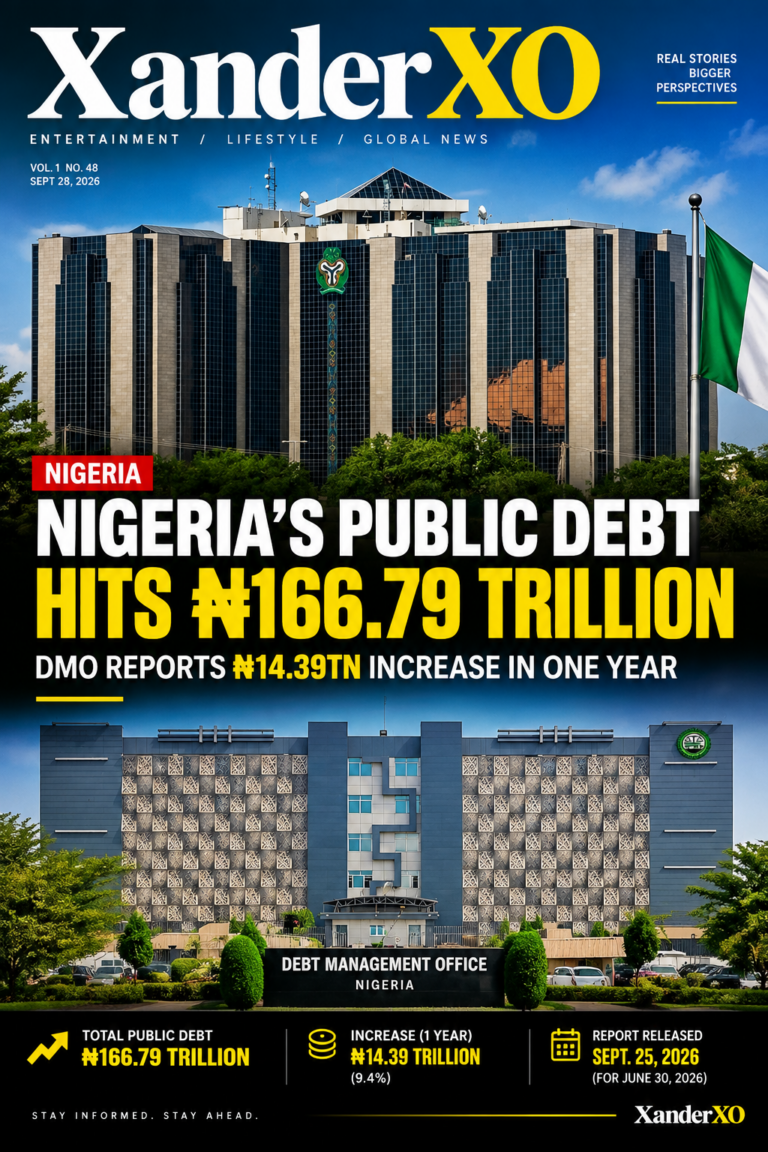
🇳🇬 NIGERIA’S PUBLIC DEBT HITS ₦166.79 TRILLION AS DEBT STOCK RISES BY ₦14.39 TRILLION IN ONE YEAR
Nigeria’s total public debt stock rose to ₦166.79 trillion as of June 30, 2026, according to the latest figures released by the Debt Management Office (DMO). The DMO published the debt report on September 25, 2026, showing that the country’s debt increased from ₦152.40 trillion in June 2025 to ₦166.79 trillion a year later —…
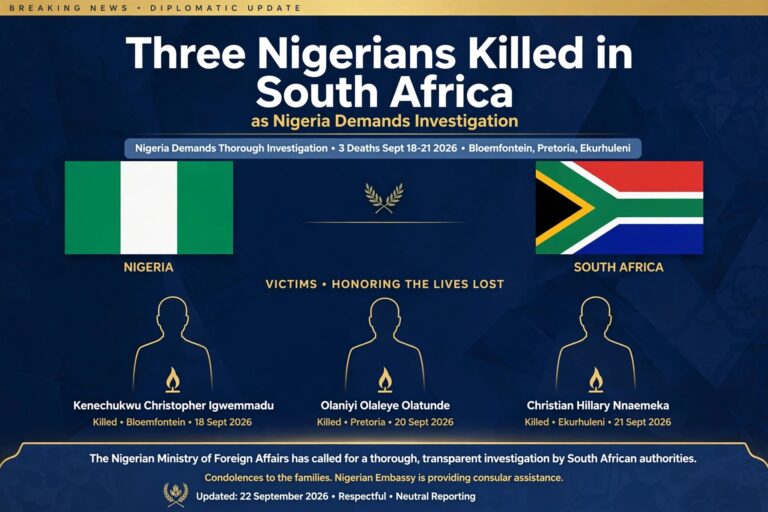
Three Nigerians Killed in South Africa as Nigeria Demands Investigation
The Nigerian Government has called for thorough investigations into the deaths of three Nigerian nationals who were killed in separate incidents in South Africa between September 18 and 21, 2026. The Nigerian Consulate-General in Johannesburg raised concerns over the deaths and called on South African authorities to investigate the circumstances surrounding each incident. The three…
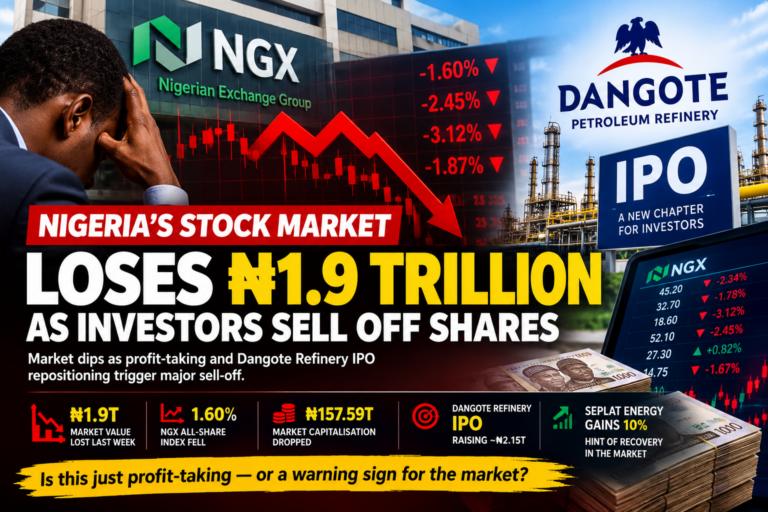
Nigeria’s Stock Market Loses Nearly ₦2 Trillion as Investors Sell Off Shares
Nigeria’s stock market has suffered a major setback, with investors losing about ₦1.9 trillion in market value last week as widespread profit-taking triggered heavy selling across several major stocks. The decline came after the Nigerian Exchange (NGX) had recorded a strong performance the previous week, when investors gained about ₦3.73 trillion in market value. The…
Samsung Expands Creator-Led TV Channels Across Global Markets
Samsung is expanding the international reach of creator-led television content as its free streaming service, Samsung TV Plus, adds new channels across several countries. The company announced the expansion on September 28, 2026, saying new creator-led channels are being introduced across markets including the United Kingdom, Australia, New Zealand, Singapore, Thailand and the Philippines. Existing…
ALIKO DANGOTE SPEAKS ON HAVING A SON, SAYS HE DOESN’T THINK A SON WOULD HAVE DONE BETTER THAN HIS THREE DAUGHTERS
Nigerian billionaire businessman and President of Dangote Industries Limited, Aliko Dangote, has spoken about having a son and his three daughters during a recent interview.The billionaire was asked about the issue of having a male child and the continuation of the family name.Speaking during the interview, Dangote said:”Sometimes,if God doesn’t give you something, don’t push…
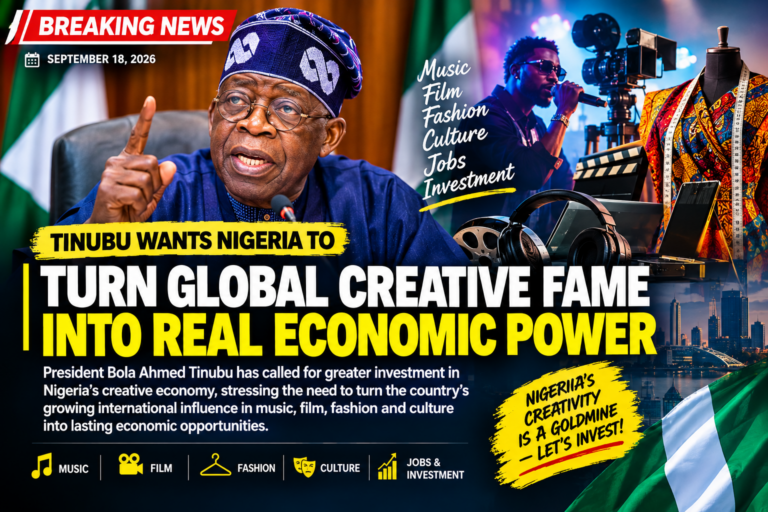
Tinubu Calls for Greater Investment in Nigeria’s Creative Economy
President Bola Ahmed Tinubu has called for increased investment in Nigeria’s creative economy, saying the country must turn the global influence of its music, film, fashion and cultural industries into lasting economic opportunities. The President made the call as attention continues to grow around Nigeria’s influence in global entertainment and culture. According to the Federal…