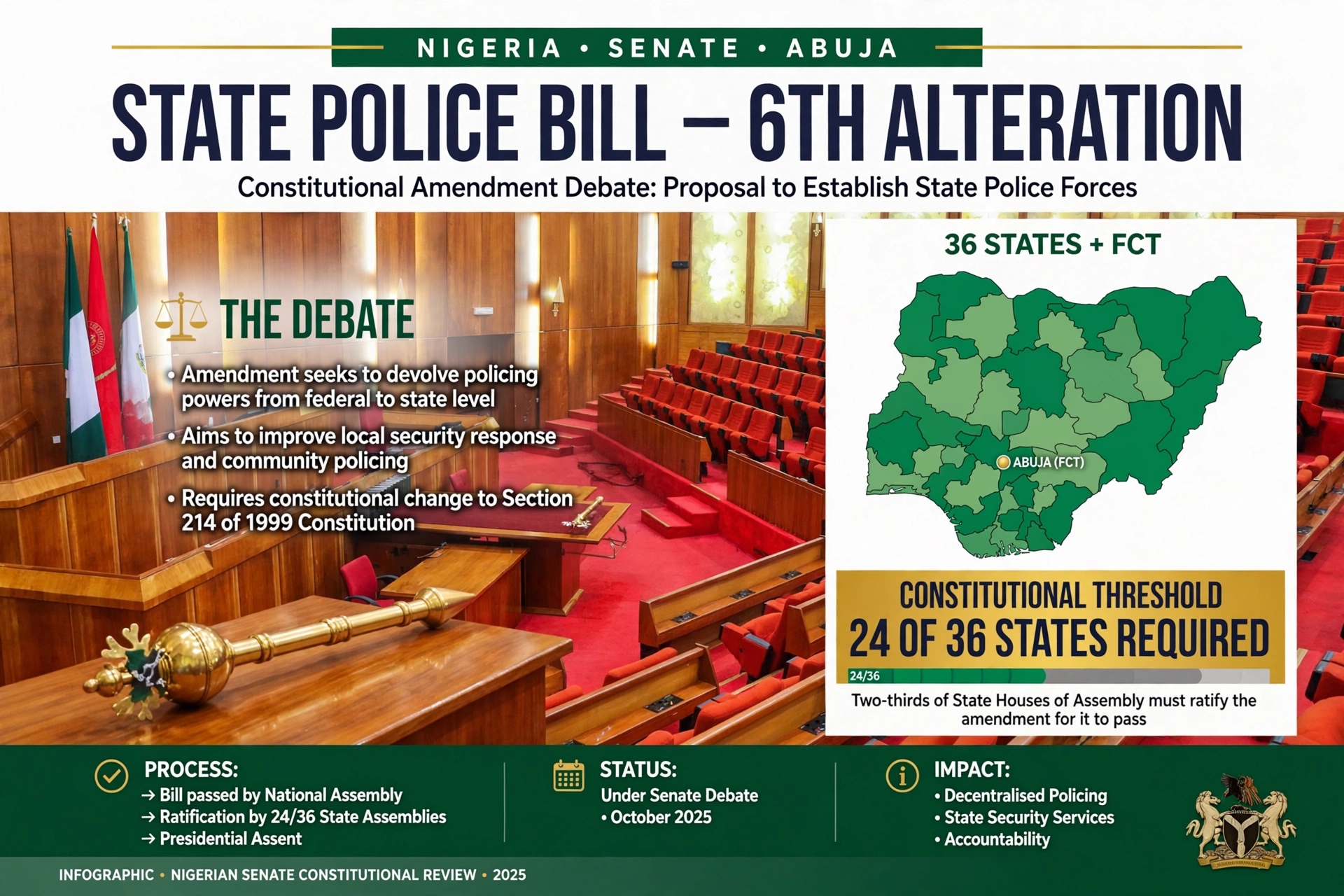
The debate over the establishment of state police in Nigeria has gained renewed attention as discussions continue about constitutional changes intended to strengthen the country’s security architecture. The proposed State Police Services Bill is currently before the 36 state Houses of Assembly after the National Assembly transmitted it on September 16, 2026 as part of the Sixth Alteration process. The Senate passed it on June 24 and the House on July 23. Under Section 9 of the 1999 Constitution, at least 24 states must concur. As of October 9, only four Edo, Oyo, Osun and Rivers have approved, with a 30-day deadline ending October 15. Senate spokesman Yemi Adaramodu, Chairman of the Senate Committee on Media and Public Affairs, said, “we need 24 state Houses of Assembly to consent. That’s two-thirds of 36. So, once we get that, we will go ahead and promulgate,” expressing confidence that “the majority of Nigerians want the state police.” The proposal has remained a major national issue as federal and state authorities consider ways to address kidnapping, banditry, terrorism and other security threats. Nigeria currently operates a centrally structured police system, with the Nigeria Police Force serving as the principal policing institution across the federation. Supporters of state police argue that state-level forces could improve local intelligence, shorten response times and enable officers to understand the specific security challenges confronting their communities. They believe a more decentralised arrangement could make it easier to respond to local threats that may not receive sufficient attention under a centralised system. The proposal has attracted support from some political leaders, security commentators and community stakeholders. Despite the potential benefits, critics have warned that state police could be misused by powerful politicians or state governments. Concerns include the possibility of politically motivated arrests, intimidation of opponents and uneven enforcement of the law. Other questions involve funding, recruitment standards, operational independence and coordination between state-level forces and the federal police. These concerns have made constitutional safeguards and accountability central to the debate. The reform also faces legal tests. A suit dated August 21, 2026 at the Federal High Court is challenging the House of Representatives’ passage procedure, arguing the bill was passed by voice vote without clause-by-clause consideration. Establishing state police would require the completion of the relevant constitutional amendment process and compliance with the applicable legal requirements. Political support alone would not automatically establish operational state police services across the country. The proposal would also require decisions about how the system would be funded, supervised and integrated with existing security institutions. As insecurity continues to affect communities across Nigeria, the debate is increasingly focused on whether a decentralised model could deliver better results without creating new opportunities for political interference. For Nigerians seeking safer communities, the central question is not simply whether state police should be established, but whether any new system would be effective, accountable and protected from abuse.
Similar Posts
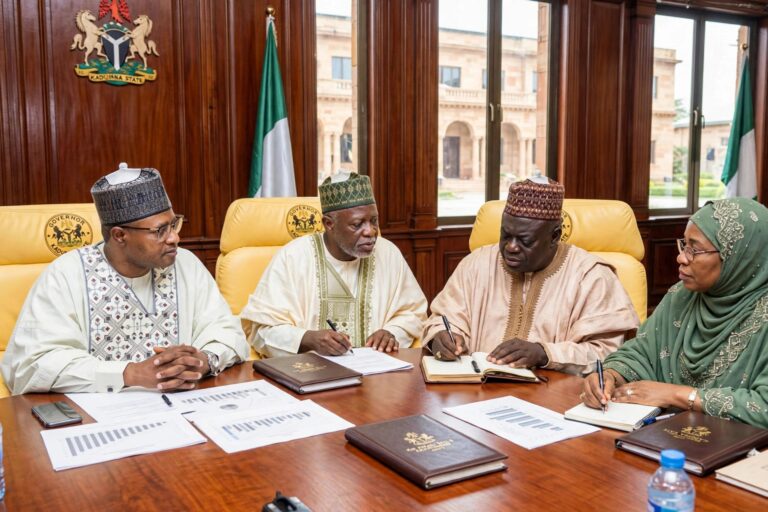
Uba Sani Calls for Unified Northern Strategy on Education and Development Kaduna State Governor
Uba Sani has called on leaders in Northern Nigeria to stop focusing primarily on the quest for political power at the centre and instead develop a common blueprint to address the region’s persistent development challenges. The governor made the call on Wednesday when the leadership of the Sir Ahmadu Bello Memorial Foundation, led by former…
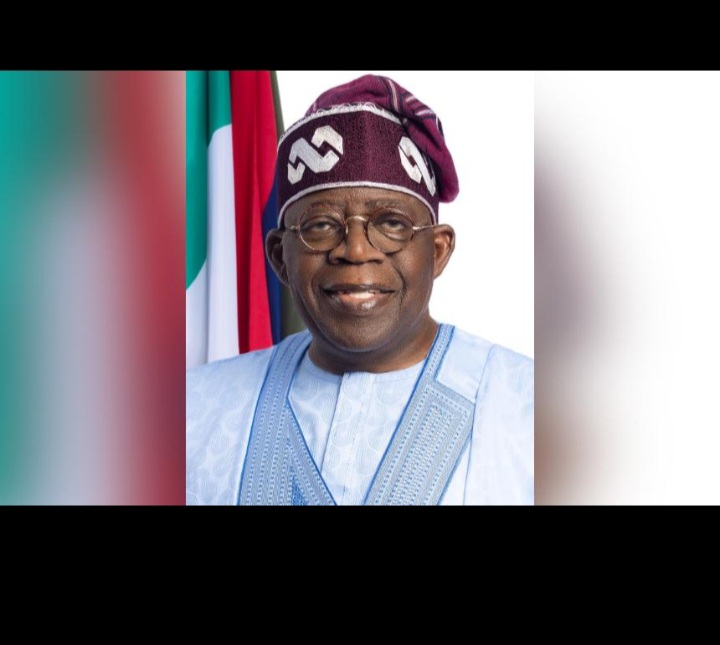
TINUBU NOMINATES SIX EXECUTIVE DIRECTORS FOR NMDPRA, SEEKS SENATE CONFIRMATION
President Bola Ahmed Tinubu has nominated six individuals for appointment as executive directors of the Nigerian Midstream and Downstream Petroleum Regulatory Authority (NMDPRA), forwarding their names to the Senate for confirmation. The nominations were announced on Friday, October 30, 2026, by the President’s Special Adviser on Information and Strategy, Bayo Onanuga. According to the announcement,…
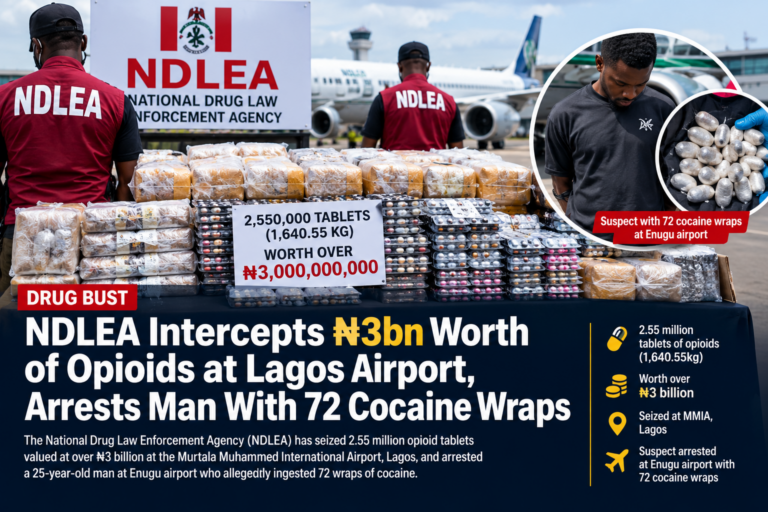
NDLEA Intercepts ₦3bn Worth of Opioids at Lagos Airport, Arrests Man With 72 Cocaine Wraps
The National Drug Law Enforcement Agency (NDLEA) has announced the interception of 2.55 million tablets of opioids valued at more than ₦3 billion at the Murtala Muhammed International Airport in Lagos. The agency said the drugs, weighing 1,640.55 kilogrammes, were seized on September 22 during the examination of three consignments at the airport’s import shed….
FCT Police Warn Criminals to Stay Away From Abuja During Independence Celebrations
The Federal Capital Territory Police Command has warned criminal elements to stay away from Abuja as Nigeria celebrates its 66th Independence Anniversary. The warning comes as security agencies intensify operations across the nation’s capital to ensure peaceful celebrations. The FCT Police Command assured residents that adequate security arrangements had been put in place to protect…
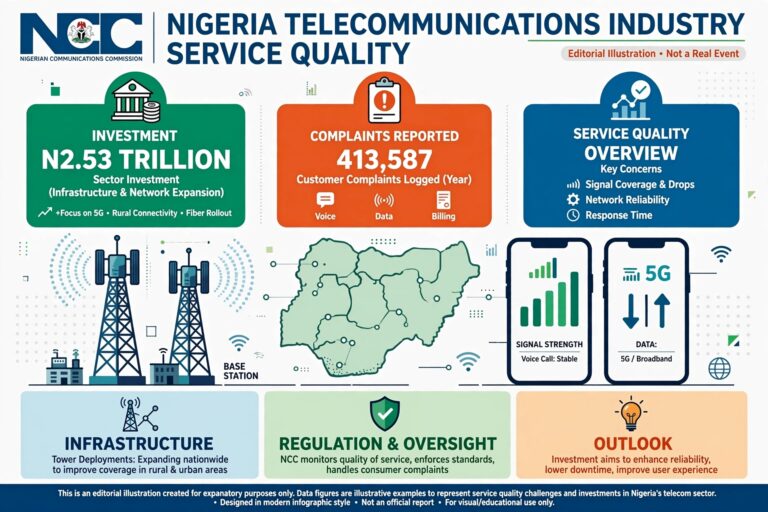
TELECOM OPERATORS INVEST ₦2.53 TRILLION IN NETWORKS AS SUBSCRIBERS CONTINUE TO COMPLAIN
Nigeria’s telecommunications industry is facing renewed questions about service quality after a report highlighted ₦2.53 trillion in network investment alongside continuing complaints from subscribers. The report, published by The Guardian Nigeria on October 10, examined whether spending on telecommunications infrastructure was translating into better experiences for mobile phone users. Figures cited in the report indicated…
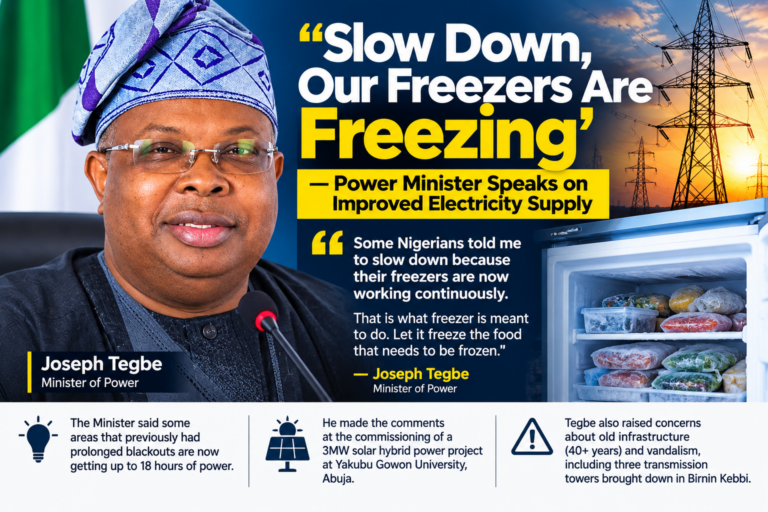
Slow Down, Our Freezers Are Freezing’ — Power Minister Speaks on Improved Electricity Supply
‘Nigeria’s Minister of Power, Joseph Tegbe, has revealed an unusual reaction from some electricity consumers following what he described as improvements in power supply across parts of the country. Speaking on Wednesday, September 16, 2026, in Abuja, Tegbe said some Nigerians had jokingly asked him to “slow down” because their freezers were now working continuously….