ABUJA — The Independent National Electoral Commission (INEC) is facing renewed scrutiny following the exclusion of former Minister of Communications and Digital Economy, Isa Ali Pantami, from its final list of governorship candidates for the 2027 general elections. The development has sparked fresh questions about the management of party primaries, the interpretation of electoral laws and the procedures used to determine which candidates qualify to contest elections in Nigeria. According to a report by Channels Television published on Tuesday, October 13, Pantami and the Peoples Democratic Party (PDP) have given INEC until Wednesday, October 14, to include his name on the list. Pantami’s lawyers reportedly argued in a legal notice dated October 12 that the commission had no authority to exclude him after he emerged from a court-ordered rerun of the party’s governorship primary. The commission had not publicly resolved the dispute at the time of reporting. The controversy comes as political parties begin preparations for the 2027 elections, a period expected to generate considerable legal and political activity. The publication of candidates’ lists is a critical stage in the electoral process because it informs voters, parties and other stakeholders about the individuals officially recognised to contest particular positions. Any dispute involving the inclusion or exclusion of a candidate can therefore have implications for the affected party’s campaign and its preparations for the election. A separate controversy has also emerged in Edo State, where two candidates reportedly appeared under both the PDP and the Allied Peoples Movement on INEC’s final list for House of Assembly elections. According to Channels Television, INEC’s Edo office acknowledged the duplication and said the matter had been referred to the commission’s headquarters. The latest developments have renewed attention on the importance of accuracy and transparency in electoral administration. For political parties, the dispute highlights the need to ensure that nominations comply with applicable electoral laws and that disagreements are addressed within the prescribed legal framework. For INEC, the challenge is to explain its decisions clearly, correct any genuine administrative errors and ensure that its procedures are consistently applied. However, the final determination of the Pantami dispute will depend on the relevant legal provisions, the facts of the party primary and any decisions reached by the appropriate authorities. As the October 14 deadline approaches, attention is likely to remain on whether INEC responds to the demand and whether the dispute proceeds further through the legal system. The controversy adds another important development to the political manoeuvring already gathering pace ahead of Nigeria’s 2027 general elections.

Similar Posts
Nigeria Wins $3.38bn Mambilla Arbitration Battle as Major Legal Hurdle Is Cleared
Nigeria has won a major international arbitration battle connected to the long-delayed Mambilla Hydroelectric Power Project in Taraba State, avoiding potential financial exposure of more than $3.38 billion. An arbitration tribunal operating under the International Chamber of Commerce (ICC) in Paris ruled in Nigeria’s favour and rejected claims brought by Sunrise Power and Transmission Company…
DANGOTE FOUNDATION PLANS IPO SHARES FOR FOUR MILLION NIGERIAN STUDENTS
A new initiative announced by the Aliko Dangote Foundation could give eligible Nigerian tertiary institution students an opportunity to participate in the stock market through shares associated with the planned public offering of Dangote Refinery. The Aliko Dangote Foundation has announced plans to acquire initial public offering shares on behalf of eligible students in Nigerian…
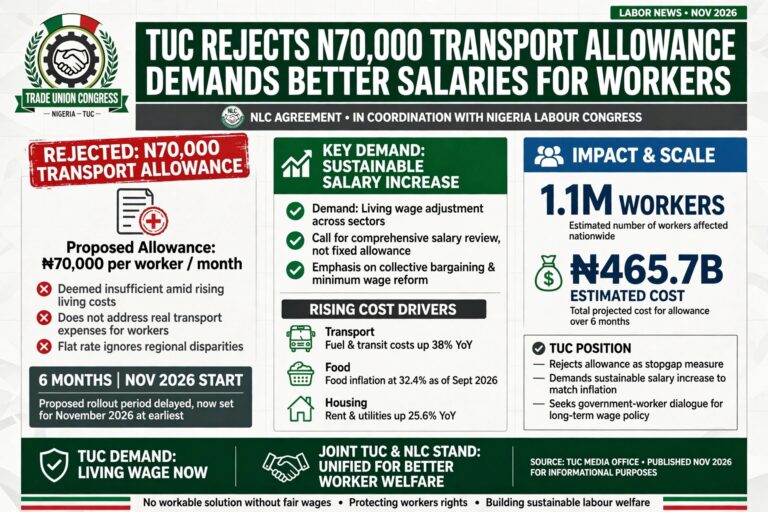
TUC REJECTS #70,000 TRANSPORT ALLOWANCE, DEMANDS BETTER SALARIES FOR WORKERS
The Trade Union Congress of Nigeria (TUC) has rejected the Federal Government’s proposed ₦70,000 monthly transport allowance for federal workers, arguing that employees need a more sustainable improvement in their earnings, the disagreement comes as workers continue to face pressure from the rising cost of transportation, food, housing and other essential expenses. Reports indicate that…
Military Court Postpones Ruling in Alleged Coup Plot Trial to October 5
A General Court Martial in Abuja has postponed its ruling in the ongoing case involving military officers accused of an alleged coup plot. The ruling, which had been scheduled for Wednesday, September 30, has now been fixed for Monday, October 5, 2026. The court is sitting at the Scorpion Officers’ Mess in Asokoro, Abuja. A…
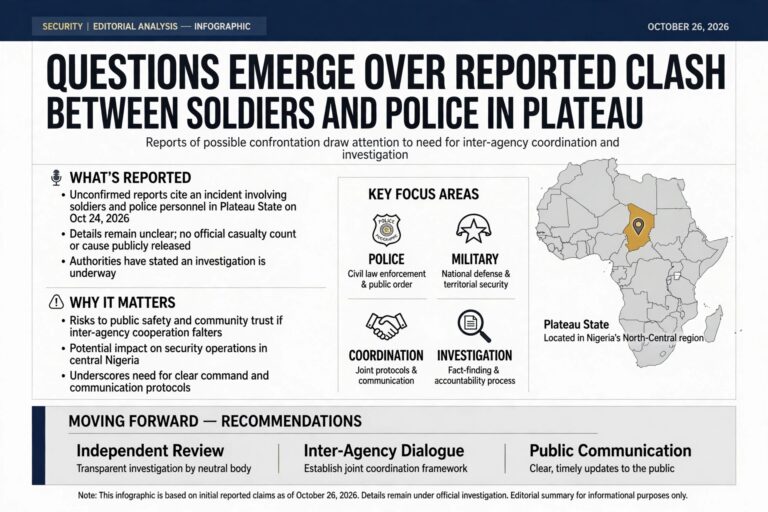
QUESTIONS EMERGE OVER REPORTED CLASH BETWEEN SOLDIERS AND POLICE IN PLATEAU
Reports of a possible confrontation involving military personnel and police officers in Plateau State have drawn attention to the importance of coordination among Nigeria’s security agencies. The military and police perform different but complementary roles in maintaining public order, protecting lives and responding to security threats, when personnel from different agencies become involved in a…
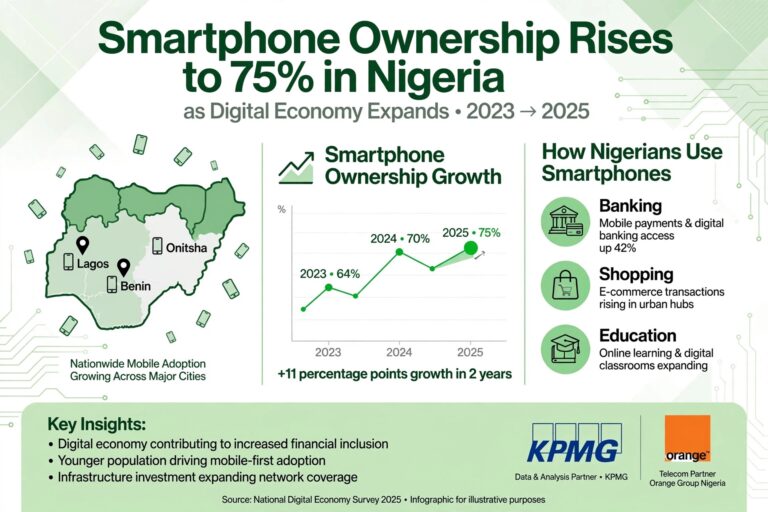
Smartphone Ownership Rises to 75% in Nigeria as Digital Economy Expands
Smartphone ownership in Nigeria has risen significantly, reaching 75 percent in 2025 compared with 64 percent in 2023, according to findings from a nationwide study. The increase represents an 11-percentage-point rise over the two-year period and highlights the growing role of smartphones in Nigerians’ daily lives. The findings were contained in the Nigeria Smartphone Study:…