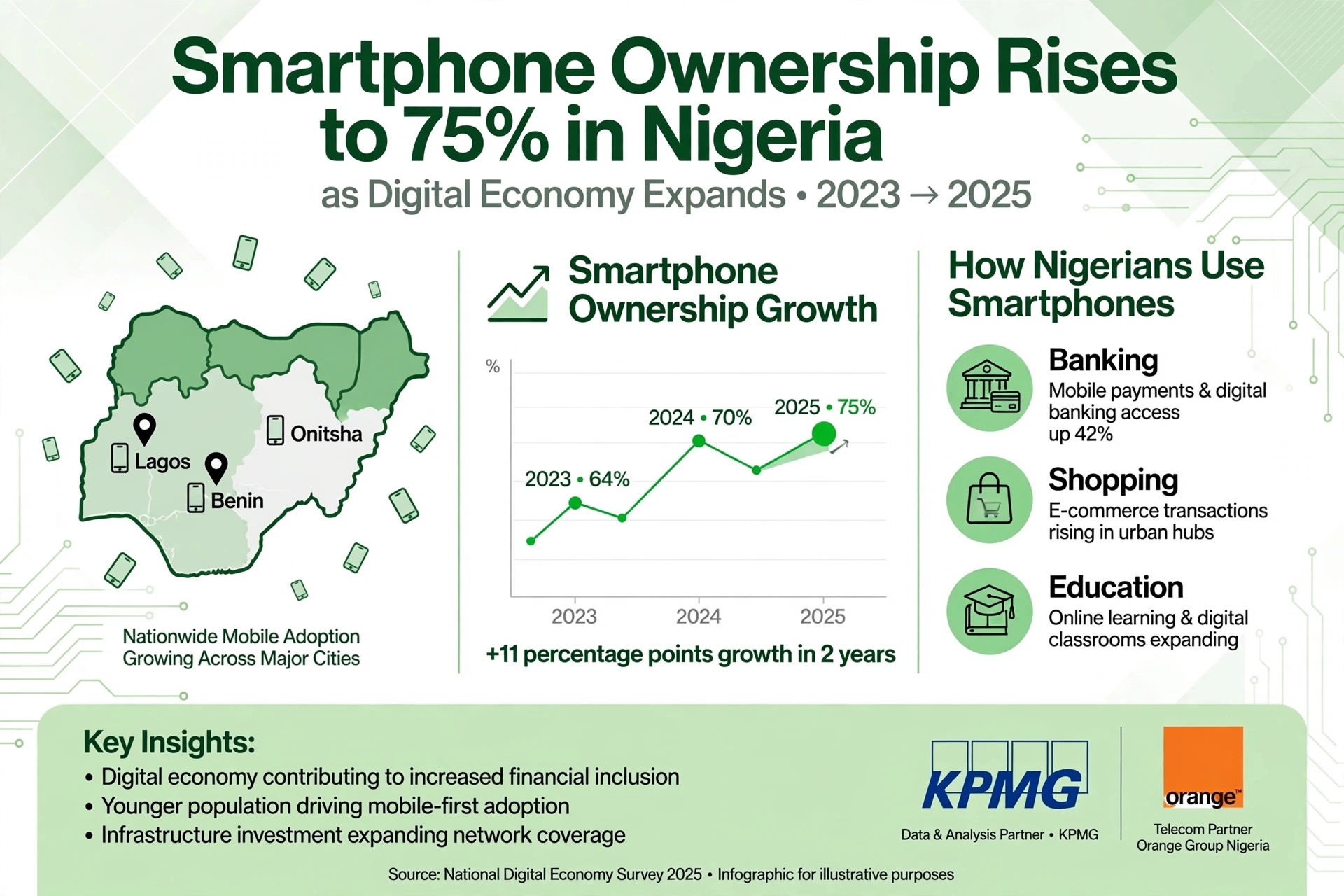
Smartphone ownership in Nigeria has risen significantly, reaching 75 percent in 2025 compared with 64 percent in 2023, according to findings from a nationwide study. The increase represents an 11-percentage-point rise over the two-year period and highlights the growing role of smartphones in Nigerians’ daily lives. The findings were contained in the Nigeria Smartphone Study: A Nationwide Analysis of Smartphone Ownership and Digital Application Usage, conducted by KPMG in partnership with Orange Group Nigeria. The study showed that smartphones are becoming increasingly important for communication, commerce, access to information and digital services. Several Nigerian cities and states recorded particularly high levels of smartphone ownership. Benin, Onitsha and Lagos were identified among the locations with some of the highest rates of smartphone penetration. The growth in smartphone ownership is significant because mobile devices have increasingly become the main gateway through which many Nigerians access the internet and digital platforms. Beyond social media and communication, smartphones are now commonly used for mobile banking, online shopping, education, entertainment, business transactions and access to government and other digital services. The rise also has implications for businesses as more consumers gain access to online platforms. Small businesses, entrepreneurs and larger companies can potentially reach more customers through mobile applications and social media platforms as smartphone adoption continues to grow. The increase in ownership also points to the expanding importance of reliable internet access and affordable mobile data. As more Nigerians depend on smartphones for essential services, challenges such as affordability, network quality, digital literacy and cybersecurity are expected to remain important issues. The latest figures nevertheless demonstrate how quickly mobile technology is becoming embedded in everyday Nigerian life. With ownership rising from 64 percent in 2023 to 75 percent in 2025, Nigeria’s digital economy continues to become increasingly mobile-driven.
Similar Posts
Abia LG Workers Threaten Three-Day Strike Over Alleged Unpaid Salaries
Local government workers in Abia State have threatened to embark on a three-day warning strike over alleged unpaid salaries, salary arrears and outstanding promotion benefits. The Nigeria Union of Local Government Employees (NULGE) said some affected workers have allegedly remained without salaries for almost three years. The union reportedly made its position known in a…
Tokyo Records 34 Consecutive Days of Rain, Breaking More Than a Century-Old Record
Central Tokyo has recorded 34 consecutive days of rainfall, setting a new record for the longest uninterrupted rainy streak since meteorological records began in the area. The record was reached on Tuesday, September 29, after rain had continued in the Japanese capital from August 27. According to reports citing Japan’s weather agency, the latest streak…
Army Rescues Six Kidnapped Victims in Benue
Troops of the Joint Task Force, Operation Whirl Stroke, have rescued six kidnapped victims in Katsina-Ala Local Government Area of Benue State. The victims were rescued around Gbise community on September 25 after troops reportedly received credible information about their release while conducting patrols in the area. The Acting Media Information Officer of the task…
Police Seek Personnel With Advanced Degrees as IGP Orders Urgent Submission of Names
The Inspector-General of Police, Kayode Egbetokun, has directed police commands and formations across Nigeria to compile and submit details of serving personnel who possess advanced academic qualifications. The directive specifically covers inspectors and rank-and-file officers holding PhD, master’s degrees or Bachelor of Laws (LLB) certificates. The order was contained in a police wireless message dated…
LAGOS GOVT RAISES ALARM OVER PALM OIL ADULTERATED WITH CANCER-LINKED DYES
The Lagos State Government has raised concerns over increasingly sophisticated adulteration of palm oil in markets across the state, urging residents to be more vigilant about the products they purchase.The warning was issued through the Lagos State Consumer Protection Agency (LASCOPA) following a technical presentation at the 2026 Lagos State Food Safety Conference and Exhibition….
SERAP Gives CBN Seven Days to Account for Alleged $6.23m Election Funds, ₦1.63tn
The Socio-Economic Rights and Accountability Project (SERAP) has given the Central Bank of Nigeria (CBN) seven days to account for millions of dollars and more than ₦1.63 trillion in public funds it says were allegedly diverted or remain unaccounted for. SERAP made the demand in a letter dated September 26 and addressed to CBN Governor…