Nigeria has won a major international arbitration battle connected to the long-delayed Mambilla Hydroelectric Power Project in Taraba State, avoiding potential financial exposure of more than $3.38 billion. An arbitration tribunal operating under the International Chamber of Commerce (ICC) in Paris ruled in Nigeria’s favour and rejected claims brought by Sunrise Power and Transmission Company Limited over disputes surrounding the massive power project. The development was confirmed by President Bola Tinubu in a statement issued on Thursday, September 17, 2026. According to the Presidency, the claims included a demand of about $680 million in settlement-related payments and interest, alongside another claim exceeding $2.7 billion in compensation and interest. The dispute dates back more than two decades to plans for the construction of a major hydroelectric facility in Taraba State. The project was initially conceived as a 3,050-megawatt power plant under a build-operate-transfer arrangement. Over the years, the proposed capacity was revised, with the Federal Government eventually rescoping the project to around 1,500 megawatts in an effort to make it financially viable and attractive to potential lenders. Sunrise Power later commenced international arbitration proceedings against Nigeria over alleged breaches connected to agreements surrounding the project. The legal dispute continued for years, creating uncertainty around the future of the Mambilla project. The latest ICC ruling has now rejected the claims that could have exposed Nigeria to more than $3.38 billion in financial liabilities. Reports on the award also indicate that Sunrise Power and its promoter, Leno Adesanya, were ordered to reimburse a substantial portion of Nigeria’s legal costs, with reports putting the recoverable legal expenses at about $11.82 million. The ruling represents a significant development in the long-running legal battle and removes one of the major disputes surrounding the project. President Tinubu described the arbitration outcome as a major development for the Mambilla project, saying the decision had removed what he regarded as the biggest legal obstacle that had kept the project from progressing. The President commended Attorney-General of the Federation and Minister of Justice Lateef Fagbemi, the Federal Ministry of Justice and members of Nigeria’s legal defence team for their roles in the case. He also acknowledged witnesses and experts who participated in the proceedings. Although the arbitration decision removes a major legal dispute, it does not mean electricity from the Mambilla project will become available immediately. The project has faced several challenges over the years, including financing, contractual disputes and questions surrounding its original agreement. The latest ruling nevertheless provides an important development in the project’s long legal history and could allow the Federal Government to focus more directly on the financing and implementation challenges that remain. For Nigeria, the outcome also means the country has avoided a potential multibillion-dollar liability arising from the arbitration. The Mambilla project remains one of Nigeria’s most ambitious proposed power developments, and its eventual completion could add significant generation capacity to the country’s electricity system. For now, attention will turn to how the Federal Government plans to move the project forward following the latest ICC decision.

Similar Posts
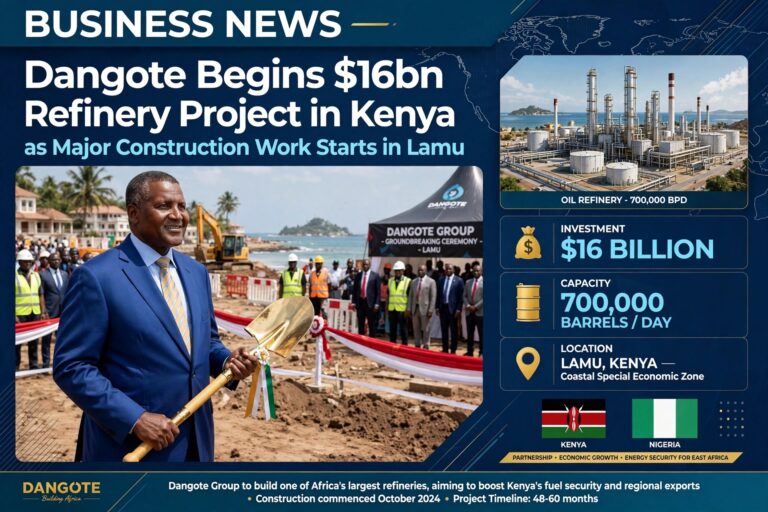
Dangote Begins $16bn Refinery Project in Kenya as Major Construction Work Starts
Nigerian billionaire Aliko Dangote has expanded his petroleum business beyond Nigeria following the commencement of construction on a proposed $16 billion oil refinery project in Kenya. The groundbreaking ceremony for the massive project was held in Lamu, Kenya, on Wednesday, September 30, 2026, attracting attention across Africa’s energy sector. The proposed refinery is expected to…
Nigeria’s 2026 budget stands at N68.32 trillion.
Bagudu said the Federal Government’s ambition of building a $1 trillion economy would require greater revenue mobilisation, investment and, where necessary, borrowing supported by public confidence. The minister also called for a more informed public conversation about Nigeria’s fiscal capacity and the resources required to fund development. At the workshop, Bagudu urged journalists to scrutinise…
Tinubu Calls for Greater Investment in Nigeria’s Creative Economy
President Bola Ahmed Tinubu has called for increased investment in Nigeria’s creative economy, saying the country must turn the global influence of its music, film, fashion and cultural industries into lasting economic opportunities. The President made the call as attention continues to grow around Nigeria’s influence in global entertainment and culture. According to the Federal…
Army Rescues Six Kidnapped Victims in Benue
Troops of the Joint Task Force, Operation Whirl Stroke, have rescued six kidnapped victims in Katsina-Ala Local Government Area of Benue State. The victims were rescued around Gbise community on September 25 after troops reportedly received credible information about their release while conducting patrols in the area. The Acting Media Information Officer of the task…
PETROAN Opens Talks With Azikel Refinery Over Direct Fuel Supply
The Petroleum Products Retail Outlets Owners Association of Nigeria, PETROAN, has opened discussions with Azikel Refinery in Bayelsa State over a proposed direct supply arrangement for locally refined petroleum products. The proposed partnership could allow members of the retail association to purchase products directly from the refinery, subject to agreement on commercial, technical and operational…
Explosion Rocks Gas Outlet in Kubwa, Abuja, Sparks Panic Among Residents
An explosion and fire at a gas outlet around Liberty Junction in Kubwa, Abuja, caused panic among residents on Sunday morning. The incident occurred at a gas-refilling outlet in the area, with reports indicating that the blast shook nearby structures and prompted an emergency response. The Federal Fire Service said its FCT Command and other…