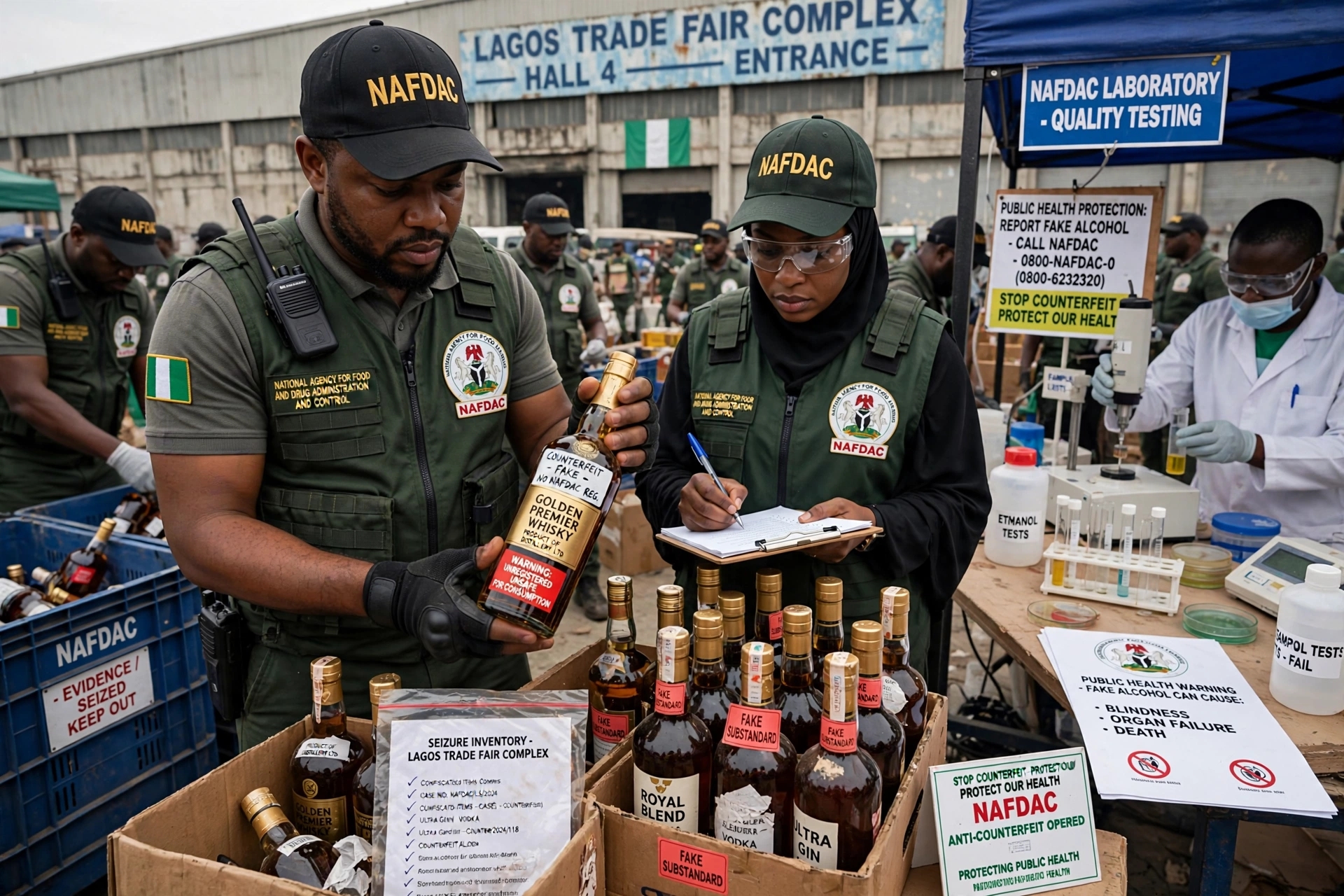
Concerns about counterfeit alcoholic beverages have again drawn attention to the importance of consumer protection, product authentication and effective enforcement against the sale of potentially dangerous goods. A report appearing in Nigerian news listings referenced an alleged factory producing fake premium spirits at the Lagos Trade Fair Complex. The specific enforcement details should be confirmed through an official announcement from the National Agency for Food and Drug Administration and Control (NAFDAC) before publication. Nevertheless, the issue highlights the public health risks associated with counterfeit alcoholic products and other improperly manufactured consumer goods. Counterfeit beverages may be produced without proper quality controls or the required regulatory oversight. Consumers may be unable to determine the true contents of a bottle from its appearance or packaging alone. Depending on the substances involved and the level of contamination, consuming illicitly produced alcohol can cause serious illness and, in severe cases, death. The risks can be particularly difficult to assess when counterfeit products are packaged to resemble recognised brands. Consumers should purchase regulated products from reputable sellers and be cautious about unusually low prices or packaging that appears damaged, altered or inconsistent. However, packaging alone cannot establish whether a product is genuine. Sophisticated counterfeits may imitate legitimate labels and seals. Anyone who suspects that a beverage is counterfeit should avoid consuming it and report the concern to the appropriate authorities. People who develop severe symptoms after consuming a suspected contaminated beverage should seek urgent medical attention. NAFDAC is responsible for regulating relevant food, drug and other products within its legal mandate. Its enforcement work can include inspections, investigations, product seizures and other actions where regulatory violations are established. Combating counterfeit goods also requires cooperation among manufacturers, distributors, retailers, law enforcement agencies and consumers. Manufacturers can support these efforts through secure packaging, traceability systems and prompt reporting of suspected counterfeiting. Retailers have a responsibility to obtain products through legitimate supply chains and avoid selling goods whose authenticity cannot be established. Counterfeit products can expose consumers to avoidable health risks while undermining legitimate businesses that comply with regulatory requirements. Effective enforcement can help remove dangerous products from circulation, but public awareness remains essential. Consumers should understand that an attractive label or familiar brand name does not necessarily prove that a product is authentic. The reported allegation involving the Lagos Trade Fair Complex requires confirmation of the precise location, products involved and any action taken by NAFDAC. Once verified, those details would help establish the scope of the operation and whether suspects, products or facilities were formally identified by the agency. For now, the broader message is clear: counterfeit alcohol is a serious consumer protection concern, and suspected cases should be handled through proper reporting and regulatory investigation.
Similar Posts
NIGERIA FACES ₦3.6 TRILLION LOSSES FROM TRANSPORT INEFFICIENCIES, EXPERT SAYS
Nigeria loses more than ₦3.6 trillion to inefficiencies and distortions in its transport and logistics sector, according to Dr Obiora Madu, Director-General of the Africa Centre for Supply Chain. Madu made the disclosure at the BusinessDay Mobility and Logistics Conference in Lagos, where industry stakeholders called for a more integrated transport system to reduce costs…
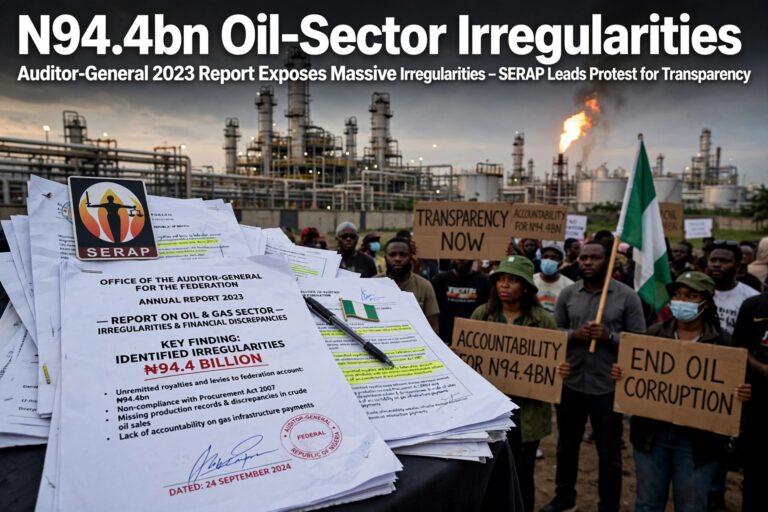
SERAP Demands Probe Into Alleged ₦94.4bn Oil-Sector Irregularities
The Socio-Economic Rights and Accountability Project has called on President Bola Tinubu to investigate alleged financial irregularities involving more than ₦94.4 billion at two petroleum-sector institutions. SERAP gave the President seven days to act on the allegations and warned that it could take legal action if the demands were not addressed. The organisation said the…
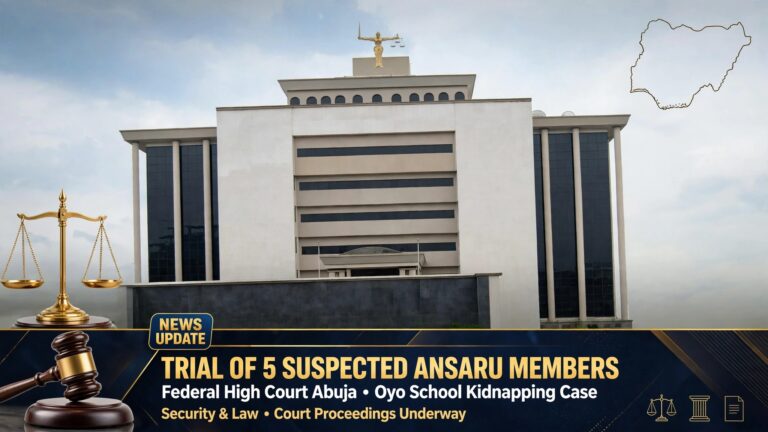
Five Suspected Ansaru Members Face Trial Over Oyo School Kidnapping
Five suspected members of the Ansaru terrorist group have been brought before the Federal High Court in Abuja over their alleged involvement in the abduction of pupils and teachers from schools in Oyo State. The defendants, Mahmud Muhammad, Abubakar Abbas, Abdulrazak Umar, Yunusa Musa and Shamsu Sani pleaded not guilty to seven terrorism-related charges filed…
“Who Gave You Audacity?” – Rep Chinedu Ogah Blasts Cubana Chief Priest, Asks EFCC To Probe Him Over Gov Nwifuru Comments
A fresh political drama is brewing in the South-East after popular socialite Pascal Okechukwu, better known as Cubana Chief Priest, clashed with Ebonyi State Governor Francis Nwifuru and was hit with a fiery response from federal lawmaker Hon. Chinedu Ogah. The controversy began days ago when Cubana Chief Priest publicly called on Governor Nwifuru to…
The Independent National Electoral Commission has published final lists of governorship candidates for the 2027 general elections
The Independent National Electoral Commission has published final lists of governorship candidates for the 2027 general elections, providing voters with a clearer picture of the political figures expected to contest governorship positions across several states. The lists contain candidates’ names, political party affiliations and other relevant identifying information. Their publication represents an important stage in…
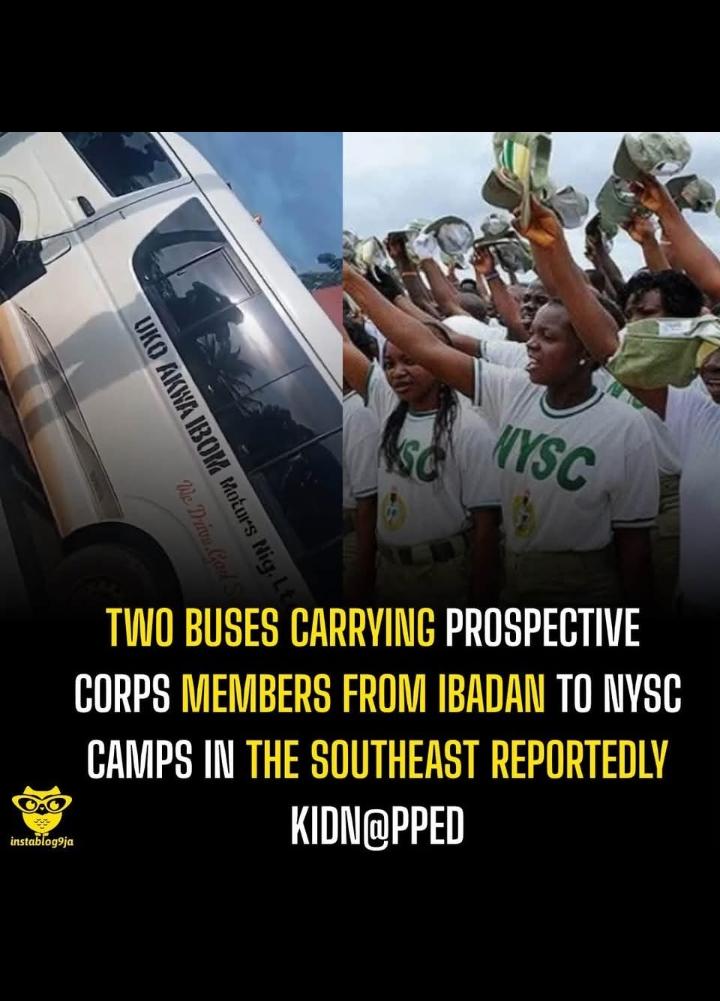
Tension in Imo as Reports of NYSC Prospective Corps Members’ Abduction Spark Panic
Tension has gripped families and prospective National Youth Service Corps members following reports that travellers heading towards NYSC orientation camps were allegedly abducted in Imo State. The reports emerged on Thursday, October 1, 2026, as Nigerians marked the country’s 66th Independence Anniversary, with social media users sharing claims that buses conveying prospective corps members had…