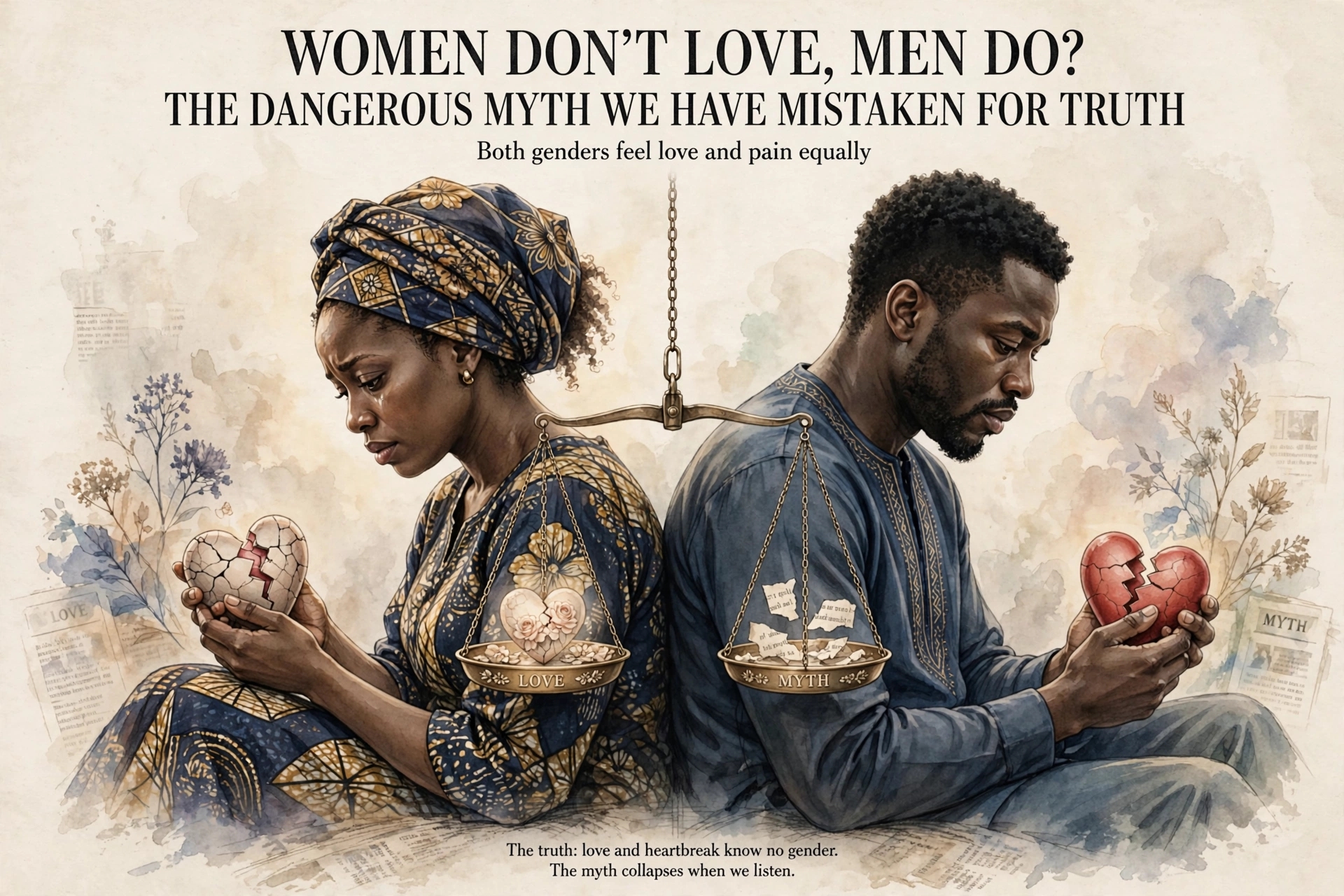
There is a controversial belief that continues to divide conversations about relationships: women don’t truly love men; men are the ones who love deeply. According to this argument, men become attached to the person, while women become attached to what the person provides. Men mourn lost love, while women mourn lost comfort, security and status. It is a convincing theory for someone who has been betrayed, abandoned or left heartbroken, but is it the truth about love, or merely a painful generalisation built on disappointment? Society often teaches men to demonstrate love through sacrifice. A man is expected to provide, protect, pursue and endure, when he spends his money, tolerates rejection or continues fighting for a relationship, his commitment becomes visible. Even after a breakup, a man who keeps calling, sending messages and hoping for reconciliation is often presented as proof that men love more deeply. But women sacrifice too, they invest emotionally, support struggling partners, adjust their lives and carry responsibilities that rarely attract public recognition. Sometimes, society recognises a man’s suffering more easily than a woman’s sacrifice. Perhaps the question is not whether men love more, but whether we have become accustomed to recognising love only when it appears in familiar ways. Of course, some people enter relationships for financial security, comfort, beauty, sexual satisfaction or social status, some remain with partners because of what they receive rather than what they feel. But such behaviour is not exclusive to women, men also pursue relationships for personal benefits and sometimes lose interest when those benefits disappear. The real distinction is not between men who love and women who calculate. It is between people who genuinely value their partners and those who value them primarily for what they can provide. Another argument supporting the claim is that some women appear to move on quickly after a breakup. A relationship ends, and within weeks, she is smiling in pictures, going out with friends or dating someone new, while her former partner is still struggling with the loss. To an observer, it may seem that she never loved him, but appearances can be deceptive. Some people begin grieving long before a relationship officially ends. By the time they finally leave, they may have already processed much of their pain. Others cope privately, choosing not to display their emotions publicly. A smiling photograph does not prove emotional healing, just as tears do not automatically prove deeper love, men and women experience heartbreak differently, and neither gender has a universal timetable for recovery. The belief that men love more often portrays men as innocent victims and women as calculated beneficiaries. The man gives everything; the woman takes everything. He wants commitment; she wants comfort. While some men genuinely experience exploitation and emotional neglect, being male does not automatically make someone sincere. A man can make grand promises and still be emotionally unavailable. He can claim to love a woman while controlling, humiliating or disrespecting her. Likewise, a woman can remain deeply committed to a man through difficult circumstances without expecting immediate rewards. Neither gender owns the moral high ground in love. Character is demonstrated through honesty, consistency, respect, accountability and genuine care. A man who pays the bills, buys gifts, travels long distances and loses sleep worrying about his partner may be demonstrating genuine commitment, but sacrifice alone does not prove healthy love, some people give excessively because they fear abandonment. Others endure painful relationships because they believe their sacrifices will eventually make their partners stay. Love is not a competition to determine who has spent more money, lost more sleep or suffered the most. A person can suffer deeply without receiving love in return. Another can make enormous sacrifices without understanding how to build a healthy relationship. True love requires mutual effort. Both partners deserve to feel valued, even when their contributions differ. When one person continually sacrifices while the other continually receives, the situation may not prove that the giver loves more. It may simply reveal an unequal relationship. Ultimately, the claim that women don’t love and men do is too simplistic to explain the complexity of human relationships. Some men love sincerely; others do not. Some women love deeply; others are motivated by personal interests. Heartbreak can make generalisations feel like facts, especially when our experiences seem to confirm our suspicions, but one person’s betrayal cannot define an entire gender. Perhaps the more important question is not who loves more, but who loves sincerely, who loves responsibly and who understands that love must be demonstrated through more than words or sacrifice.Because love is not determined by gender. It is revealed by character, sustained by mutual effort and proven by how two people treat each other when the benefits are no longer guaranteed.
Similar Posts
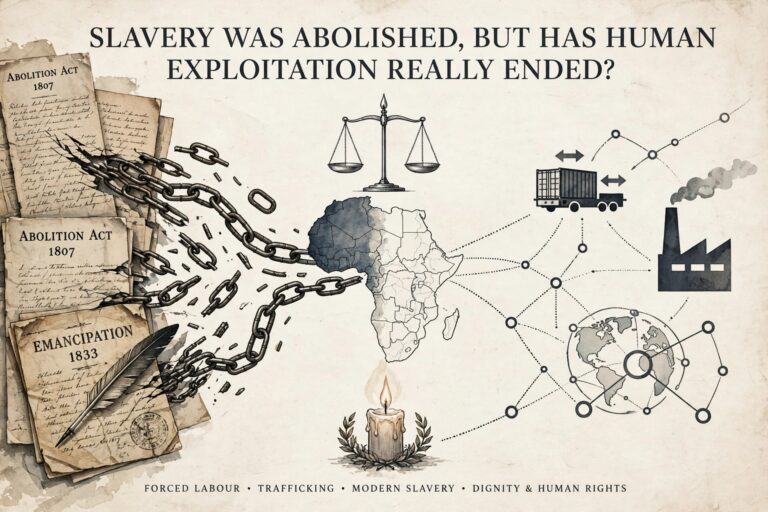
SLAVERY WAS ABOLISHED, BUT HAS HUMAN EXPLOITATION REALLY ENDED?
Human history contains achievements that deserve celebration and tragedies that demand permanent remembrance. The abolition of the transatlantic slave trade and the eventual legal abolition of slavery in many countries belong to both categories: they demonstrate the possibility of moral progress while reminding humanity of the extraordinary cruelty it once normalised, but a difficult question…
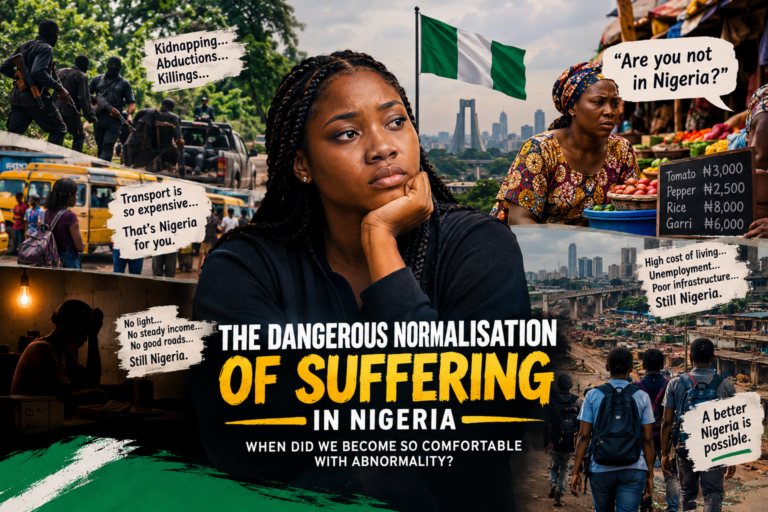
THE DANGEROUS NORMALISATION OF SUFFERING IN NIGERIA: WHEN DID WE BECOME SO COMFORTABLE WITH ABNORMALITY?
There is something deeply troubling about a country where suffering has become so familiar that people no longer find it unusual. A country where kidnapping has become a recurring headline, where families constantly worry about the safety of their loved ones, and where travelling from one location to another sometimes comes with the fear of…
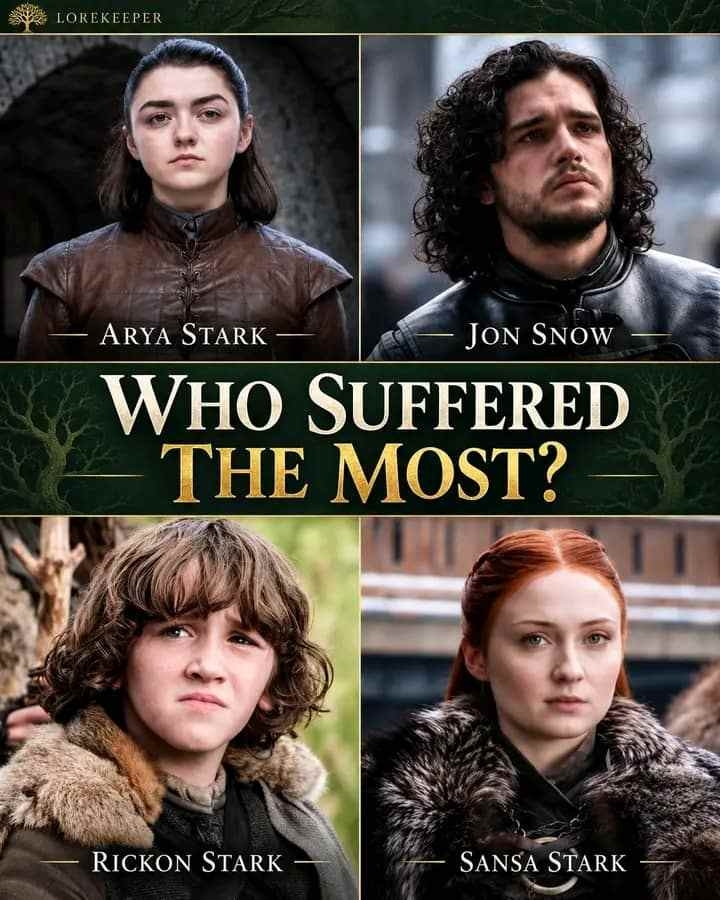
WHO SUFFERED THE MOST IN GAME OF THRONES? ARYA, JON, RICKON OR SANSA STARK?
Four Stark siblings. Four heartbreaking journeys. One family destroyed by war, betrayal and the relentless pursuit of power. But which of them truly suffered the most? In the brutal world of Game of Thrones, being born into the Stark family was supposed to mean honour, loyalty and a proud Northern legacy. Instead, for the children…
THE COST OF WANTING TO BE LIKED
For many years, I did not know the difference between being kind and being liked. I thought they were the same thing. I thought that if I was kind enough, available enough, quiet enough, and apologetic enough, I would be accepted. I wanted to be in everybody’s good books, I did not know I was…
THE BERLIN WALL FELL: WHY EVERY SOCIETY MUST CONFRONT ITS OWN DIVISIONS
On November 9, 1989, an event unfolded in Europe that became one of the most recognisable symbols of political change in modern history. The Berlin Wall, which had divided East and West Berlin for nearly three decades, was opened, allowing people to cross a barrier that had separated families, restricted movement and symbolised the division…
SEPTEMBER 11 CHANGED THE WORLD: HAVE WE FOUND THE RIGHT BALANCE BETWEEN SECURITY AND FREEDOM?
Some historical events alter not only the lives of those directly affected but also the policies, fears and political priorities of countries thousands of kilometres away. The terrorist attacks of September 11, 2001, did precisely that. The attacks killed nearly 3,000 people in the United States and reshaped international security policy, military strategy, airport screening,…