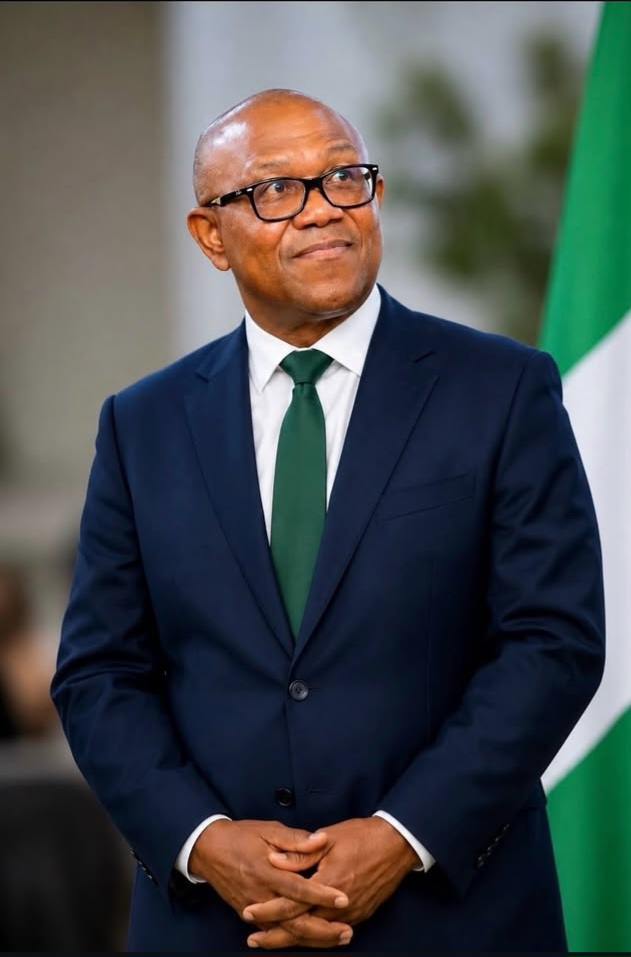
Pesidential candidate Peter Obi renewed criticism of Nigeria’s economic conditions on Monday, October 12, 2026, arguing that improvements reported in some economic indicators do not translate into better living standards for ordinary citizens. The former Anambra State governor and presidential candidate of the Nigeria Democratic Congress (NDC) made the remarks in a statement titled Celebrating Microeconomic Stability Amidst Increasing Poverty, published on his official X account. His criticism followed the World Bank’s October 2026 Africa Economic Update, which revised Nigeria’s GDP growth outlook to 4.3% in 2026 compared to 4.0% in 2025. Obi challenged the World Bank’s assessment that Nigeria’s economy is stabilizing, saying: So-called ‘economic stability’ has not resulted in higher living standards, improved employment opportunities, and reduction of poverty and inequality across Nigeria,” An economy is not truly stabilized simply because government revenue increases, foreign reserves strengthen, or GDP grows. Stability exists when citizens can afford food, obtain healthcare, provide education for their children, and live with dignity, He added:“The World Bank’s assessment should compel this government to review its reform and focus attention on the welfare of Nigerians and not indulge in unfounded self-congratulation. The true test is whether Nigerians are eating better, living better, and escaping poverty. The definitive measure of economic success is not the apparent stability of the economy on paper, but the quality of people’s lives.”What He Blamed. In the same statement cycle, Obi attributed current hardship to President Bola Tinubu administration’s key reforms, including the removal of fuel subsidy, floating of the Naira, and tax reforms, saying they had contributed to increasing prices of goods and services, business closures and declining living standards. Economic performance is commonly assessed through GDP growth, inflation, foreign exchange conditions and government revenue. However, Obi argued that these figures do not reflect the financial circumstances of households. For many Nigerians, the immediate measures of wellbeing remain the price of food, transportation, rent, school fees, healthcare and employment. The Tinubu administration has pursued fuel pricing and foreign exchange reforms. Supporters argue they can create conditions for longer-term growth, while critics argue the immediate costs require stronger social protection. Obi urged the Federal Government to prioritise policies that deliver measurable improvements in welfare rather than relying on favourable statistics.
Similar Posts
PETROAN Opens Talks With Azikel Refinery Over Direct Fuel Supply
The Petroleum Products Retail Outlets Owners Association of Nigeria, PETROAN, has opened discussions with Azikel Refinery in Bayelsa State over a proposed direct supply arrangement for locally refined petroleum products. The proposed partnership could allow members of the retail association to purchase products directly from the refinery, subject to agreement on commercial, technical and operational…
STATE POLICE PROPOSAL RENEWS DEBATE OVER NIGERIA’S SECURITY STRUCTURE
The proposal to establish state police continues to generate debate over how Nigeria should organise its security system and respond to crime. Supporters argue that policing arrangements closer to local communities could improve intelligence gathering and enable officers to respond more quickly to security threats, critics, however, warn that state-controlled police forces could face political…
Petrol Price Surge Deepens Cost-of-Living Crisis as Nigerians Face Fresh Pressure
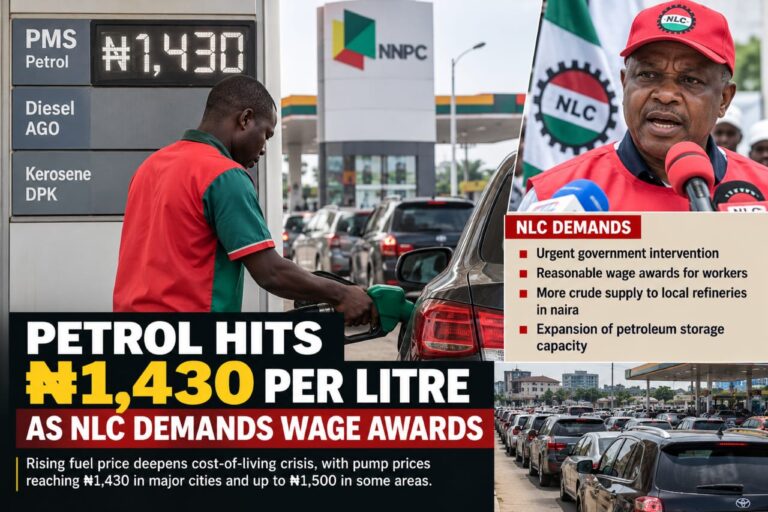
The rising price of petrol is putting fresh pressure on households and businesses across Nigeria, with pump prices reaching about ₦1,430 per litre in major cities and climbing as high as ₦1,500 in some parts of the country. The latest increase has triggered renewed concerns about transportation costs, food prices and the wider cost of…
More Than 80 Reportedly Abducted as Fresh Security Incidents Raise Concern Across Nigeria
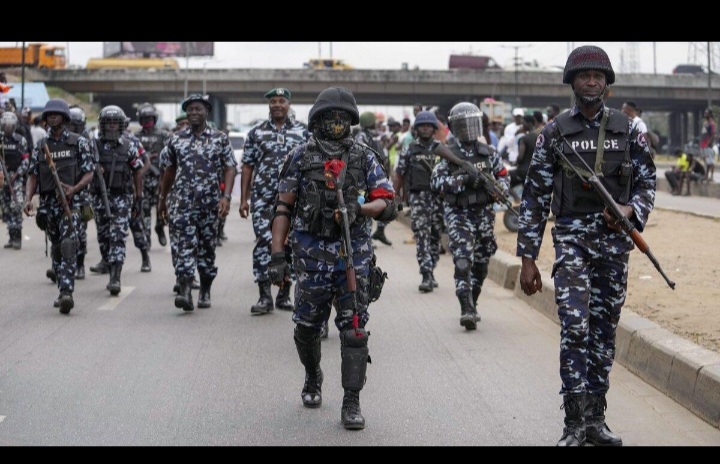
Fresh reports of abductions in parts of northern Nigeria, alongside the discovery of suspected human remains in a separate police operation in Abia State, have renewed attention on the country’s security challenges. More than 80 people, including farmers and women, were reportedly abducted in separate incidents in Niger and Zamfara states, according to reports published…
Nigerians Dip Into Savings, Take Loans to Buy Dangote Refinery Shares
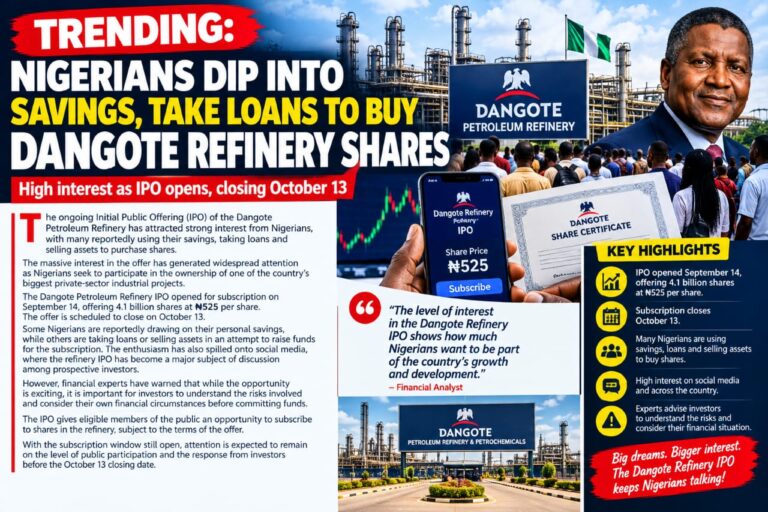
The ongoing Initial Public Offering of the Dangote Petroleum Refinery has attracted strong interest from Nigerians, with some prospective investors reportedly using personal savings, taking loans and selling assets to raise money to purchase shares. The development has generated widespread attention as Nigerians seek to participate in the ownership of one of the country’s biggest…
Tinubu Returns to Nigeria After Four-Week Working Vacation in Europe
President Bola Ahmed Tinubu has returned to Nigeria after spending about four weeks in Europe on what the Presidency described as a working vacation. The President arrived at the Presidential Wing of the Murtala Muhammed International Airport in Lagos on Tuesday evening, September 29. He departed Nigeria on August 30 and spent time in London…