Lawmakers direct a committee to investigate the institution’s management and compliance with university regulations as efforts to strengthen the National Universities Commission advance. The Nigerian Senate has ordered an investigation into the operations and management of Tansian University in Umunya, Anambra State, following allegations of administrative excesses and concerns about compliance with regulatory requirements. The directive followed a motion raised by Senator Victor Umeh, who questioned the institution’s alleged disregard for established procedures, particularly in matters involving the appointment and dismissal of personnel, the Senate’s decision, reported on October 22, 2026, places renewed attention on university governance and the enforcement powers of the National Universities Commission (NUC). The institution has not been established by the reported Senate action to have committed any wrongdoing; the allegations remain subject to investigation. Senate President Godswill Akpabio reportedly directed the relevant committee to investigate the circumstances surrounding the university’s operations and present its findings to the Senate, the committee is expected to examine the concerns raised by lawmakers and determine whether there is evidence of violations of applicable regulations. According to the report, the investigation was referred to the Senate committee responsible for tertiary education and Tertiary Education Trust Fund matters, with a two-week reporting period, the outcome of the investigation could inform the Senate’s consideration of possible regulatory or legislative responses. University governance determines how institutions are managed, how decisions are made and how academic standards are maintained, effective governance is important for protecting students, supporting staff and ensuring that institutions operate in accordance with applicable laws and regulations. Appointments, dismissals, accreditation, financial accountability and academic administration can all affect the quality and stability of university operations, when concerns arise about an institution’s compliance with regulations, an independent and evidence-based investigation can help establish the facts. It is equally important that allegations are not treated as proven findings before the appropriate process has been completed. The investigation comes as the National Assembly considers a legislative proposal intended to strengthen the regulatory framework governing Nigerian universities. According to reports, the proposed legislation seeks to update the legal framework for the National Universities Commission and strengthen its ability to enforce academic standards, the proposed changes also concern accreditation processes, minimum academic standards and sanctions for regulatory violations, supporters of stronger regulation argue that the NUC needs effective legal tools to ensure that institutions meet established requirements. However, the practical impact of any proposed changes will depend on the final legislation, its implementation and the resources available to the regulatory body, university investigations can attract concern among students, parents and staff, particularly when questions arise about institutional administration. Students will be interested in whether the investigation affects academic programmes, accreditation or the validity of their qualifications, staff may also want clarity on employment procedures and the regulations governing appointments and dismissals. At this stage, however, the Senate’s directive should not automatically be interpreted as a decision to close the university or cancel its academic programmes, any regulatory action would depend on the findings of the investigation and the relevant legal procedures. The Senate’s intervention highlights the importance of accountability in higher education, universities are expected to maintain academic standards while operating within the law. Regulatory bodies must also exercise their powers fairly and transparently. An investigation should therefore establish the relevant facts, give affected parties an appropriate opportunity to respond and distinguish between allegations and proven violations. The Senate’s findings will be important in determining whether further action is warranted. For students and the wider academic community, the key issue is whether the process leads to clearer governance, stronger regulatory oversight and better protection of educational standards.
Similar Posts
APM DEMANDS OKPEBHOLO’S RESIGNATION OVER ₦1,500 PETROL COMMENT
The Allied Peoples Movement has called for the resignation of Edo State Governor Monday Okpebholo following remarks attributed to him concerning petrol prices. The political party criticised the governor over his comparison of petrol prices in Nigeria and the United Kingdom.The controversy centres on comments concerning petrol reportedly selling for around ₦1,500 per litre in…
NSCDC Raids Unregistered Juice Factory in Lagos Producing ‘Barkas Juice,’ Arrests Culprits, Rescues Minors
The Nigeria Security and Civil Defence Corps (NSCDC), Lagos State Command, has busted an illegal juice factory in Badagry where an adulterated fruit drink branded *’Barkas Juice’ was allegedly being produced in unhygienic conditions and distributed across Lagos and other parts of Nigeria. The operation was carried out at Aradagun, Badagry, on Talabi Onilegbale Street…
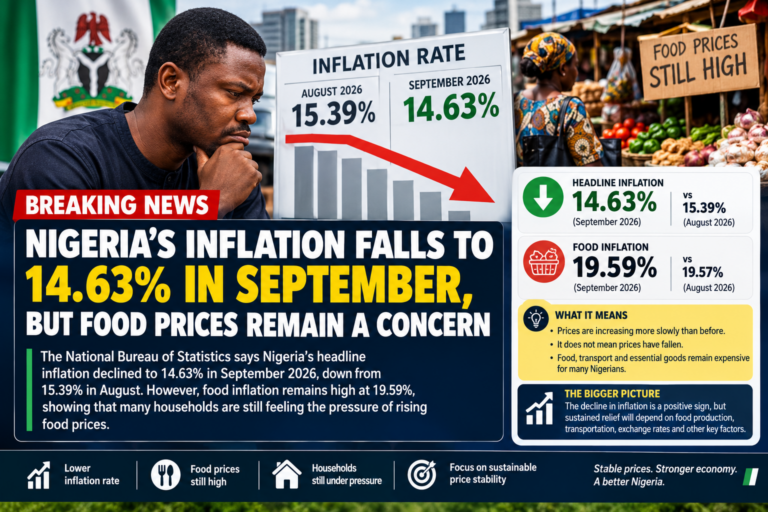
NIGERIA’S INFLATION FALLS TO 14.63% IN SEPTEMBER, BUT FOOD PRICES REMAIN A CONCERN
Nigeria’s headline inflation rate reportedly declined to 14.63 per cent in September 2026, down from 15.39 per cent in August, according to figures attributed to the National Bureau of Statistics. The figures, reported on October 15, indicate that the annual rate of increase in consumer prices continued to ease. However, food inflation remains a major…
Osun on Alert as DSS Warns of Alleged Terror Plot Targeting Worship Centres
Osun State has been placed on heightened security alert following a warning from the Department of State Services (DSS) over an alleged plan by terrorists to attack places of worship and other crowded locations in the state. The warning has sparked increased security awareness among religious communities, with Christian and Muslim leaders urged to take…
Nigeria Launches New Digital Postcode System for Buildings Nationwide
Nigeria is set to introduce a new National Digital Alphanumeric Postcode System, giving addressable buildings across the country unique digital codes. The system officially launches on October 1, 2026, as part of efforts to modernise Nigeria’s addressing infrastructure and make it easier to identify and locate buildings. According to the official National Digital Postcode platform…
Petrol Price Hits ₦1,430 as NLC Demands Wage Awards and Emergency Relief
The rising cost of petrol has triggered fresh concerns across Nigeria, with the Nigeria Labour Congress (NLC) calling on the Federal Government to urgently intervene as petrol prices climb to about ₦1,430 per litre in some major cities. The labour union says the increase is placing additional pressure on workers and households already struggling with…